
GEO SEO: How Generative Engine Optimization Fits Into Your SEO Program
Learn how GEO SEO adds generative engine optimization to your existing SEO program with a 90-day plan, accountability model, and clear guidance on what to keep,

GEO in this article means generative engine optimization, not geographic SEO or local search. GEO is a cross-functional operating layer you add to an existing SEO program. It preserves crawlability, indexing, helpful content, and authoritative sourcing. This article covers what to keep, what to add, what to stop doing, who owns each workstream, and a concrete 90-day plan. For the full definition, see Generative Engine Optimization Explained. For where GEO fits in the broader AI search landscape, start with the AI Search Engine Optimization hub.
Why GEO belongs inside SEO, not next to it
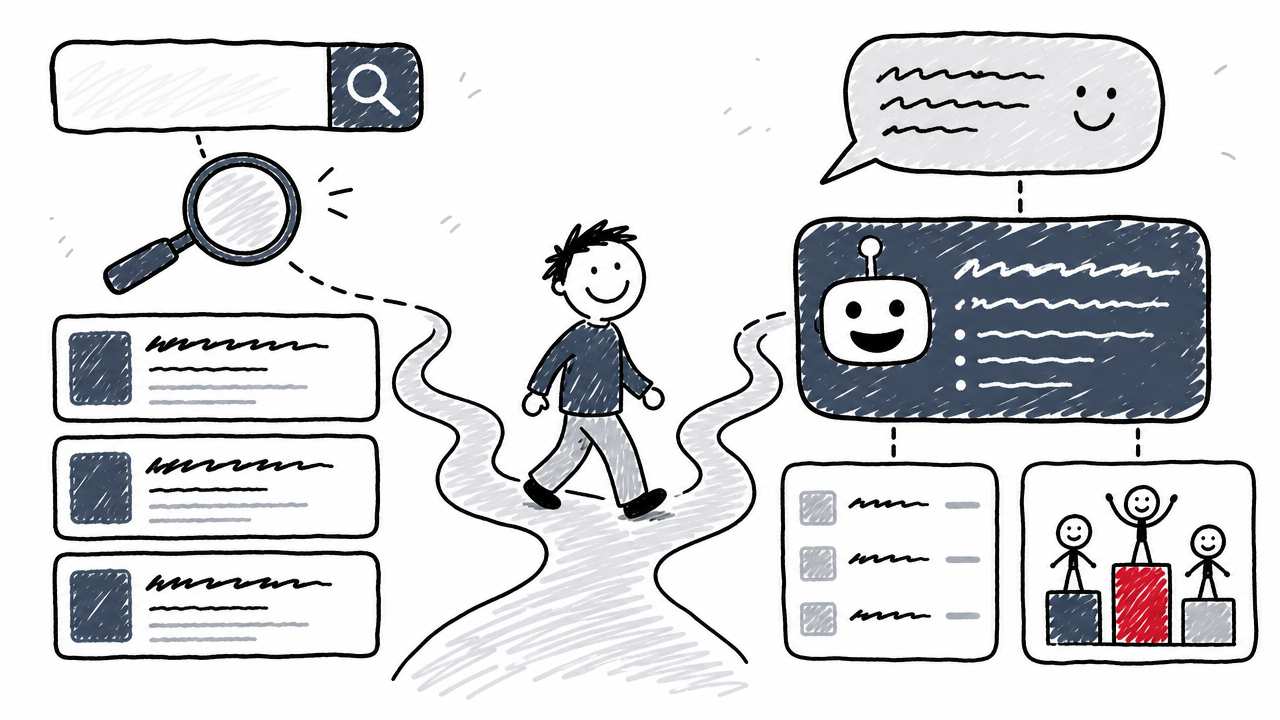
GEO is the next quarterly initiative for your SEO team, not a reason to build a separate department. Google's AI Overviews and AI Mode draw from core Search ranking and quality systems, use retrieval-augmented generation from the Search index, and require nothing beyond being indexed and eligible for a normal Search snippet (Google Search Central). The foundation that makes a page eligible for a generative answer is the same one that makes it eligible for a traditional result.
GEO adds an observation and editing layer on top of that foundation: prompt-based diagnosis across platforms, answer-quality improvements to existing pages, cross-platform visibility tracking, and a measurement loop that separates AI mentions from business outcomes. These extend work an SEO team already does; they do not replace it.
If your site is not crawlable, not indexed, or not producing useful original content, no GEO-specific tactic will compensate. Fix the floor before you raise the ceiling.
For the full side-by-side comparison, see GEO vs. SEO: the complete breakdown.
The seven priorities, in order
This is a sequence, not a buffet. Protect the foundation first, diagnose before you create, fix before you build, and measure before you scale.
- Protect your SEO foundation.
- Build a prompt baseline across platforms.
- Fix high-value existing pages before creating new ones.
- Fill evidence and intent gaps deliberately.
- Strengthen credible external source coverage.
- Create a measurement and refresh cadence.
- Scale only after you can show what changed and why.
1. Protect your SEO foundation
Crawlability, indexing, internal linking, site architecture, helpful original content, page experience, accurate structured data, and Search Console diagnosis all remain prerequisites. Google documents no special schema, no ideal page length, and no need to split content into small blocks for AI features (Google Search Central). Every page that earns a generative citation first earns the right to appear with a normal Search snippet.
Do not sacrifice technical SEO hygiene for any GEO tactic. A page that cannot be crawled or rendered cannot be retrieved by a generative system that draws from the Search index.
2. Build a prompt baseline across platforms
Expand beyond keywords into prompts. Build a set covering brand queries, category-entry queries, "best" and recommendation queries, comparisons, alternatives, use-case questions, pricing and implementation questions, and failure-mode questions ("who is this not for?"). A starting set of 25–40 prompts works for most mid-market teams.
Run the same prompt set across Google AI Overviews/AI Mode, ChatGPT, Perplexity, Claude, and Gemini. Record the date, platform, region, answer text, named brands, linked sources, answer accuracy, and competitor presence. Responses vary by platform, query, region, session, and product version, so document conditions carefully to make the baseline reproducible.
Use the free Keyword Research tool to check conventional search demand alongside prompt research. Keyword data tells you what people type into search; prompt observation tells you what AI platforms synthesize. You need both.
3. Fix high-value existing pages before creating new ones
The highest-impact GEO work is usually updating pages you already have. Start by placing the direct answer near the top of the page. Use headings that reflect the real question a reader asks. Write key sections so they make sense when pulled out of context. Name subjects, products, dates, and entities plainly. Back up claims with primary sources, original data, or attributed expert evidence. Include clear limitations and "not a fit for" guidance where relevant. Remove outdated or conflicting claims. Show authorship, review responsibility, and update dates.
Good example: A product comparison page that states its verdict in the opening paragraph, cites first-party specs for each product, names winners by use case, and includes a "last reviewed on [date]" note.
Poor example: A comparison page that buries the conclusion under 800 words of feature tables, names no winner, cites no sources, and shows no review date.
4. Fill evidence and intent gaps deliberately
Create or improve only the pages tied to a documented gap: comparisons, alternatives, use-case pages, implementation guides, troubleshooting content, original research, and customer evidence. The unit of planning is a customer topic or journey, not an arbitrary list of AI-generated prompt variations.
Use keyword data, Search Console queries, People Also Ask results, sales calls, support tickets, and actual AI answers to identify what to build. Confirm demand before committing resources.
Growth Calendar can turn a GEO-informed topic backlog into an organized content schedule with direct-answer structures and source citations built into each article brief. It supports planning and production, not AI citation monitoring.
5. Strengthen credible external source coverage
Identify reputable third-party pages already shaping the category's AI answers. Correct inaccurate profiles and outdated descriptions. Pursue genuine editorial coverage, expert contributions, reviews, and customer evidence. This is cross-functional work: PR, communications, product marketing, and customer success all contribute.
Do not manufacture mentions or publish low-quality directories just to place the brand name on more pages. Google warns against seeking artificial mentions (Google Search Central).
6. Create a measurement and refresh cadence
Define terms before using them as success metrics:
Google states that traffic from AI Overviews and AI Mode is included in Search Console's Performance report under the Web search type (Google Search Central). Combine Search Console data with analytics, CRM data, and prompt observation rather than relying on a single AI visibility score.
<!-- Set a monthly prompt refresh and a quarterly page refresh cadence. For tooling options in AI visibility monitoring, see the GEO tools round-up. -->
7. Scale only after you can show what changed and why
Do not expand content production or invest in new tools until the team can show a reproducible before-and-after for at least one customer journey. AI answers are variable; a single re-test is not proof of causation. The 90-day plan below gives the team enough time to build that evidence and set up a repeatable process.
Who owns what: the GEO accountability model
GEO should begin as a cross-functional extension of SEO, not a standalone "AI content" team. Siloing GEO into content alone strips it of technical eligibility work. Siloing it into PR alone strips it of page-level improvements. The program needs a single accountable lead and clear distributed ownership.
In most companies, the SEO lead owns the operating mechanics, the content team owns page execution, and engineering owns technical access. Subject-matter experts own accuracy, PR owns external reputation, and analytics owns reporting. An executive sponsor resolves cross-functional priority conflicts when they arise (and they will).
A 90-day plan to operationalize GEO SEO
This is a framework, not a results guarantee. Three phases, each with objectives, key actions, and exit criteria.
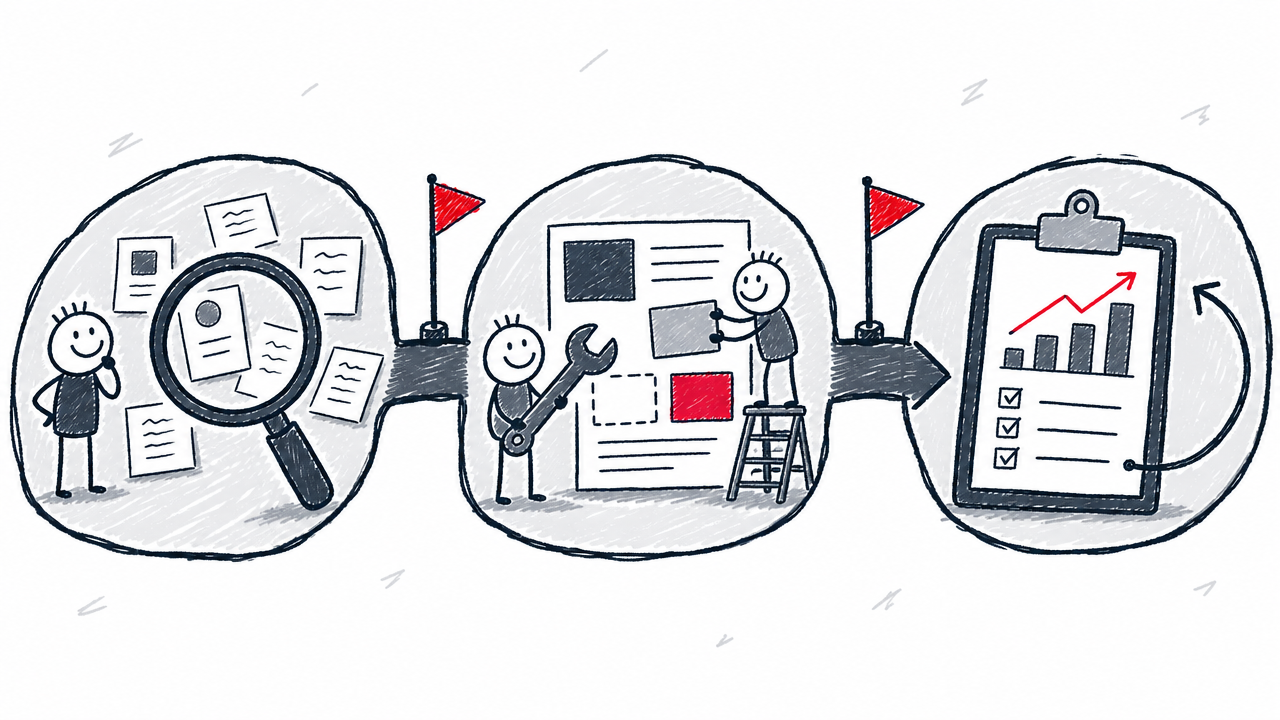
Days 1–14: Baseline and diagnosis
Define business outcomes, select priority customer journeys, build and run the prompt set, review the current SEO baseline, and classify each visibility gap. Use these categories: absent, mentioned but not cited, wrong URL cited, competitor owns the source, inaccurate answer, no page exists, or page is weak.
Exit criteria: Approved prompt library, defined competitors, baseline spreadsheet, top 10–20 actionable gaps with named owners.
The baseline must be specific enough that you can re-run it under comparable conditions in 60 days and know whether something changed.
Days 15–30: Fix the foundation and highest-value pages
Technical work: Confirm priority pages are indexable and snippet-eligible. Check robots.txt, CDN, and WAF controls without relying on folklore about universal AI crawler behavior. Verify rendering, internal links, structured data accuracy, canonicals, sitemaps, and mobile fundamentals.
Content work: Update the pages most closely connected to valuable prompts. Lead with the direct answer, use headings that describe the question being answered, and write each section so it reads clearly on its own. Name entities, support claims with sources, add limitations and authorship details, and remove outdated claims.
Exit criteria: Priority technical issues resolved or assigned, first batch of high-value pages updated, changes documented by page and hypothesis, re-test date scheduled.
Days 31–60: Cover intent gaps and build evidence
Create or improve only the pages tied to a documented gap. Confirm demand with keyword research and customer language. Pursue genuine external authority improvements: editorial coverage, expert contributions, corrected profiles, customer evidence.
Exit criteria: Every priority gap has a documented decision (update, create, earn external evidence, or leave alone), new pages live and internally linked, evidence sources recorded.
Days 61–90: Re-test, report, and operationalize
Re-run the original prompt set under comparable conditions. Compare mention rate, citation rate, source ownership, competitor presence, answer accuracy, organic clicks, conversions, and AI referral traffic. Do not claim causation from a single re-test. AI answers are variable, and platform behavior is not fully transparent.
By day 90, establish: a monthly prompt refresh process, a quarterly page refresh list, a scored backlog, a standard GEO-aware content brief template, a technical checklist for new pages, an escalation path for inaccurate AI descriptions, and a reporting format that separates visibility metrics from business outcomes. The quarter ends with a repeatable operating system, not a finished outcome.
What to stop doing when you start GEO
Adding GEO to your program means removing myths from your backlog as firmly as you add real work. These patterns waste resources and can actively harm your SEO foundation:
- Mass-producing pages for every AI-generated query variation. Google says there is no need to create content targeting every question variation (Google Search Central). One strong page that covers a topic thoroughly outperforms ten thin ones.
- Keyword-stuffing or forcing conversational phrases into awkward copy. Writing for AI answers means writing clearly, not inserting unnatural prompts.
- Assuming shorter "chunks" automatically perform better. Google documents no ideal page length. Write as long as the topic demands.
- Adding
llms.txtexpecting Google AI citations. Thellms.txtformat is a proposal with uneven adoption, not a ratified standard, crawler directive, or citation guarantee. Publish it if it serves your documentation workflow; do not treat it as a higher priority than crawlability, indexing, or content quality. - Adding schema that does not describe visible page content. Structured data must reflect what is actually on the page.
- Pursuing artificial or paid mentions as if they were earned authority. Google warns against this directly.
- Changing robots.txt or CDN rules using an unverified AI-crawler blocklist. Verify each crawler's identity and behavior before making access decisions.
- Measuring the program only through rankings or a single AI visibility score. Separate mentions from citations, citations from clicks, and clicks from revenue.
- Stopping conventional technical SEO. It remains the eligibility layer for everything that follows.
FAQ
What does GEO mean in SEO?
GEO stands for generative engine optimization: the practice of improving a website's visibility in AI-generated answers from platforms like Google AI Overviews, ChatGPT, Perplexity, Claude, and Gemini. It has nothing to do with geographic SEO or local search. For the full definition, see Generative Engine Optimization Explained.
Does GEO replace traditional SEO?
No. Google's generative search features are rooted in core Search ranking and quality systems (Google Search Central). Crawlability, indexing, relevance, helpful original content, and authoritative sourcing remain prerequisites. GEO adds prompt-based diagnosis, answer-quality editing, and cross-platform measurement on top of that foundation.
How long does it take to see GEO results?
Timing depends on indexing speed, platform retrieval cycles, content changes, external source coverage, query variability, and measurement quality. A 90-day plan is a practical operating cycle, not a guaranteed results window. Expect the first quarter to deliver a repeatable process and early directional data, not a finished outcome.
What is the difference between an AI mention and an AI citation?
A mention means the AI answer names your brand, product, or organization. A citation means the answer links to or identifies a specific page as a supporting source. A mention without a citation gives brand visibility but no measurable click path. Track both, but do not treat them as the same thing.