
Best AEO Tools 2026
Ranked list of the 8 best AEO tools for snippet tracking, structured-data validation, AI-citation monitoring, and question research, with stacks by team size.

Best answer engine optimization (AEO) tools 2026
Similarweb is the best overall answer engine optimization (AEO) tool for teams that need to track featured snippets, People Also Ask, AI Overviews, and AI citations in one platform. AEO means answer engine optimization: the practice of making your content easy to extract as direct answers across search and AI surfaces. The right tool depends on which answer-extraction job you need, and most sites should start with Google's free structured-data validators before buying a paid suite.
What are answer engine optimization tools, and why do categories matter?
Answer engine optimization (AEO) tools help you discover questions, structure content for extraction, check markup, and track whether your pages appear as answers in search features and AI responses. They are not a single product category.
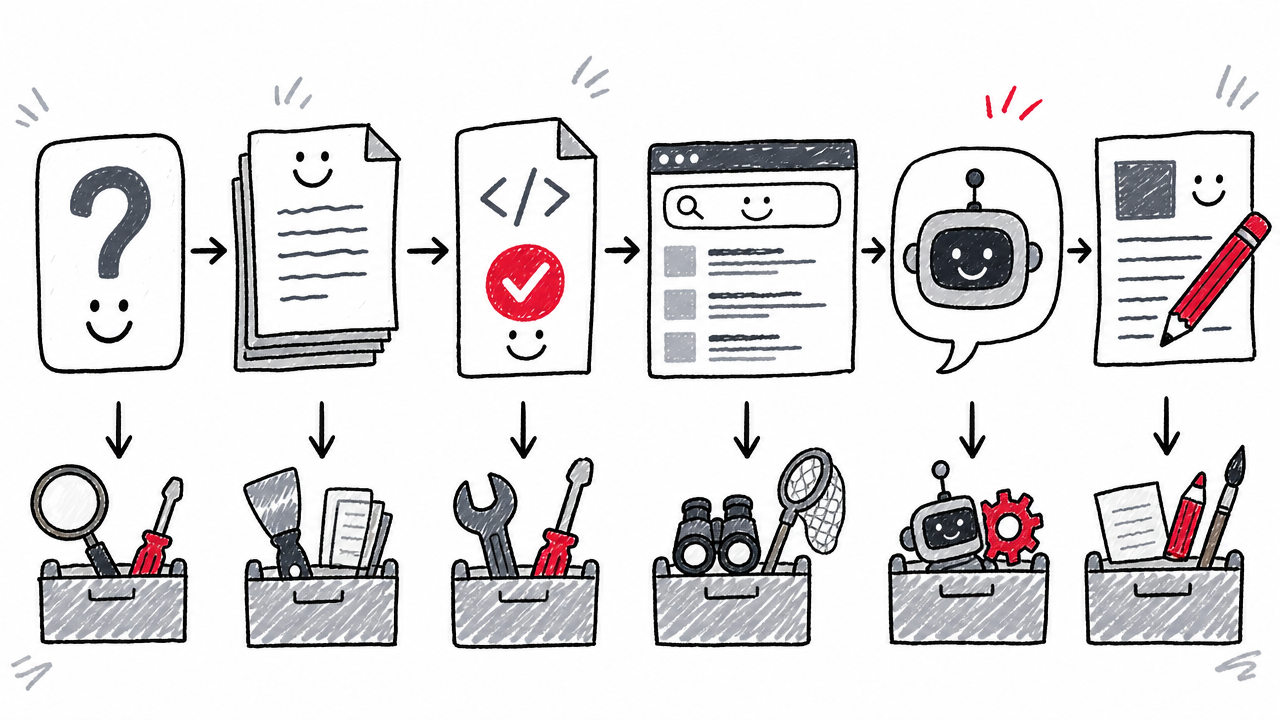
The answer-extraction workflow has at least six distinct jobs:
- Question discovery: finding real questions, PAA trees, and related intent.
- Content structure checking: reviewing headings, answer blocks, lists, and tables.
- Structured-data validation: testing JSON-LD and Schema.org markup.
- SERP answer tracking: watching featured snippets, PAA, AI Overviews, and AI Mode over time.
- AI-answer monitoring: measuring mentions, citations, cited pages, and competitor share of voice in ChatGPT, Gemini, Perplexity, and others.
- Content production: creating or updating answer-first pages.
This roundup focuses on the answer-extraction job. The companion GEO tools roundup covers broader generative-engine visibility and citation-monitoring platforms. For the full terminology map of AEO, GEO, LLM SEO, and AI SEO, see the AI Search Engine Optimization guide.
Google's position is that its generative AI features remain rooted in core Search ranking and quality systems. Conventional crawlability, useful content, and technical structure still matter.
Before reading on, know these measurement terms:
One key qualification: structured data, FAQ markup, and llms.txt are not magic citation levers. Google's AI optimization guide confirms no special schema is required for generative AI features. Google deprecated FAQ rich results in May 2026 and removed the documentation in June 2026. Do not buy a tool expecting these to shortcut your way into AI answers.
Selection criteria
Every tool in this roundup was judged against five criteria. Weight them based on your own needs:
- Answer-extraction coverage: Does the tool address question discovery, structured-data validation, or snippet/PAA/AI Overview tracking?
- Platform breadth: Which answer surfaces does it cover (Featured Snippets, PAA, AI Overviews, AI Mode, ChatGPT, Gemini, Perplexity, others)?
- Actionability: Does it give specific page-level recommendations, or only rolled-up scores?
- Cost and accessibility: Free tier, entry price, scalability to enterprise.
- Honest scope: Does it conflate monitoring with production, or keep them separate?
Pricing listed below was checked against official pages as of August 15, 2026. Refresh before acting on any price.
Quick comparison table
This table summarizes all eight entries in ranked order. Detailed sections follow.
The 8 best answer engine optimization (AEO) tools, ranked
Similarweb is the top choice because it connects the parts most readers mean by answer engine optimization: question and prompt analysis, Featured Snippet/PAA/AI Overview tracking, competitor gaps, and citation analysis in one product.
The important qualification: readers who only need to check structured data should skip paid platforms entirely. Google's free Rich Results Test and Schema Markup Validator handle that job better and at no cost.
Once you have chosen your stack, the AEO practical guide covers step-by-step implementation.
1. Similarweb AEO tools: best overall for answer-surface coverage
Similarweb earns the top spot because no other single platform bridges traditional SERP answer tracking and AI-citation monitoring as broadly.
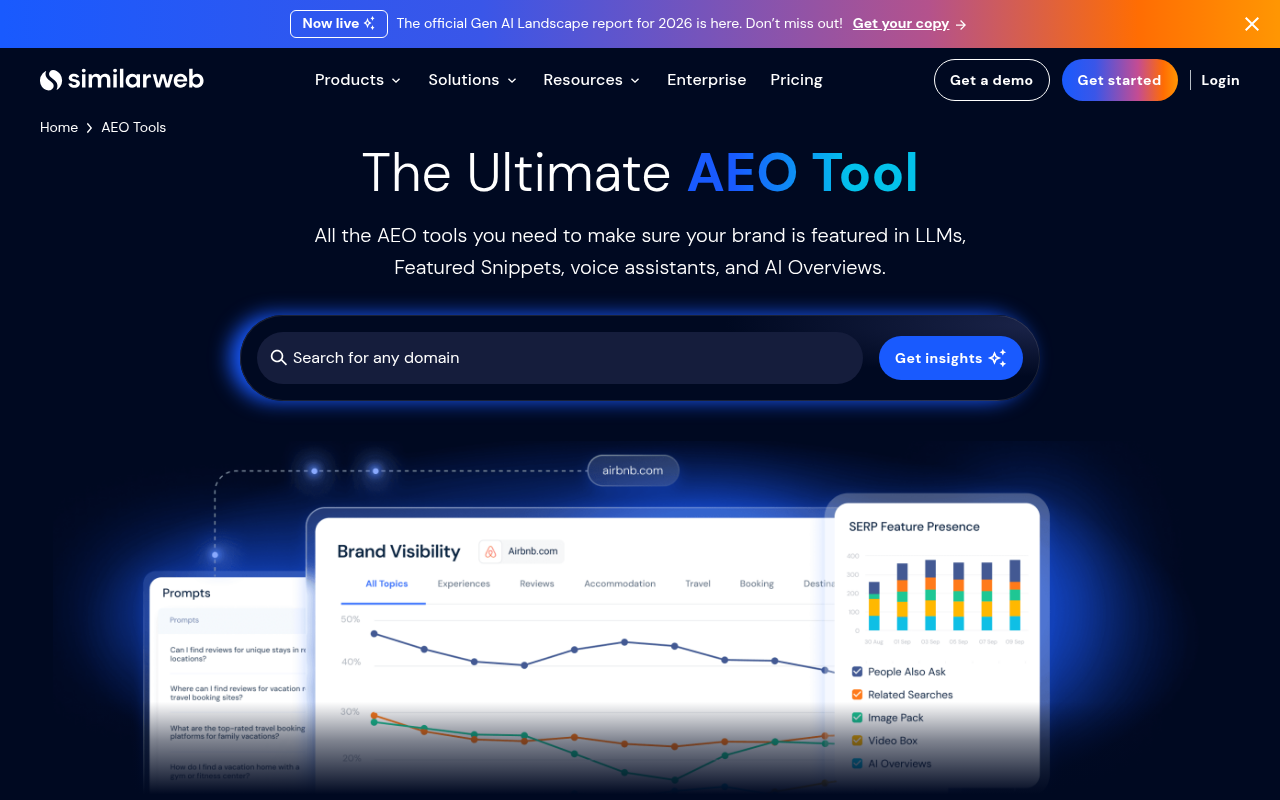
- What it is: A platform combining AI brand visibility and share of voice, prompt tracking, citation analysis (down to URLs and domains), Featured Snippet/PAA/AI Overview tracking through its rank-tracking and keyword-analysis products, and competitor keyword analysis for queries that trigger answer features.
- Who it's best for: Marketing and SEO teams that need a single dashboard spanning both Google answer surfaces and AI-platform citations.
- Standout trait: The broadest overlap between traditional SERP answer tracking and AI-citation monitoring in one product. You can see which competitors own featured snippets for your target queries and which domains are cited in AI answers for related prompts.
- Limitation: This is a broad platform, not a lightweight checker. Current pricing was not publicly listed on the reviewed page, so expect an enterprise-style sales conversation.
- Who should skip it: Solo publishers who only need schema validation or PAA research. You would be paying for capability you will not use.
Source: Similarweb AEO tools
2. Google Rich Results Test + Schema Markup Validator: best free structured-data stack
Every site doing AEO work should start here. These two free Google tools handle the structured-data validation job without cost or setup.
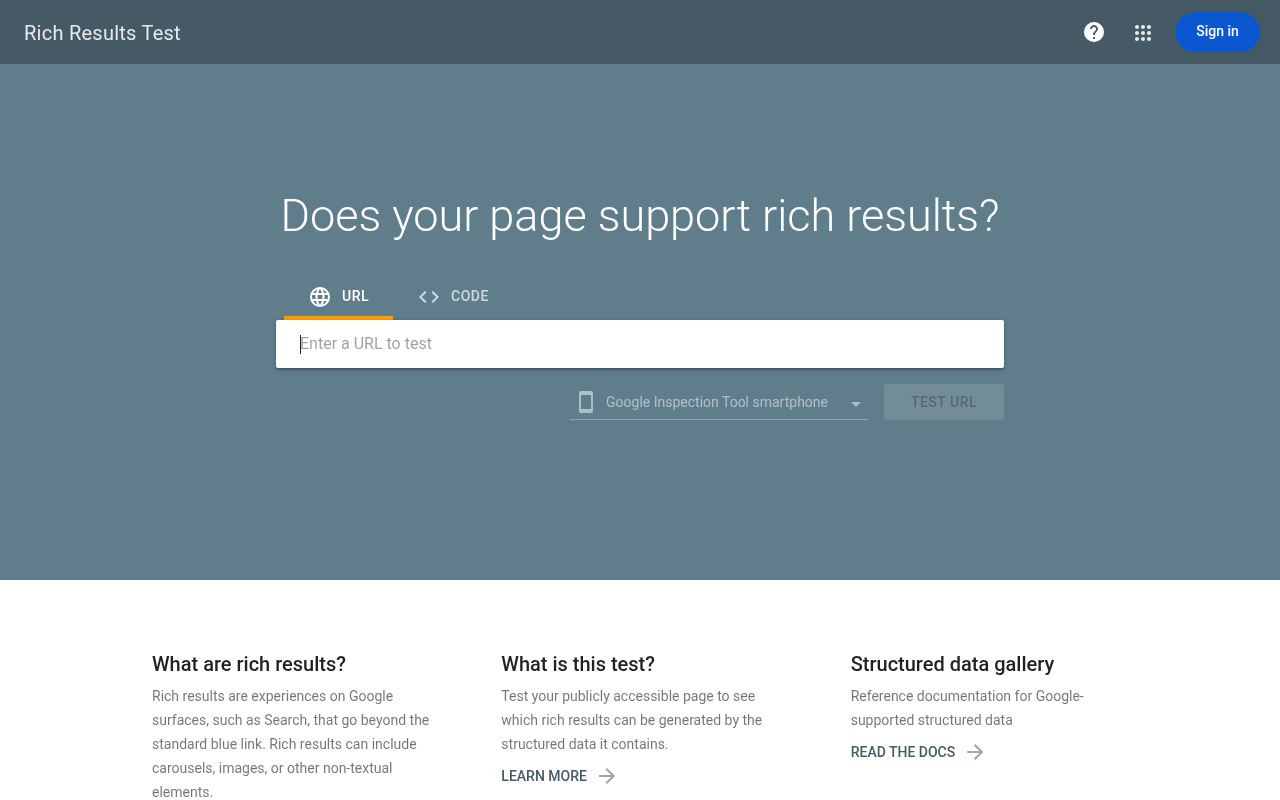
- What they are: Two complementary tools. The Rich Results Test checks which Google-supported rich results a page's markup may generate. The Schema Markup Validator checks generic Schema.org validity without Google-specific feature warnings.
- Who they're best for: Any site checking JSON-LD, HowTo, Article, or QAPage markup, or confirming whether existing markup is syntactically correct.
- Standout trait: Authoritative (they come from Google and Schema.org respectively), free, and require zero setup. Paste a URL or code snippet and get results right away.
- Limitation: They check markup only. They do not research questions, rewrite content, track AI citations, or watch featured snippets over time.
- Critical clarification: Valid markup does not guarantee a rich result or an AI citation. Google's AI optimization guide states no special schema is required for generative AI features. Google deprecated FAQ rich results in May 2026, so do not expect FAQPage markup to generate dropdown results in Google Search.
Sources: Google structured-data documentation, Rich Results Test, Schema Markup Validator
3. AlsoAsked: best for real question and PAA research
You cannot write answers if you do not know what questions people are asking. AlsoAsked is the best tool for that foundational research step.
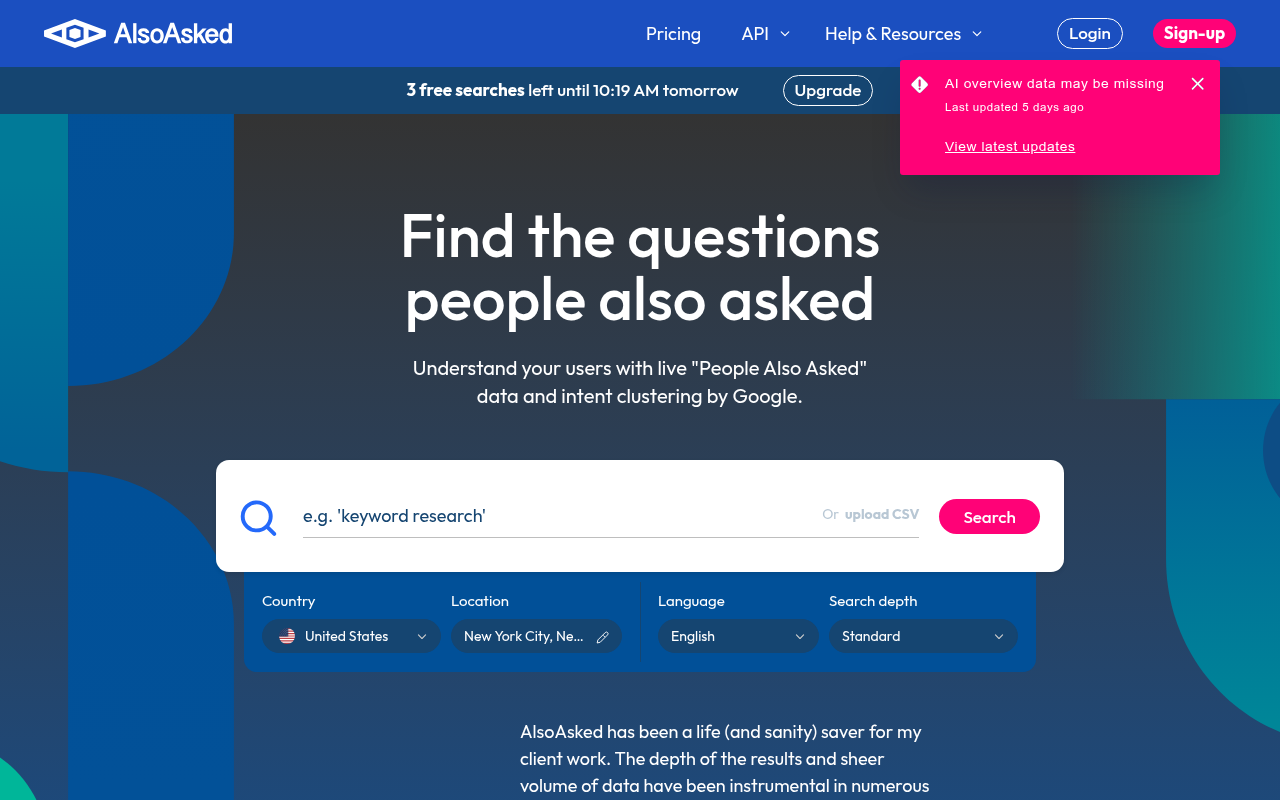
- What it is: A question-research tool that pulls live Google People Also Ask data, maps intent trees, supports country/city/language targeting, bulk search, deep search, CSV/PNG export, and API access.
- Who it's best for: Content strategists and writers who need to discover the questions searchers ask before creating answer-first pages.
- Standout trait: Direct PAA tree visualization with geographic granularity. You see branching question paths rather than flat keyword lists, which reveals the intent structure behind a topic.
- Limitation: Research tool only. It does not check structured data, track citations, or measure snippet ownership over time.
- Pricing (checked August 15, 2026): Basic $12/mo (100 credits), Lite $23/mo (300 credits), Pro $47/mo (1,000 credits).
Source: AlsoAsked, AlsoAsked pricing
4. HubSpot AEO: best for HubSpot users who need monitoring plus recommendations
If your team already lives in HubSpot, this add-on removes the friction of adopting a separate monitoring tool and gives you prescriptive next steps rather than raw data.
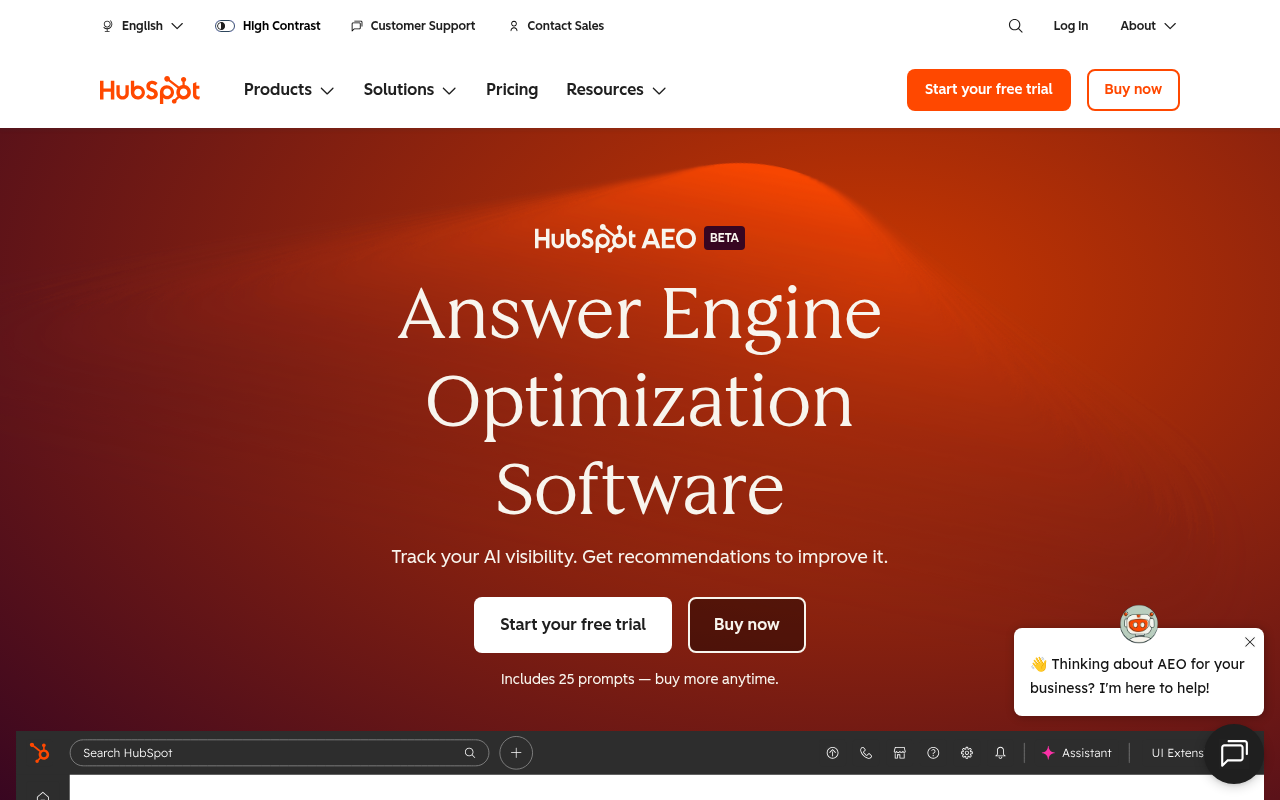
- What it is: An add-on product covering brand visibility scoring, competitor share of voice, prompt tracking, citation analysis, and prioritized AEO action recommendations across ChatGPT, Gemini, and Perplexity.
- Who it's best for: Teams already in the HubSpot ecosystem who want monitoring with prescriptive next steps embedded in their existing CRM/CMS workflow.
- Standout trait: The prioritized recommendation engine. Rather than dumping citation data on you, HubSpot surfaces suggested actions ranked by expected impact.
- Limitation: More focused on brand visibility and recommendations than on page-level answer extraction, structured-data work, or question research. It does not replace a schema validator or PAA research tool.
- Pricing (checked August 15, 2026): $50/mo ($45/mo annual), 25 prompts included.
Source: HubSpot AEO
5. Semrush AI Visibility: best for teams combining SEO audits and AI visibility
Semrush's strength is connecting its existing technical SEO audit engine to AI-answer eligibility. If you already run Semrush for site audits and keyword tracking, adding AI Visibility keeps everything in one platform.
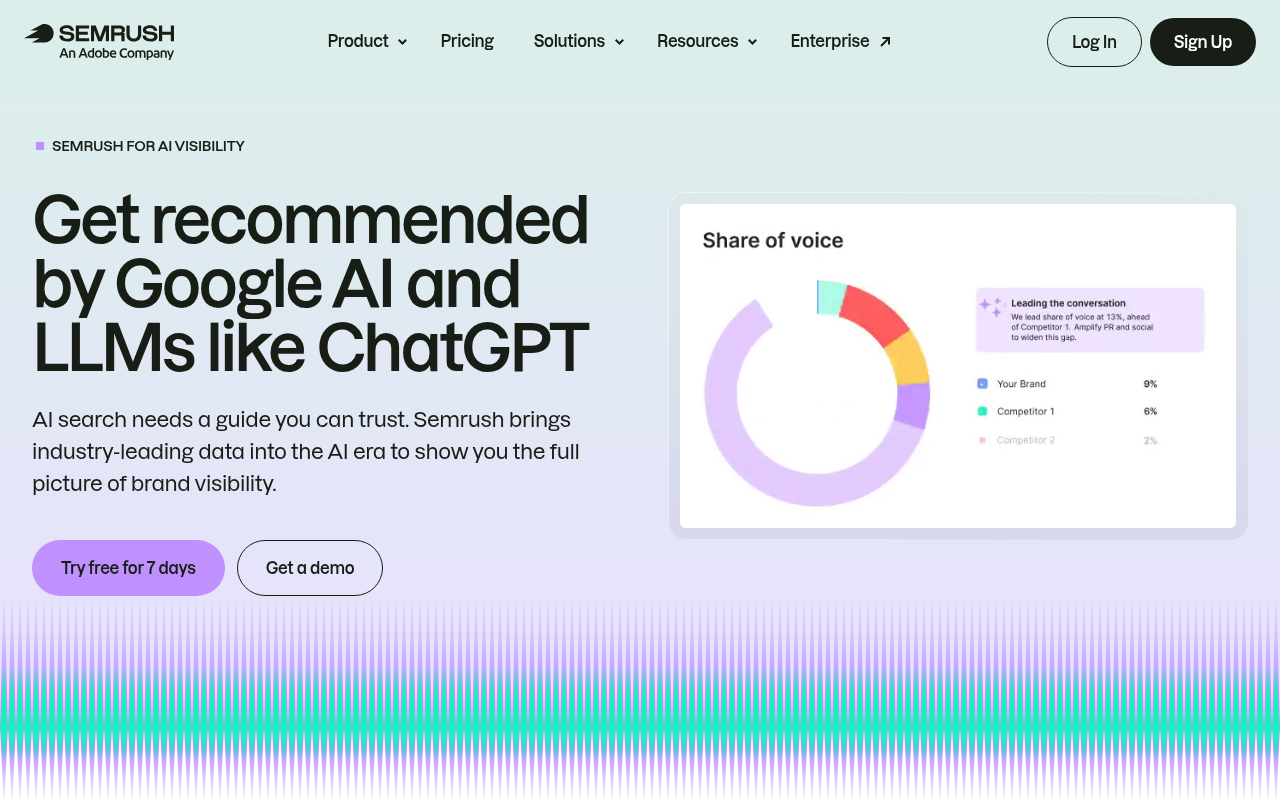
- What it is: An AI visibility module within Semrush covering mentions from ChatGPT, Google AI, Gemini, and Perplexity, plus 25 custom prompts tracked daily, AI competitor analysis, prompt research, and an AI-readiness site audit.
- Who it's best for: SEO teams that already use Semrush and want to add AI-answer tracking without switching platforms.
- Standout trait: The AI-readiness site audit connects technical SEO findings (crawlability issues, heading structure, indexing gaps) to answer-engine eligibility. No other tool in this list ties technical audit results directly to AI-visibility readiness.
- Limitation: A broader SEO/AI-visibility suite that may be excessive for a small site needing only schema validation or PAA research.
- Pricing (checked August 15, 2026): $99/mo per domain (annual billing); enterprise custom pricing available.
Source: Semrush AI Visibility, Semrush AI Visibility pricing
6. Ahrefs Brand Radar: best for large-scale citation and prompt discovery
Ahrefs Brand Radar covers the widest range of AI answer platforms and reports the largest prompt database, making it the strongest option for enterprise-scale citation benchmarking.
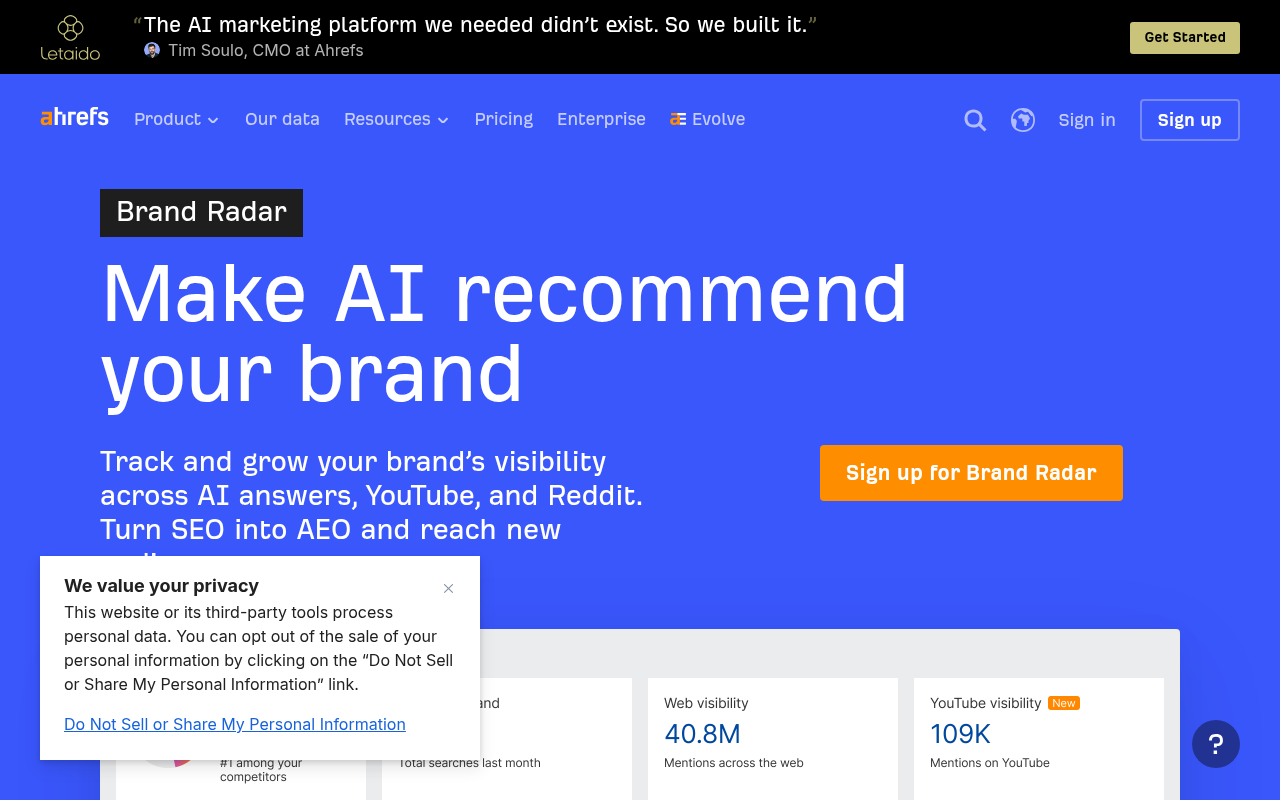
- What it is: An AI-visibility product covering AI Overviews, AI Mode, ChatGPT, Copilot, Gemini, Perplexity, and Grok. Ahrefs reports 466M+ monthly prompts in its database, using search-backed prompts rather than only synthetic queries.
- Who it's best for: Enterprise teams and agencies that need broad AI-citation benchmarking at scale across seven platforms.
- Standout trait: The large search-backed prompt database and breadth of platform coverage, including Grok, which most competitors do not track.
- Limitation: More relevant to broad AI visibility and generative engine optimization (GEO) than to FAQ markup, answer blocks, or page-level structure. The 466M figure is an Ahrefs-reported database claim, not a third-party verified measurement.
- Cross-reference: Covered in more depth in the GEO tools roundup because its scope aligns more closely with generative-engine monitoring than with answer-extraction work.
Source: Ahrefs Brand Radar
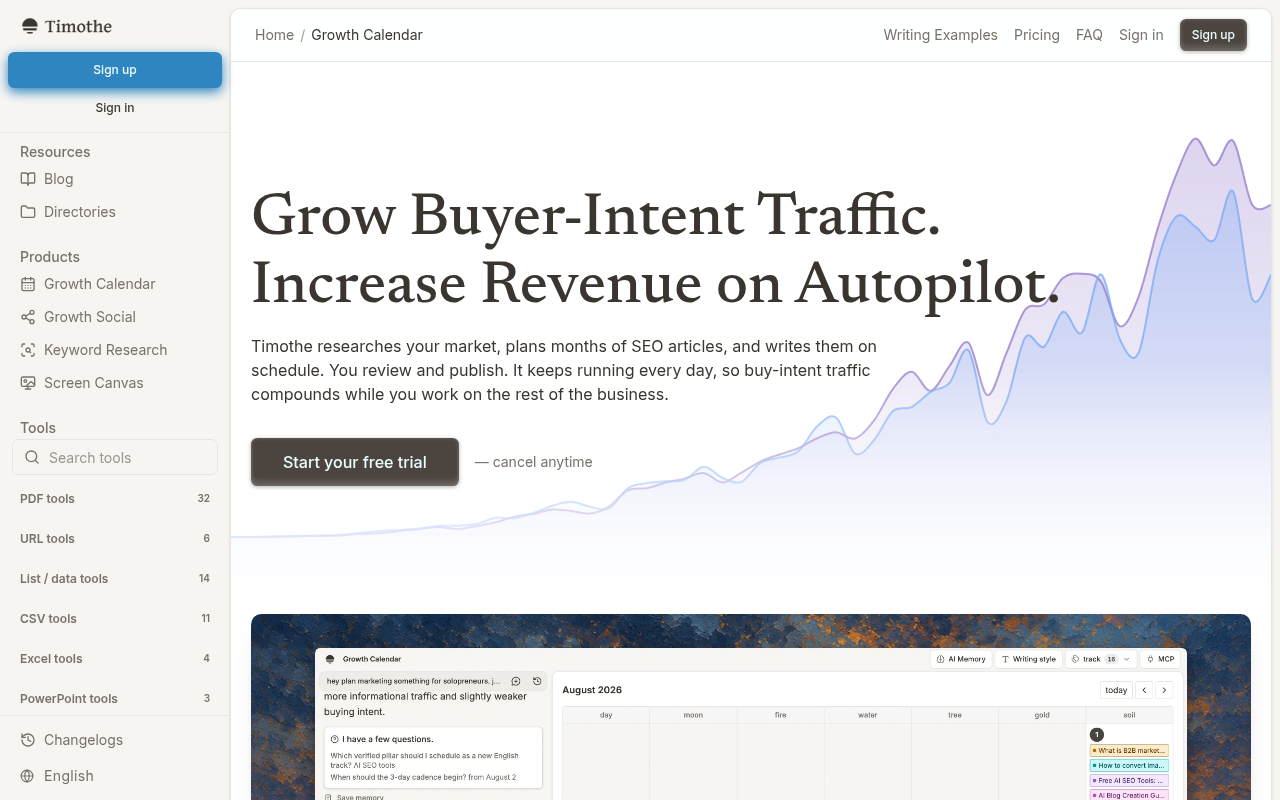
7. Timothe Growth Calendar: best content-production companion
Monitoring tells you where you are missing. Production tools help you fix it. Growth Calendar fills the content-creation gap that pure monitoring platforms leave open.
- What it is: A planning and production tool that researches markets, competitors, and keywords; plans topic clusters; performs live SERP research and deep research using primary sources; and produces articles with internal linking, direct-answer structures, source citations, and follow-up questions on a review-and-publish schedule.
- Who it's best for: Content teams that need to create or update answer-first pages efficiently rather than writing from scratch.
- Standout trait: Combines question research, answer structuring, and scheduled production in one workflow. The output includes direct-answer paragraphs, source citations, and follow-up questions, the structural patterns answer engines extract.
- Limitation: It researches and produces content. It does not track AI citations or replace a visibility tracker.
Source: Growth Calendar
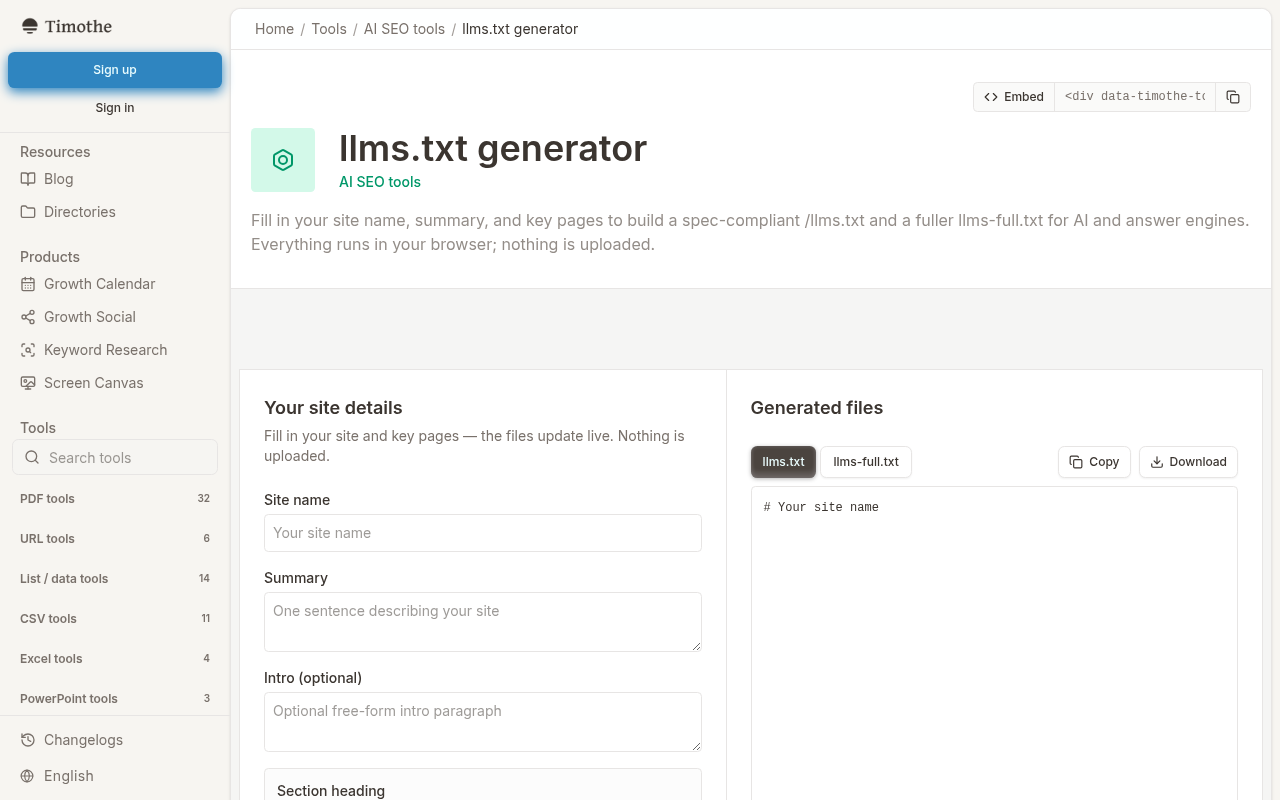
8. Timothe llms.txt generator: best quick llms.txt production option
If you have decided to publish a llms.txt file, this is the fastest way to create one without writing Markdown by hand.
- What it is: A free, browser-based tool that generates
llms.txtandllms-full.txtfiles from site details and key-page links. Inputs remain in the browser and are not uploaded. - Who it's best for: Anyone who wants to publish a
llms.txtfile quickly as part of their site's content architecture. - Standout trait: Fastest creation path. Zero cost. No data leaves your browser.
- Critical qualification:
llms.txtis a proposal with uneven adoption. It is not a ratified web standard, a crawler-control mechanism, or a reliable route to AI citations. Publish it if it serves your content architecture, but do not treat it as an AEO shortcut.
Source: llms.txt proposal, Timothe llms.txt generator
What not to buy (and common AEO tool mistakes)
The wrong tool wastes budget and creates false confidence. Avoid these mistakes:
- Do not buy an expensive AI-visibility platform solely to check FAQ markup or discover PAA questions. Google's free tools and AlsoAsked handle those jobs at a fraction of the cost.
- Do not assume a tool that tracks brand mentions also improves your content structure. Monitoring shows where you stand; it does not rewrite your headings or add answer blocks.
- Do not treat mention, citation, visibility score, and referral traffic as the same metric. A mention is not a link. A visibility score is not traffic. Define what you are measuring before you buy the tool.
- Do not expect FAQ schema to produce rich-result dropdowns in Google Search. Google deprecated FAQ rich results in May 2026.
- Do not assume
llms.txtwill trigger AI citations. It is a proposal with uneven platform adoption. - Do not compare outputs across tools as if they measure the same thing. Monitoring datasets differ: some tools use synthetic prompts, others use search-backed prompt databases, and others track Google SERP features. Their numbers are not interchangeable.
Recommended AEO tool stacks by team size
Small site or solo publisher
Start free. Use the Google Rich Results Test and Schema Markup Validator for structured-data checks. Use AlsoAsked (free credits or Basic at $12/mo) for question research. Check the Google Search Console generative AI performance report for impressions from AI Overviews and AI Mode. Run manual prompt checks in ChatGPT and Perplexity to see if your content appears. Total cost: $0–$12/mo.
Content team
AlsoAsked (Lite or Pro) for question research, plus the Google validation stack for markup, plus Growth Calendar for answer-first content production. Add Similarweb or Semrush when budget allows ongoing answer-surface tracking.
Marketing team
Choose one primary monitoring platform based on your existing stack:
- Similarweb if you need the broadest answer-surface coverage in one dashboard.
- HubSpot AEO if your team already operates in HubSpot and wants embedded recommendations.
- Semrush AI Visibility if you already run Semrush for technical audits and keyword tracking.
- Ahrefs Brand Radar if you need the largest prompt database and broadest platform coverage.
Pick based on which answer surfaces matter most to your business and whether your team needs prescriptive recommendations or raw data.
Enterprise
Judge based on: prompt coverage depth, cited-page granularity, data refresh frequency, API access, geographic and language support, multi-domain reporting, and export options. Do not choose based on a vendor's composite score alone.
For context on the scale of these surfaces: Google reports that AI Overviews serve more than 2.5 billion monthly active users and AI Mode has surpassed 1 billion monthly users (Google blog, June 2026).

How AEO tools measure visibility and citations
Understanding what each tool measures prevents you from comparing incompatible numbers. Four main approaches exist:
Prompt-based monitoring: Tools like HubSpot AEO, Semrush AI Visibility, and Ahrefs Brand Radar send queries to AI platforms and record the responses. Datasets vary enormously, from 25 custom prompts (Semrush's base plan) to Ahrefs' reported 466M+ monthly prompts. The size and composition of the prompt set determines what "visibility" means in that tool's reports.
SERP feature tracking: Tools like Similarweb detect Featured Snippets, PAA boxes, and AI Overviews in traditional SERP monitoring. This captures Google-specific answer surfaces but not ChatGPT or Perplexity.
Google Search Console: The generative AI performance report shows impressions from AI Overviews and AI Mode for your own site, with page, country, and device dimensions. This is Google-specific and free, but it only covers your own domains.
Referral traffic: Measured in your web analytics platform (not in the AEO tool itself). This tells you whether AI-answer appearances send visitors.
A "visibility score" from one tool is not comparable to a "share of voice" from another. Always ask: what is the denominator? How many prompts were tracked, on which platforms, and how often?
FAQ
Which AEO tool is best overall?
Similarweb covers the broadest range of answer-extraction jobs: snippet/PAA/AI Overview tracking, prompt analysis, and citation analysis in one platform. Teams that only need structured-data validation should use Google's free Rich Results Test and Schema Markup Validator instead.
What is the difference between AEO and GEO?
AEO (answer engine optimization) focuses on making content extractable as direct answers across featured snippets, PAA, AI Overviews, AI Mode, and AI assistants. GEO (generative engine optimization) is a broader term for visibility across all generative-engine experiences, including multi-step reasoning, conversational follow-ups, and multi-modal responses. The GEO tools roundup covers that wider scope.
Does structured data guarantee AI citations?
No. Google's AI optimization guide states there is no special schema required for generative AI features. Structured data helps search engines understand your content and enables supported rich results, but it does not guarantee display, citation, or inclusion in AI answers.
Does FAQ schema still produce rich results in Google Search?
No. Google deprecated FAQ rich results in May 2026 and removed the documentation in June 2026. Do not rely on FAQPage markup to generate dropdown results in Google Search.
What is the best free AEO tool?
The combination of Google Rich Results Test, Schema Markup Validator, and Google Search Console's generative AI performance report. Together they cover structured-data validation and Google-specific AI-feature impressions at no cost.
What is the difference between an AI mention and an AI citation?
A mention means your brand name appears in an AI-generated answer. A citation means the answer links to or names a specific source page or domain. A mention does not guarantee a link, and a citation does not guarantee referral traffic. Track both, but measure them separately.
Do I need llms.txt to appear in AI answers?
No. llms.txt is a proposal with uneven adoption, not a requirement. Publishing one may help AI agents find relevant content on your site, but it is not a ratified standard, a crawler directive, or a citation guarantee. Focus on crawlability, useful content, and technical structure first.
What should a small business's AEO tool stack look like?
Start with Google's free Rich Results Test and Schema Markup Validator for structured-data checks, AlsoAsked (free or $12/mo) for question research, and Google Search Console for AI Overview and AI Mode impressions. Add a paid monitoring platform only when you need ongoing citation tracking across AI assistants.
How often should I track answer-engine prompts?
Depends on your competitive intensity. For most teams, weekly checks catch meaningful shifts. High-volume sites in competitive markets may benefit from daily tracking (offered by Semrush and Ahrefs). Manual spot-checks in ChatGPT and Perplexity work for small sites with limited budgets.