
LLM SEO - Optimizing for ChatGPT, Claude, and Gemini
Learn what LLM SEO is, how ChatGPT, Claude, Gemini, and Perplexity retrieve and cite sources differently, and the priority order for optimizing your content for AI answers.

LLM SEO is the practice of improving the chance that your content is retrieved, understood, mentioned, or cited by large-language-model-powered search experiences: ChatGPT, Claude, Gemini, Perplexity, and the growing list of AI assistants people use to find information. It extends conventional SEO rather than replacing it, and each platform retrieves and cites sources differently. A useful market-terminology note: in the US, llm seo (880/mo) and llm optimization (720/mo) far outpace the abbreviation llmo (roughly 480–590/mo), though llmo is a much larger query in Japanese (DataForSEO, en-US, August 2026).
What is LLM SEO?
LLM SEO is an SEO discipline focused on visibility inside AI-generated answers. It covers two distinct paths: live web retrieval, where the assistant searches the internet during a conversation, and model-knowledge recall, where the assistant draws on patterns stored in its training weights. These are different visibility problems that require different thinking.
The field overlaps with generative engine optimization (GEO) and answer engine optimization (AEO), both of which describe related practices from slightly different angles. None of them replace traditional SEO. Google states that its generative AI features remain rooted in core Search ranking and quality systems.
A useful analogy: traditional SEO optimizes for a ranked list of blue links. LLM SEO optimizes for a synthesized answer that may blend information from several sources, may or may not cite those sources, and may or may not drive a click back to any website. The output differs, but the inputs (crawlable pages, useful content, clear structure, authoritative sourcing) remain the same.
LLM SEO, LLMO, GEO, and AEO: a terminology map
These labels describe overlapping territory, not separate disciplines.
Volume figures: DataForSEO, en-US, August 2026.
GEO (generative engine optimization) is defined and mapped in detail in our AI Search Engine Optimization: The Complete Guide, which owns the full terminology breakdown. AEO (answer engine optimization) predates the generative AI wave and originally described optimization for featured snippets and voice-assistant answers. Today it increasingly overlaps with GEO.
If someone says "LLMO," they mean the same thing as "LLM SEO." The abbreviation is useful shorthand but is not the dominant English-market term.
The difference between model knowledge and live retrieval
This distinction matters more than any single tactic.
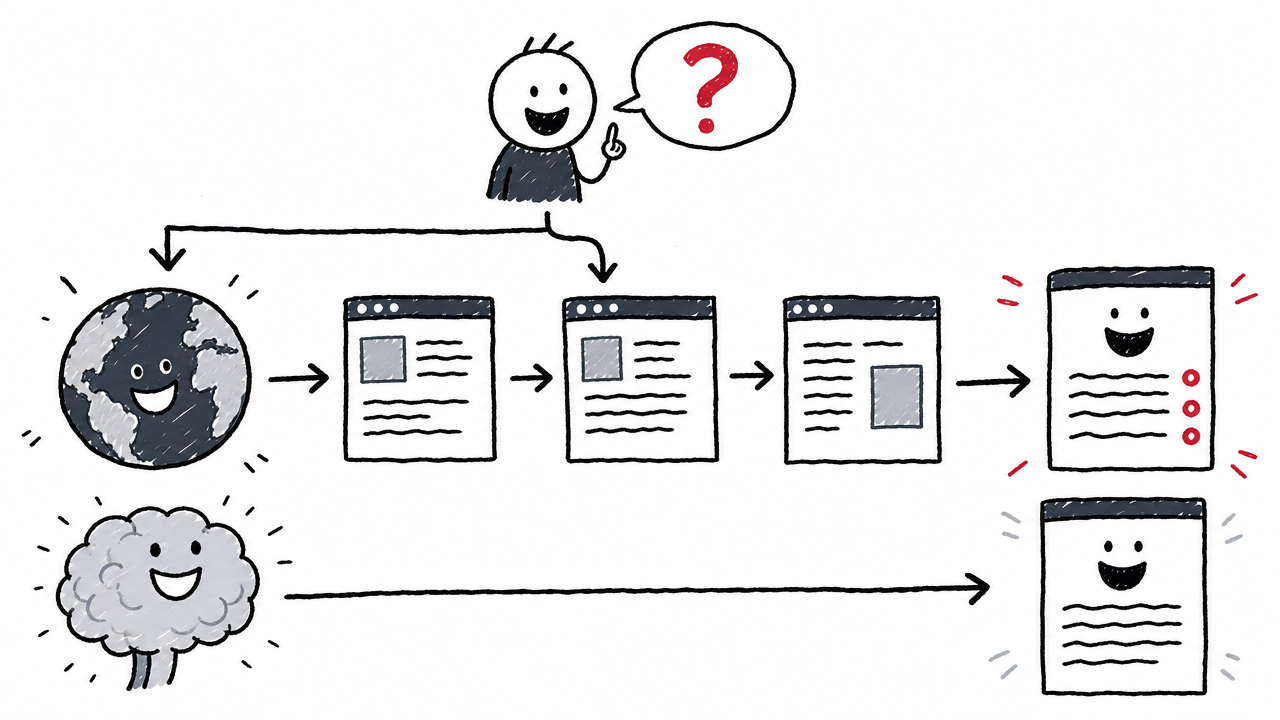
When an assistant's web search is off or not triggered, it answers from model knowledge: patterns encoded in weights during training on a past corpus. No page edit you make today changes that answer. Your visibility depends on whether your content appeared in training data and how prominently it was represented.
When web search is on, the assistant performs live retrieval, often through retrieval-augmented generation (RAG). It queries a search index, reads current pages, and synthesizes an answer that may cite sources. Here, crawlability, freshness, structure, and ranking signals directly matter, because the assistant selects from results returned by a live search.
The same prompt sent to the same assistant can follow either path depending on the user's settings, the platform's judgment about whether the query needs current information, and the tools available in that session.
What every LLM-powered assistant still needs from your site
Every LLM-powered assistant that retrieves the web depends on the same foundation that has driven SEO for decades:
- Crawlable, indexable pages. If a search engine or AI crawler cannot reach your content, it cannot be retrieved. Confirm that
robots.txtdoes not block the crawlers you want, that yoursitemap.xmlis current, and that pages are server-rendered or properly pre-rendered. - Clear site architecture and internal linking. A coherent structure helps both traditional crawlers and AI systems understand your site's topical coverage and the relationships between pages.
- Useful, original, non-commodity content. Google's AI optimization guide emphasizes "helpful content that's created for people" as the foundation of AI-feature visibility. Content that merely restates what exists elsewhere has little reason to be cited.
- Strong factual sourcing and entity consistency. Consistent use of brand names, product names, author names, and other entities across your site and third-party sources helps models correctly identify and associate information with your brand.
- Third-party brand mentions and references. LLMs weight information that appears across reputable sources. If your brand is discussed on industry sites, review platforms, news outlets, and authoritative directories, models have stronger signals to draw from.
- Current business, product, and pricing information. Outdated facts in AI answers damage trust. Keep factual details current so that retrieval-based answers reflect reality.
Schema markup (Schema.org structured data) helps machines parse content and is good practice, but no platform publicly documents it as a specific prerequisite for AI citation.
For planning content that supports these fundamentals, including cluster research, direct-answer structures, and source citations, tools like Growth Calendar handle the workflow from market research through scheduled publishing. (Growth Calendar is a content-planning and production tool, not an AI citation monitor.)
How each assistant retrieves and cites sources
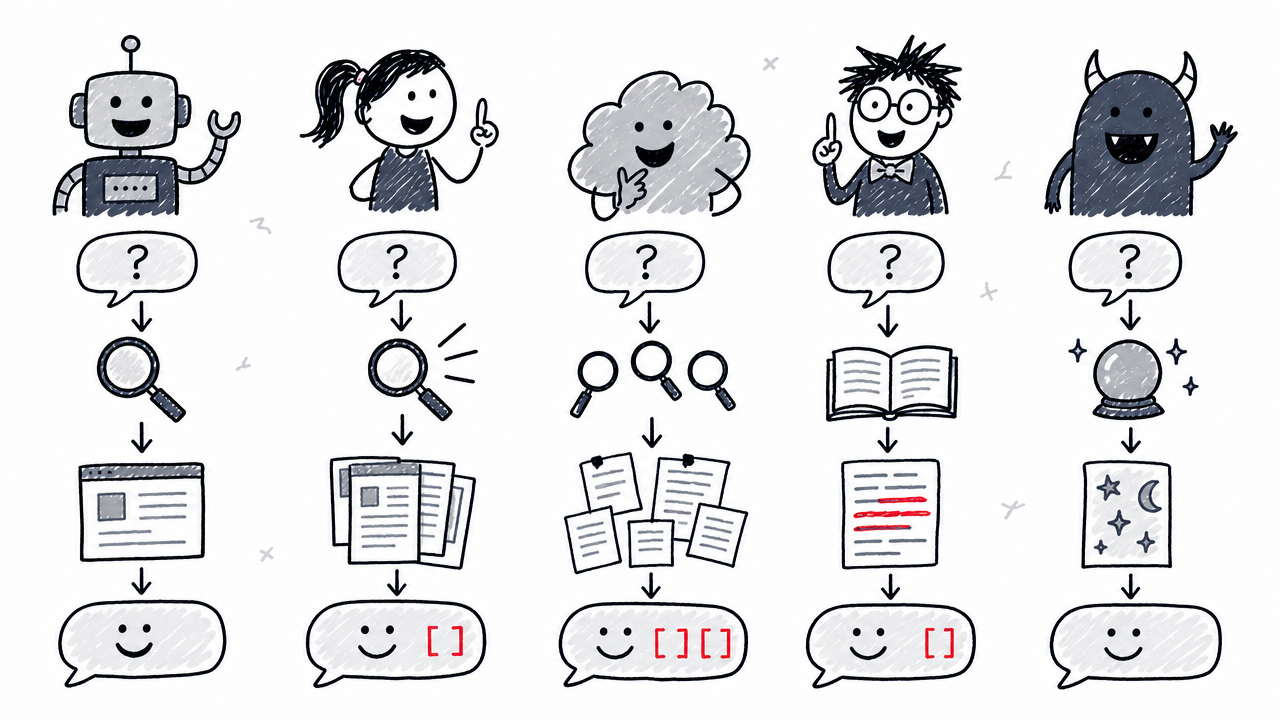
The same prompt can produce different answers, different citations, and different source selections across platforms. The comparison below organizes what each platform publicly documents, what practitioners can reasonably infer, and what remains unknown.
Comparison table: platform retrieval and citation at a glance
Evidence tier: "Documented" = stated in the platform's own public documentation. "Unknown" = not publicly disclosed.
ChatGPT
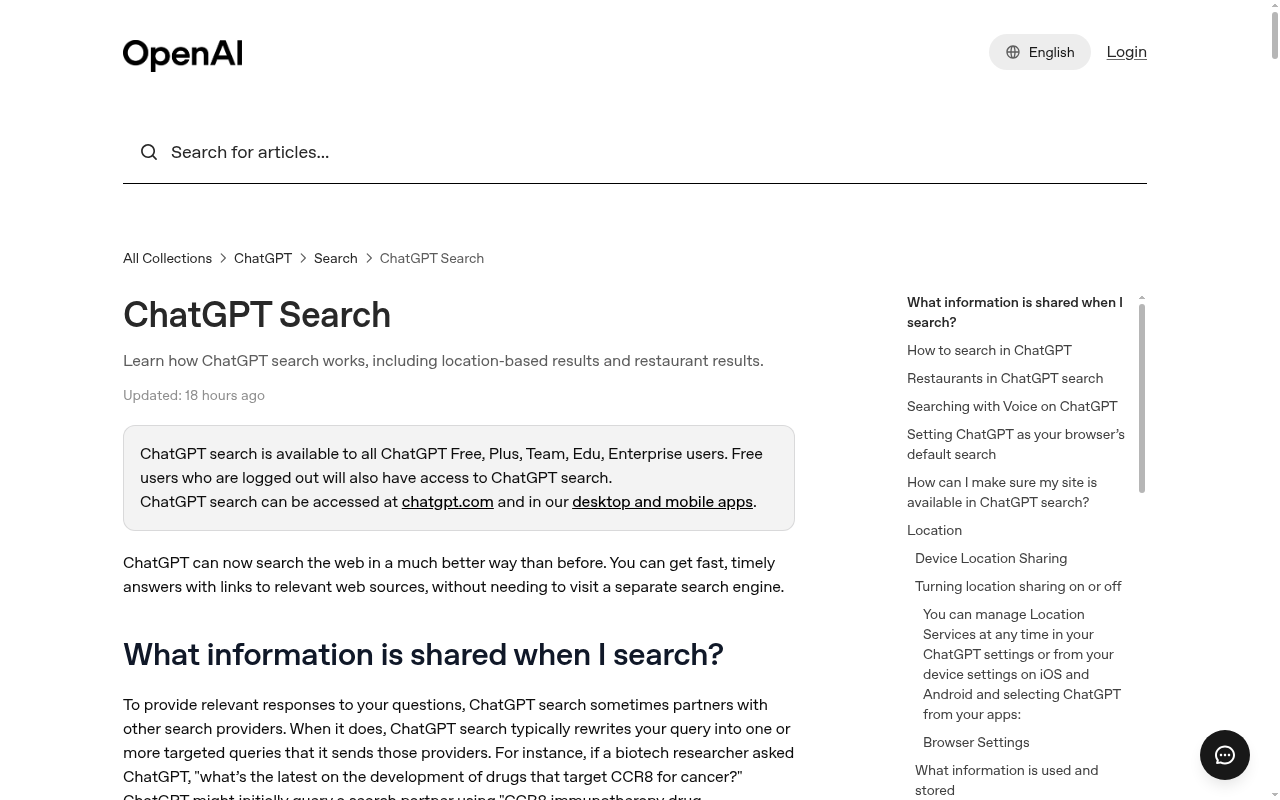
ChatGPT can automatically search the web when a question benefits from current information. According to OpenAI's help documentation, ChatGPT Search may rewrite a user's prompt into one or more targeted queries and send them to search providers. Search responses may include inline citations and a Sources panel listing the pages used.
Three crawlers, three purposes. OpenAI documents distinct crawlers with separate functions:
These are controlled independently through robots.txt. Blocking GPTBot does not block OAI-SearchBot, and vice versa. OpenAI states that robots.txt changes may take about 24 hours to take effect in its systems.
Without web search, ChatGPT answers from model knowledge, uploaded material, connected tools, or other data available in the session. The source path changes by session and configuration, so a user with search disabled receives answers drawn entirely from the model's training weights, not from any current page.
A common claim in the SEO industry is that "ranking in Bing means ranking in ChatGPT." This oversimplifies the reality. Bing may be involved in ChatGPT's search infrastructure, but OpenAI's documentation does not establish a simple, universal ranking equivalence. ChatGPT's query rewriting, source selection, and citation logic are separate processes that are not fully disclosed.
What is unknown: OpenAI does not publish a complete ranking or citation-selection formula for ChatGPT Search. No guaranteed content format, word count, or structural pattern ensures a citation.
Claude
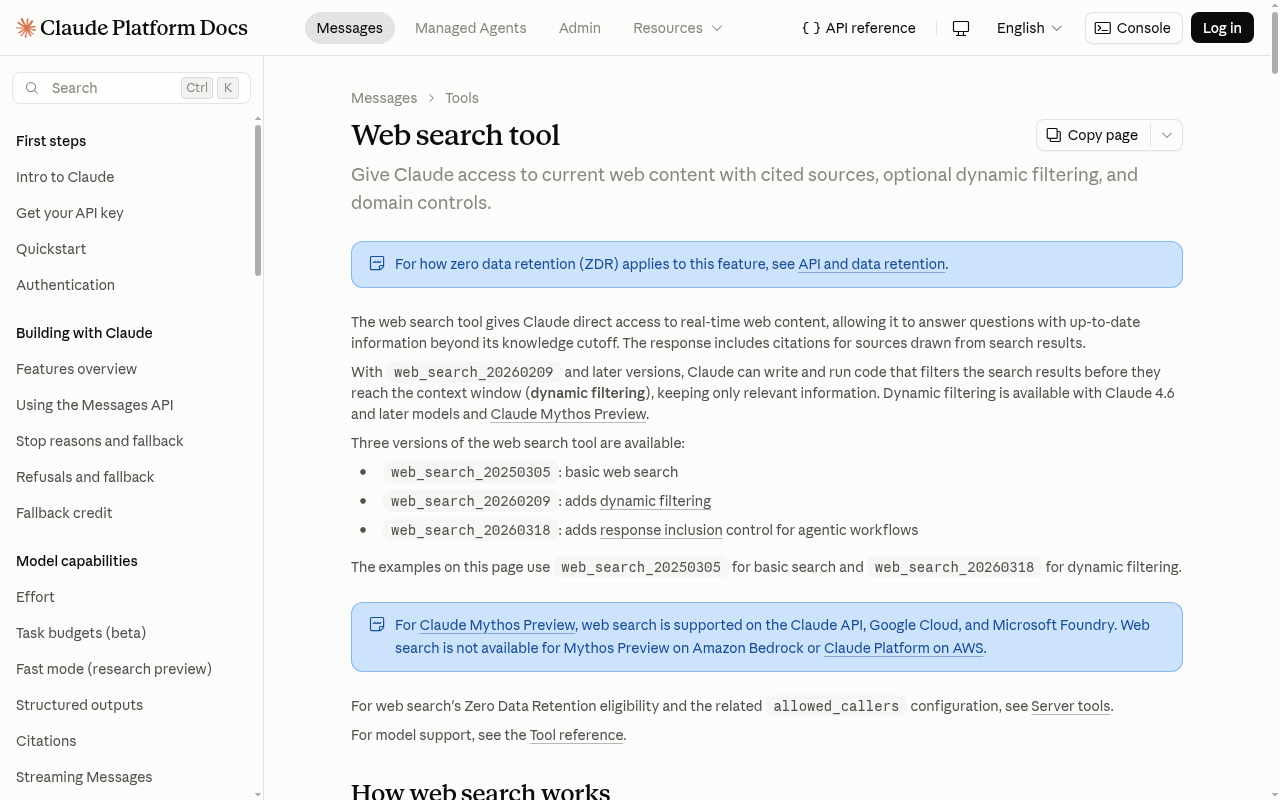
Claude Web Search retrieves current web content and provides citations with source links. According to Anthropic's support documentation, Claude may process several sources to answer a question and can also use Web Fetch when a user provides a direct URL.
The Claude API web search tool documentation provides more detail for developers: Claude determines when to search based on the prompt, may perform several searches within a single request, and returns cited sources in the final response. The API supports domain filtering (restricting or excluding specific domains) and localization parameters.
Cited sources appear as links within or alongside Claude's responses, often accompanied by relevant quotes. This format gives the user a direct path to verify the information.
Do not assume an undocumented search-provider relationship. Some industry commentary asserts that Claude uses a specific search backend, but Anthropic does not publicly confirm this in its documentation.
What is unknown: Anthropic does not disclose a complete web-search ranking formula or a guaranteed SEO tactic for earning a Claude citation. The factors that determine which sources Claude selects, how it ranks them, and what triggers a citation versus a passing mention are not publicly documented.
Are Gemini Apps and Google AI Overviews the same thing?
No. These are three related but distinct surfaces, and conflating them leads to incorrect optimization assumptions.
1. Gemini Apps are Google's conversational AI assistant (available at gemini.google.com and in mobile apps). According to Google's support page, Gemini Apps may provide sources and related links, but not every response includes them. Direct quotes of a large amount of text may trigger a source link. Sources can include public websites, uploaded files, or connected Google Workspace material. Gemini Deep Research uses Google Search as a source by default, performing extensive multi-step research across the web.
2. Google AI Overviews are a Google Search experience. When you search on Google and see a generated summary above the traditional results, that is an AI Overview. According to Google's AI features documentation, AI Overviews surface relevant links, and the underlying pages must be indexed and eligible to appear in Google Search with a snippet. Google states there are no extra technical needs specifically for AI Overviews. Query fan-out may issue several related searches behind the scenes to build a thorough answer.
3. Google AI Mode is an experimental Search experience that uses similar Google Search-based retrieval and generative capabilities. It shares the same foundational systems as AI Overviews.
The critical distinction: Gemini Apps are a standalone assistant that may or may not use Google Search for a given response. AI Overviews and AI Mode are Google Search products that always operate within Google's search and ranking systems. Optimization for AI Overviews follows directly from Google's existing SEO guidance: be indexed, be snippet-eligible, publish helpful content, and maintain technical quality.
What is unknown: Google does not publish a fixed formula for which individual pages are selected in every generated answer across any of these surfaces.
Perplexity
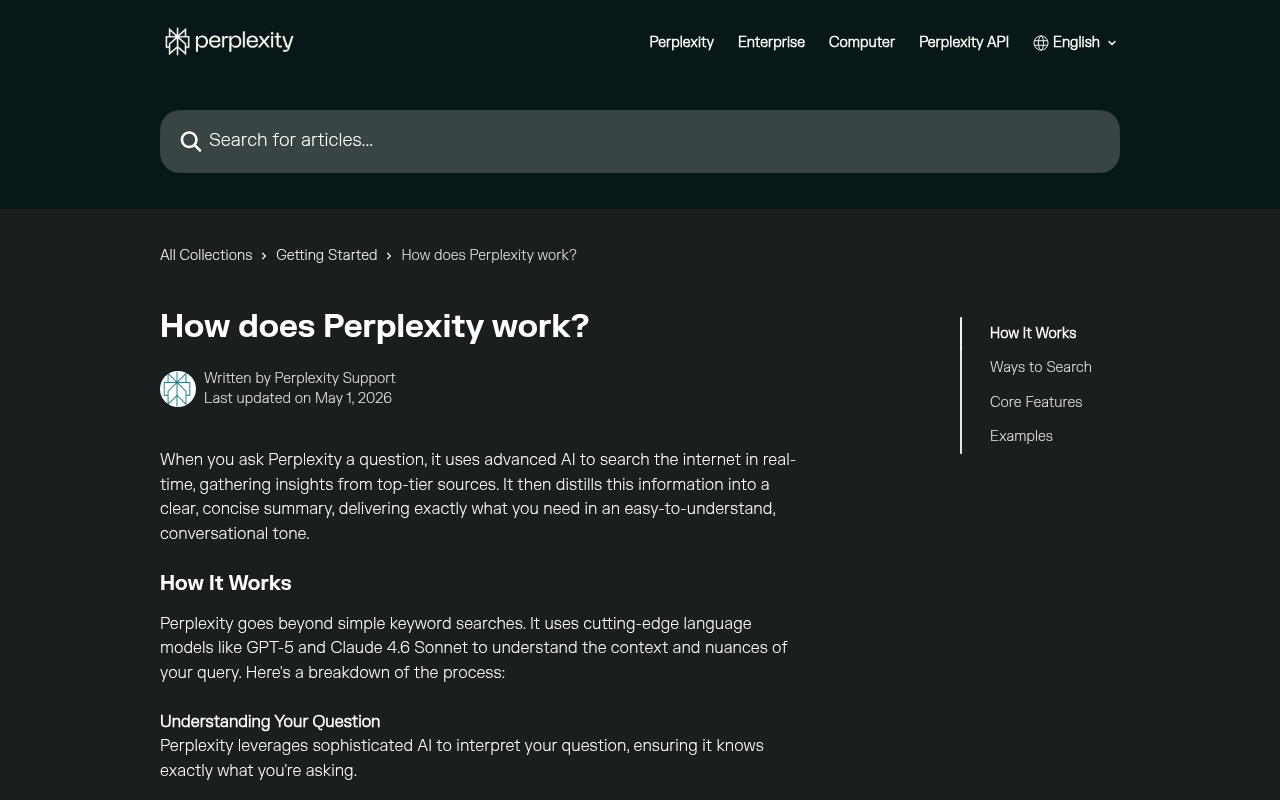
Perplexity is the clearest retrieval-first example in this comparison. According to its help documentation, Perplexity searches the internet in real time, synthesizes information from several sources (articles, websites, journals), and provides numbered citations linking directly to original sources.
Every answer is built from retrieved content, making the retrieval path transparent and the citation model explicit. Users can click any numbered citation to visit the original source.
Perplexity Pro Search and Research modes involve more extensive multi-source research, potentially following up with extra queries to build a more thorough answer. These are product features subject to change; avoid treating current capabilities or limits as permanent product facts.
What is unknown: Perplexity describes its user-facing workflow but does not disclose a complete source-ranking formula. How it selects which sources to cite, how it prioritizes among competing pages, and how its retrieval index is built are not publicly documented.
What no one can honestly promise about LLM SEO
This section names the limits of the field directly. Anyone selling LLM SEO as a precise, guaranteed system is overstating what the evidence supports.
No universal "LLM ranking position" exists. Unlike Google Search, where a page holds a measurable rank for a query, AI assistants do not expose a stable position number. The same prompt can produce different results depending on the model version, account settings, geographic region, personalization, enabled tools, conversation history, and product configuration.
A citation does not guarantee referral traffic. Being cited in an AI answer means a link to your page exists in the response. Whether the user clicks depends on how much the synthesized answer already satisfies their need.
A mention is not necessarily an endorsement. An AI assistant may name your brand in a negative context, a comparison, or a neutral list. Presence in an answer is not the same as a recommendation.
A page can be technically accessible and still not be selected. Meeting every crawlability and content-quality standard does not entitle a page to inclusion. Source selection is determined by opaque, undisclosed processes that differ by platform.
llms.txt is a proposal, not infrastructure. The llms.txt proposal describes a root-level Markdown file that curates a site overview and key links. It is not a ratified web standard, a crawler directive, or a citation guarantee. Adoption is uneven, and publishing one does not establish crawler support, inclusion, or citation by any specific platform.
AI visibility tools estimate from sampled prompts. No third-party tool has access to the complete private query universe of ChatGPT, Claude, Gemini, or Perplexity. Visibility measurements are always approximations based on sampled, repeatable prompts, not census data.
The Aggarwal et al. GEO research paper (arXiv 2311.09735), submitted in 2023 and revised in 2024, introduced generative engine optimization as a framework and reported visibility improvements of up to 40% in its experimental setting. Those results are experimental and domain-dependent, not evidence that a specific tactic will produce the same outcome on a current production platform.
How to measure LLM visibility
Start with definitions, because conflating these terms leads to meaningless reporting.
Recommended measurement approach:
- Track fixed, representative prompts across each relevant platform. Choose prompts that reflect real queries your audience would ask.
- Record separately for each prompt: brand mention (yes/no), citation (yes/no), cited URL, competitor presence, sentiment or description of how your brand is characterized, and referral traffic.
- Use Google Search Console for Google Search and AI-feature reporting. The Search Console Performance report can surface impressions and clicks from AI Overviews where available.
- Use analytics referral data as a partial signal. ChatGPT, Claude, and Perplexity referrals may appear in your analytics, but not every platform sends identifiable referrer headers.
- Report exact conditions. Every measurement should record the platform, mode, prompt text, date, region, and account conditions. A result from Claude with Web Search enabled is not comparable to one with Web Search off.
Separate production tools (content planning, writing, keyword research) from monitoring tools (AI citation tracking). A content-planning tool like Growth Calendar helps you build content structured for direct answers and source citations, but it does not track whether an AI assistant cites your pages. Those are different tool categories.
Verdict: the priority order for LLM SEO
LLM SEO is conventional SEO plus platform-aware source accessibility, entity clarity, original information, and disciplined measurement. Every retrieval-based AI answer depends on the same foundation. The priority order:
- Make the site crawlable, indexable, useful, and technically sound. This foundation supports every retrieval-based AI answer.
- Publish original, well-structured, well-sourced information. Content that adds something new (original data, expert analysis, practical examples) has a reason to be selected over commodity rewrites.
- Build consistent brand and entity references beyond your own website. Third-party mentions on reputable sites strengthen the signal that models use to associate your brand with a topic.
- Understand the retrieval paths of the assistants that matter to your audience. ChatGPT, Claude, Gemini, and Perplexity do not work the same way. Know which crawlers to allow, which surfaces your audience uses, and which mode of retrieval applies.
- Measure sampled visibility without treating it as a stable ranking position. Track, report, and learn, but do not mistake a snapshot for a permanent result.
The strongest strategy is platform-aware SEO: doing the foundational work well while understanding how each assistant finds, evaluates, and cites sources. Abandoning SEO for speculative chatbot tricks is a gamble against undisclosed, rapidly changing systems.
For step-by-step execution on ChatGPT and other assistants specifically, the upcoming article How to Rank in ChatGPT and Other AI Answer Engines will cover the tactical playbook in detail.
FAQ
Does traditional SEO still matter for ChatGPT and other AI search tools?
Yes. Every LLM-powered assistant that retrieves the web depends on crawlable, indexed pages with clear structure and useful content. Google states that its AI features are rooted in core Search ranking systems. OpenAI's ChatGPT Search relies on web retrieval infrastructure that requires pages to be accessible to crawlers.
What is the difference between a mention, a citation, and a referral?
A mention is when a brand or site name appears in generated text. A citation is when the answer links to or attributes a specific source. A referral is when a user clicks through from the AI product to the website. They are not interchangeable, and measuring only one gives an incomplete picture.
Does llms.txt improve LLM SEO?
llms.txt is a community proposal for a Markdown file that describes a site's key content. It is not a ratified standard, a crawler directive, or a guaranteed citation lever. Publishing one may help your content architecture and give AI agents a curated overview, but do not treat it as required infrastructure or a reliable route to citations.
Why do ChatGPT, Claude, Gemini, and Perplexity return different answers for the same question?
Each platform uses different models, retrieval backends, search providers, citation logic, personalization settings, and product configurations. No shared ranking system connects them. The same query may trigger web search on one platform, model-knowledge recall on another, and a blended approach on a third.
Is LLMO a common term in English?
Not especially. In the US market, llmo registers roughly 480–590 monthly searches compared to 880 for llm seo and 720 for llm optimization (DataForSEO, en-US, August 2026). The same abbreviation has much higher search volume in Japanese, where it appears to be the dominant term for the concept.