
AI SEO Agencies and Services - What They Do and What to Pay
Learn what AI SEO agencies actually do, what to pay across four budget tiers, which proposal red flags to walk away from, and when to start in-house instead.

An AI SEO agency should improve both conventional search visibility and visibility in generative search experiences: Google AI Overviews, AI Mode, ChatGPT Search, Perplexity, and others. AI SEO supplements SEO. It does not replace crawlability, indexing, relevance, authority, or useful content. A premium is justified only when the provider brings a documented, repeatable system for measuring both. Do not pay extra for repackaged SEO with new labels.
The market for these services is growing fast (DataForSEO reports roughly 1,300 monthly US searches each for "ai seo agency" and "ai seo services" as of August 2026), but so is the noise. This guide breaks down what the work involves, what a worthwhile proposal looks like, what you should pay, and which proposals to reject on sight.
What an AI SEO agency does
The work splits into two categories that most agency pitches blur together. Keeping them separate is the fastest way to judge a proposal.
Production work
Production is where most of the labor and budget should go. It includes everything that makes a site technically sound, topically authoritative, and useful enough to be retrieved and cited:
- Conventional SEO foundation: crawlability, indexing, technical fixes, internal linking, structured data (Schema.org markup such as Organization, Article, FAQPage, and Product schema where relevant), and page experience.
- AI-search content and information architecture: answer-focused formatting, entity consistency across the site and third-party profiles, topical authority built through comprehensive coverage, authoritative sourcing, and digital PR that earns real mentions from credible publications.
A critical point many agencies gloss over: Google's own AI optimization guide confirms there are no extra technical requirements for AI Overviews or AI Mode beyond standard SEO fundamentals. Google's AI features documentation reinforces that AI Overviews surface relevant links from the web using the same foundational ranking and quality systems. Any agency selling "secret AI ranking factors" is selling fiction.
Monitoring and measurement work
This is the genuinely new layer AI SEO adds. It requires its own tools and processes:
- Prompt-set design: a documented collection of queries real buyers type into AI assistants, tested across platforms.
- Platform coverage: Google AI Overviews, ChatGPT Search, Perplexity, Gemini, Claude, Microsoft Copilot, and any other assistants relevant to the client's market.
- Citation verification: confirming whether the brand is linked/sourced (a citation) or merely named (a mention).
- Competitor benchmarking and referral/conversion analysis.
A content-production tool is not an AI citation-monitoring system. These are separate functions that require separate tools or processes. If an agency lists "AI monitoring" but uses only a content calendar, the monitoring is not happening.
For a complete map of how these terms and practices relate, see our guide to AI search engine optimization.
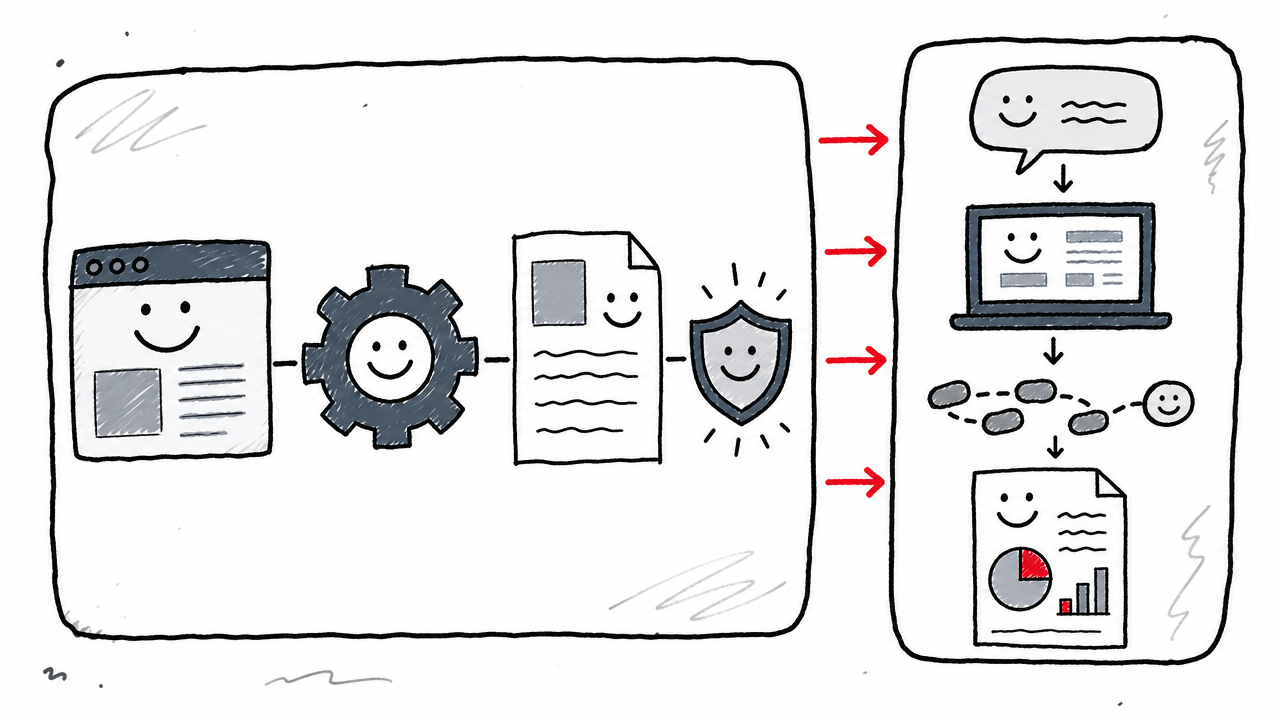
What should AI SEO services include?
A worthwhile proposal covers these deliverables in priority order. Skip the agency that jumps to "AI visibility dashboards" before fixing the foundation.
Baseline audit and buyer-prompt mapping
Everything starts here. The agency should deliver a technical audit, content audit, and entity/authority review. Alongside that: buyer-prompt research identifying the questions prospects type into AI assistants. The output is a documented prompt set with platforms, locations, and dates, establishing the baseline against which all future work is measured.
Technical and content work
Fixes shipped. Pages published. Schema deployed. Internal links restructured. Content must be original, editorially reviewed, and useful. AI-generated drafts alone are not a deliverable; they are a starting point that requires editorial judgment, subject-matter accuracy, and a human publishing decision.
Third-party authority
Digital PR, earned mentions, and source-worthy placements in publications that AI systems retrieve. Not link farms. Not paid directories dressed up as editorial. The goal is making the brand a credible, citable source.
Ongoing monitoring, reporting, and iteration
Recurring prompt testing, citation vs. mention tracking, Search Console and analytics reporting, business-outcome attribution, and a clear next-action plan each cycle. Without this loop, the engagement is a project, not a service.
How to tell substance from theater
Before using the scorecard below, know what the terms mean:
- Citation: the AI platform links to or identifies a source URL in its answer.
- Mention: the brand appears in an answer but is not linked or sourced.
- Visibility: the brand appears in a defined set of test prompts, whether cited or mentioned.
- Referral traffic: sessions from an AI platform.
- Share of answer / citation rate: meaningless unless prompt set, platforms, date range, and counting method are disclosed.
Print this table. Bring it to the pitch meeting.
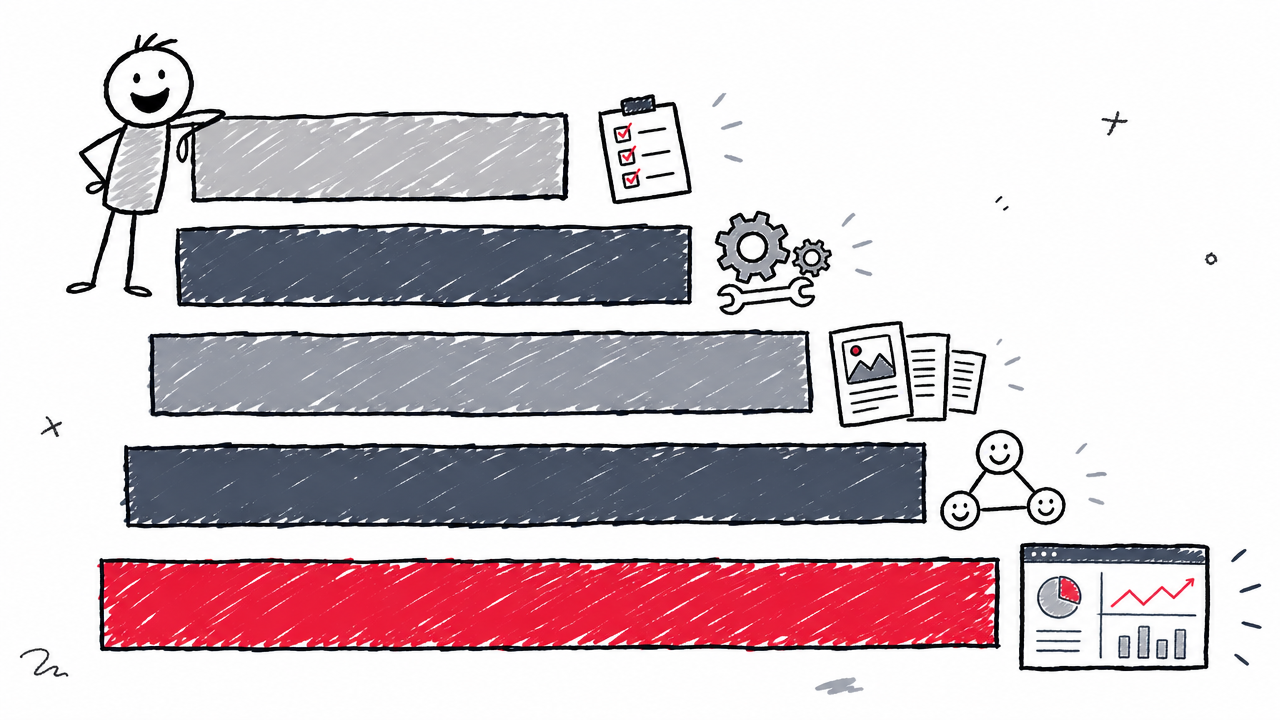
How much do AI SEO services cost?
No standard rate card exists. The ranges below are budgeting bands synthesized from provider-reported data (Stackmatix, Authoricy, Clutch), not universal market rates. For a conventional SEO comparison: Clutch reports typical agency fees of $2,000–$20,000/month, and an Ahrefs survey via OuterBox puts the average SEO retainer at roughly $3,209/month.
The critical takeaway: a $3,000/month proposal with no work shipped or monitoring can be worse value than a $6,000/month proposal with narrower but fully executed scope. Price is not a proxy for quality. Scope and evidence are.
Proposal patterns to walk away from
These are not hypothetical. They show up in real pitches, and they should end the conversation.
"We guarantee inclusion in ChatGPT, Google AI Overviews, or Perplexity." No agency controls those systems. Google advises rejecting providers that guarantee rankings. The same logic applies to AI answers.
"We use a proprietary AI algorithm" with no explanation of inputs, outputs, or validation. Proprietary does not mean credible.
A fixed number of AI-written articles as the main deliverable. Volume is not authority. Unedited, undifferentiated AI content is the definition of scaled content abuse.
Reports that count mentions but never distinguish mentions from citations. If everything is a "citation," nothing is measured.
No baseline prompt set. Without a starting point, improvement cannot be measured. Period.
Claims that Google requires
llms.txt, special "AI schema," or mandatory content chunking. Google's AI optimization guide does not support those claims.llms.txtis a proposal with uneven adoption, not a ratified standard or a ranking factor.An "AI SEO surcharge" for routine technical SEO work. Ask exactly what new work the surcharge funds. Fixing broken canonical tags is not AI optimization.
Platform-by-platform fees with no extra testing or reporting detail. Charging separately for "Perplexity optimization" and "ChatGPT optimization" requires demonstrably different work.
Case studies showing only percentage gains with no absolute numbers, timeframe, baseline, or actions taken.
A 12-month lock-in contract before any audit or baseline is completed. You should see a baseline before committing long-term.
The agency owns the dashboards, content, prompt data, or tracking history instead of the client. Your data is your data.
Is AI SEO different from traditional SEO?
The conventional SEO foundation (crawlability, indexing, relevance, authority, useful content) still accounts for most of the work. What changes is the retrieval and presentation layer: retrieval-augmented generation, query fan-out, source synthesis, citation mechanics, and multi-platform answer visibility add new measurement and content-architecture demands.
AI SEO extends SEO. It does not replace it. Any agency that claims otherwise is selling relabeled fundamentals or misreading the field.
The market uses several overlapping terms: generative engine optimization (GEO) emphasizes optimization for generative AI answer experiences, answer engine optimization (AEO) focuses on direct-answer retrieval, and LLM SEO describes optimization for large language model outputs. They describe the same emerging discipline from different angles.
<!-- If you are looking at a provider that focuses only on generative engine optimization rather than broader AI SEO, the buying decision is different. Our guide to GEO agencies and services covers that distinction in detail. -->
Can you do AI SEO in-house?
Yes, if three conditions hold: you have the budget discipline to avoid overspending on an unproven agency, the internal capacity to execute consistently, and the willingness to learn measurement as you go. Many businesses, especially those with small-to-medium sites and a competent marketing team, are better served starting in-house.
When in-house makes sense
- Budget: The agency quote exceeds what the business can justify before proving fit. Starting in-house lets you build a baseline and judge agencies from knowledge rather than guesswork.
- Internal capacity: A marketer, editor, SEO practitioner, or subject-matter expert can own decisions and quality control.
- Publishing frequency: The team can sustain a consistent cadence. Sporadic publishing undermines topical authority regardless of who does the writing.
- Technical access: Developers or site owners can ship fixes directly.
- Measurement: The team can maintain a prompt set and manually inspect AI answers, or add a separate monitoring tool when the budget allows.
An in-house stack that covers research through publishing
Three tools cover the research-to-publish pipeline:
- Growth Calendar: Market and competitor research, keyword research, SEO article cluster planning, and scheduled content production with internal linking, direct-answer structures, and source citations built in. Starter plan at $29/month, Pro plan at $59/month (verify current pricing on the page). Growth Calendar does not track AI citations.
- Keyword Research: Free tool returning estimated search volume, CPC, competition, trends, related keywords, and organic Google results from a seed keyword.
- llms.txt generator: Free, browser-based generator for
llms.txtandllms-full.txtfiles. Inputs stay in the browser and are not uploaded.
The limitation is plain: this stack supports research, planning, production, and content organization. A business that needs recurring cross-platform AI citation measurement must add a separate monitoring process or tool.
What should an AI SEO agency report?
Four reporting layers separate a real engagement from a monthly invoice with a PDF attached.
Work completed: Pages audited, technical issues fixed, content published, internal links added, schema deployed, third-party placements earned with links and context.
Search performance: Impressions, clicks, CTR, and query/page trends from Google Search Console. Organic traffic and conversions from analytics. Keyword rankings where they remain a meaningful signal.
AI visibility: The exact prompt set tested, platforms covered, dates and locations, brand mentions vs. linked citations, cited URLs, competitor presence, collection method (manual or tool-based), and changes from the baseline.
Business outcomes: AI-referred sessions (where identifiable), assisted conversions, self-reported "how did you hear about us?" data, qualified leads, pipeline, and revenue.
A citation is a visibility signal along the path, not a lead or a sale by itself. Require the agency to connect the dots to business results or explain honestly what remains unmeasurable. ChatGPT Search and Perplexity include inline citations, but not every answer drives a click, and not every click can be attributed. Honest agencies say so.
FAQ
Can an agency guarantee citations in ChatGPT or Google AI Overviews?
No. AI platforms are dynamic and contextual. A credible agency commits to defined work, measurement, reporting, and iteration. Google advises rejecting providers that guarantee rankings; the same principle applies to AI answer inclusion. Any guarantee of citation placement is either dishonest or based on a misreading of how these systems work.
Does appearing in an AI answer always produce referral traffic?
Not always. Some AI answers satisfy the user's question without a click. A mention without a linked citation may build brand awareness but not drive a measurable session. Require your agency to track referral sessions separately and define which AI-platform referrals can and cannot be attributed. ChatGPT Search may include inline citations users can click; Perplexity provides clickable source links. Neither guarantees a click-through on every citation.
Do you need llms.txt for AI SEO?
llms.txt is a proposal, not a ratified web standard. Google's documentation states plainly that it does not require llms.txt or other special AI text files. Publishing one may help organize content for agent consumption, but it is not a crawler directive, a ranking factor, or a citation guarantee. Any agency selling it as mandatory infrastructure is overstating the evidence.
How long does AI SEO take to show results?
Timelines depend on technical debt, content gaps, competitive landscape, and measurement scope. Expect a baseline and initial reporting within the first month or two, with meaningful visibility and performance trends emerging over three to six months. Distrust any agency that promises results on a fixed timeline without first auditing the site.
Hire an AI SEO agency when your business has meaningful commercial search demand, limited internal execution capacity, and a provider with verifiable measurement and ownership of the work. Do not hire one just because it says "AI" more often than a conventional SEO firm. If your site is small and your team can publish consistently, start in-house with research, planning, and solid content. Spend first on fundamentals and useful original content. AI search visibility is not a shortcut around the work that makes a site worth citing in the first place.