
Answer Engine Optimization - A Practical Guide
Learn what answer engine optimization is and follow a step-by-step workflow covering crawlability, question mapping, extractable passages, schema, llms.

Answer engine optimization is the practice of structuring crawlable, useful content so AI-powered answer engines can retrieve, extract, and attribute direct answers from your pages. It builds on SEO fundamentals; crawlability, indexing, relevance, and content quality remain prerequisites. This guide gives you a prioritized workflow: what to do first, second, and third. A sequence, not a menu, that works only when you follow the order.
What is answer engine optimization?
Answer engine optimization (AEO) prepares your content to appear in AI-generated answers across platforms like Google AI Overviews, Google AI Mode, ChatGPT, Perplexity, Gemini, Claude, and Bing Copilot. Each platform handles retrieval, extraction, synthesis, and citation differently, and behavior varies by query, session, location, and product version.
AEO does not replace SEO. Google states that its generative Search features are rooted in core Search ranking and quality systems. If a page is invisible to conventional search, it will not enter the candidate set for generative answers. For a full terminology map covering GEO, AEO, LLM SEO, and AI SEO, see the AI search engine optimization guide. For a direct comparison of how AEO and traditional SEO differ and overlap, read the AEO vs SEO breakdown.
The priority order: what to do first
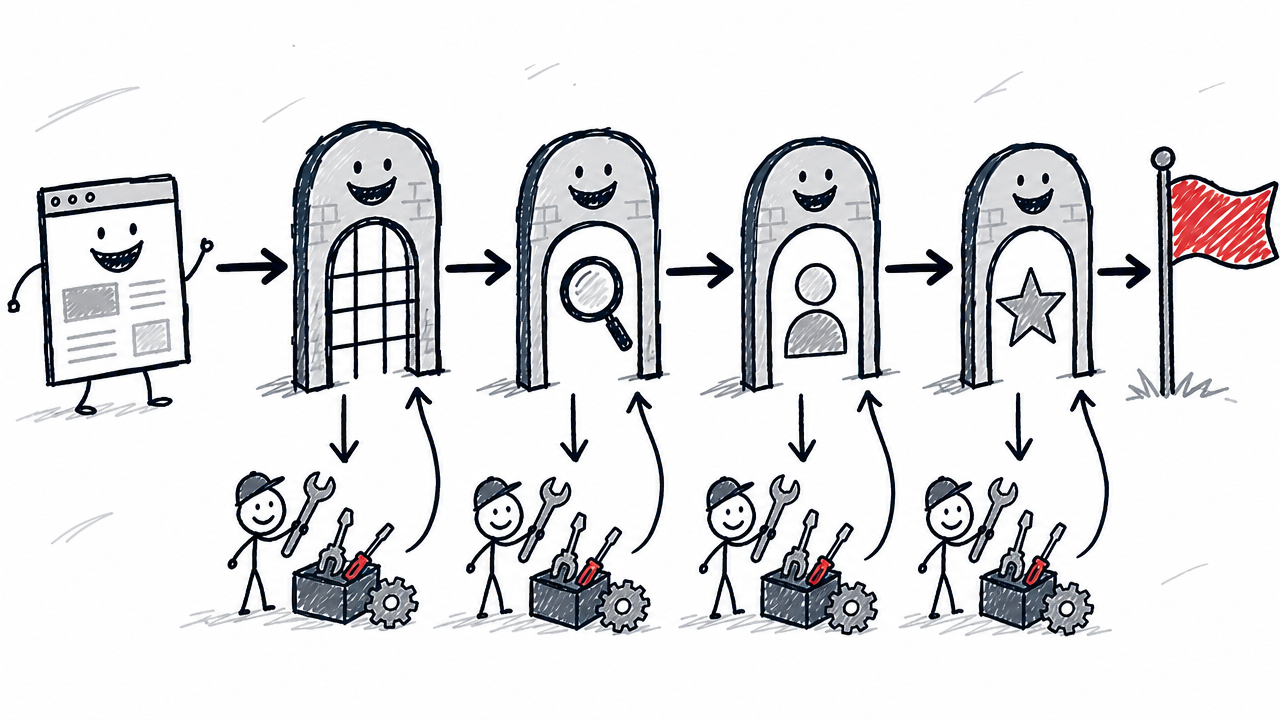
If your page is not crawlable, indexable, and relevant, nothing else on this list matters yet. Follow this sequence:
- Confirm your SEO foundation (crawlability, indexing, intent, originality).
- Build a question map from real user data.
- Design question-led headings and write self-contained answer passages.
- Choose the right format (paragraphs, lists, tables) for each answer.
- Add FAQPage schema only when it mirrors genuine visible Q&A content.
- Publish
llms.txtonly after the core content work is done. - Measure citations, mentions, traffic, and conversions by platform and query set.
- Diagnose and iterate using a structured troubleshooting order.
Start at step one. Skip nothing.
Confirm your SEO foundation before anything else
Generative search retrieves from the search index. Google uses retrieval-augmented generation and query fan-out to gather relevant pages before synthesizing an answer. A page that fails conventional SEO never enters the candidate set for any AI answer.
Before you touch a single heading or schema tag, confirm these fundamentals:
- The page is not blocked by
robots.txtor anoindexdirective. - The page appears in the index (check via
site:query or Google Search Console). - The page satisfies a real search intent, not just a keyword match.
- The content is original and useful, not a commodity rewrite of existing results.
- Key information lives in accessible HTML text, not buried in JavaScript widgets, images without alt text, or iframes.
- The page has clear topic, author, or organization context and links to supporting sources.
Good vs. bad example: A detailed product-comparison page blocked by an overzealous robots.txt rule will never appear in an AI Overview. The same page, properly indexed and matching a comparison intent with original testing data, is a strong extraction candidate. Fix access first; then work on answers.
Build a question map from real data
The strongest answer engine content targets questions your audience asks, drawn from data rather than guesswork. Build your question map from these sources, in this order of reliability:
- Google Search Console query data: filter for queries phrased as questions or containing interrogative words.
- Customer-service and sales logs: the exact language real people use when they need help.
- People Also Ask boxes: expand PAA results for your core queries and record the branching questions.
- Related searches and autocomplete suggestions.
- Competitor headings: scan the H2s and H3s of pages ranking for your target terms.
- Conversational rewrites: rephrase your highest-value commercial queries as the natural-language questions a user might ask an AI assistant.
Focus on business value and user intent. Do not create a separate page for every wording variation. Google warns against producing large numbers of pages mainly to target query variations. Group closely related questions under one strong page.
Growth Calendar supports market, competitor, and keyword research and can plan article clusters around these questions, with direct-answer structures and source citations built into the drafting workflow.
Should headings be written as questions?
Yes, selectively. Using a real user question as an H2 or H3 creates a clear extraction target: the heading signals the question, and the passage immediately below provides the answer. This pattern aligns with how answer engines identify Q&A pairs.
Rules for question headings:
- Use one clear question or intent per section.
- Match the user's natural wording without forcing awkward exact-match phrases.
- Mix question headings with statement headings. If every heading on the page is a question, readability suffers.
- Reserve question headings for sections where the answer is genuinely a direct response to a user query.
Good: ## How long does a trademark registration take? Bad: ## Trademark Registration Time Duration Period FAQ Answer
The first reads like a real question someone would ask an assistant. The second is keyword stuffing disguised as a heading.
Write self-contained passages that survive extraction
Answer engines may pull a single passage from your page and present it without any surrounding context. If that passage depends on a previous paragraph, a table header, or an earlier definition, it becomes incoherent in isolation. Every potential answer must stand alone.
A strong extractable passage contains five elements:
- The subject: name it explicitly; do not use "it" or "this."
- The direct answer: state the conclusion or recommendation in the first sentence.
- The relevant scope or condition: when the answer applies and when it does not.
- A supporting reason or fact: one piece of evidence that makes the answer credible.
- A source, when quantitative: attribute the number, study, or data point.
Weak passage:
As mentioned above, this can increase by 25% if you follow the steps. The strategy works best when combined with the approach in Section 3.
Strong passage:
Organic click-through rates for pages appearing as rich results were 82% higher than for non-rich-result pages in Nestlé's implementation, according to Google's structured-data case studies. Adding accurate structured data to product pages is a measurable improvement, not a theoretical benefit.
The strong version names the subject, states the finding, attributes it, and makes sense if read in complete isolation.
Anti-patterns to eliminate:
- "As mentioned above" or "see below"
- Unexplained acronyms on first use
- Statistics without a source, population, or timeframe
- Conclusions buried under three paragraphs of background
- Promotional claims presented as factual answers

How long should an answer be?
A 40–60-word opening answer is a useful editorial starting point, but no Google rule or guaranteed extraction threshold exists for that range. The real instruction is more precise: answer immediately, include the subject and the conclusion in your first sentence, and keep the initial answer concise enough that an engine can extract it cleanly. Then add depth, qualifications, examples, and evidence in the sentences that follow.
Some answers need 30 words. Some need 80. Aim for completeness and clarity in the opening, and let the content dictate the length.
How do tables and lists help answer engine optimization?
Tables and lists improve answer engine visibility when they match the structure of the information. They fail when used as decoration. Choose the format based on what the content requires:
Good table: A comparison of three email platforms showing price, send limit, and automation features in consistent columns. Bad table: A single-column table listing "benefits of AEO" that could be a paragraph or a bullet list. This adds visual noise without aiding extraction or comprehension.
Essential meaning must live in accessible HTML text. If your key data exists only inside an image, a complex CSS layout, or a canvas element, answer engines cannot extract it.
Does FAQ schema help AI search?
Separate three things that ranking pages often conflate:
1. Visible FAQ content is useful. A well-structured Q&A section presents answers in a format that answer engines can parse and extract. The content and its structure carry the value; markup alone does not.
2. FAQPage JSON-LD is a secondary annotation. Schema.org defines FAQPage as a WebPage presenting one or more frequently asked questions. Adding FAQPage structured data provides a machine-readable layer that mirrors your visible content. It does not function as a citation lever. Do not add it to pages that lack genuine, visible Q&A content, and do not mark up marketing claims as answers.
3. Google's FAQ rich-result feature is no longer shown in Search. Google removed the FAQ rich-result documentation and display as part of its documentation changes. Do not expect FAQ rich results to appear.
Google states that structured data is not required for generative AI Search, although it remains part of a broader SEO strategy. Structured data has demonstrated value in other contexts: Google's case studies show results like Rotten Tomatoes reporting a 25% higher CTR and Food Network seeing a 35% increase in visits after implementing structured data (Google structured-data introduction). These are structured-data outcomes for traditional Search, not evidence that FAQ schema causes AI citations.
Note the distinction: FAQPage is for a page where the site owner provides all answers. QAPage is for community or forum pages where users contribute answers to a question.
Does llms.txt improve answer engine visibility?
Do not start here. The llms.txt proposal defines a root-level Markdown file that curates a site overview and key links for LLM consumption. It remains a proposal, not a ratified web standard. It does not control crawling, does not guarantee inclusion, and does not earn citations.
Google states that llms.txt is not needed for Google Search or Google's generative AI features. Publishing it creates no positive or negative Google visibility effect.
The file may still be useful as a curated content index for AI systems that choose to read it. Adoption is uneven and undocumented across most platforms.
Recommendation: Complete the core AEO work (steps 1 through 6) first. If you then decide to publish the file, the llms.txt generator is the fastest browser-based creation route: enter your site details and key-page links, and it produces both llms.txt and llms-full.txt without sending data to a server. Teams wanting full control over the Markdown structure can also write the file manually following the proposal specification.
How do you measure answer engine optimization?
Define your metrics before you start tracking. These terms mean different things, and conflating them produces meaningless reports:
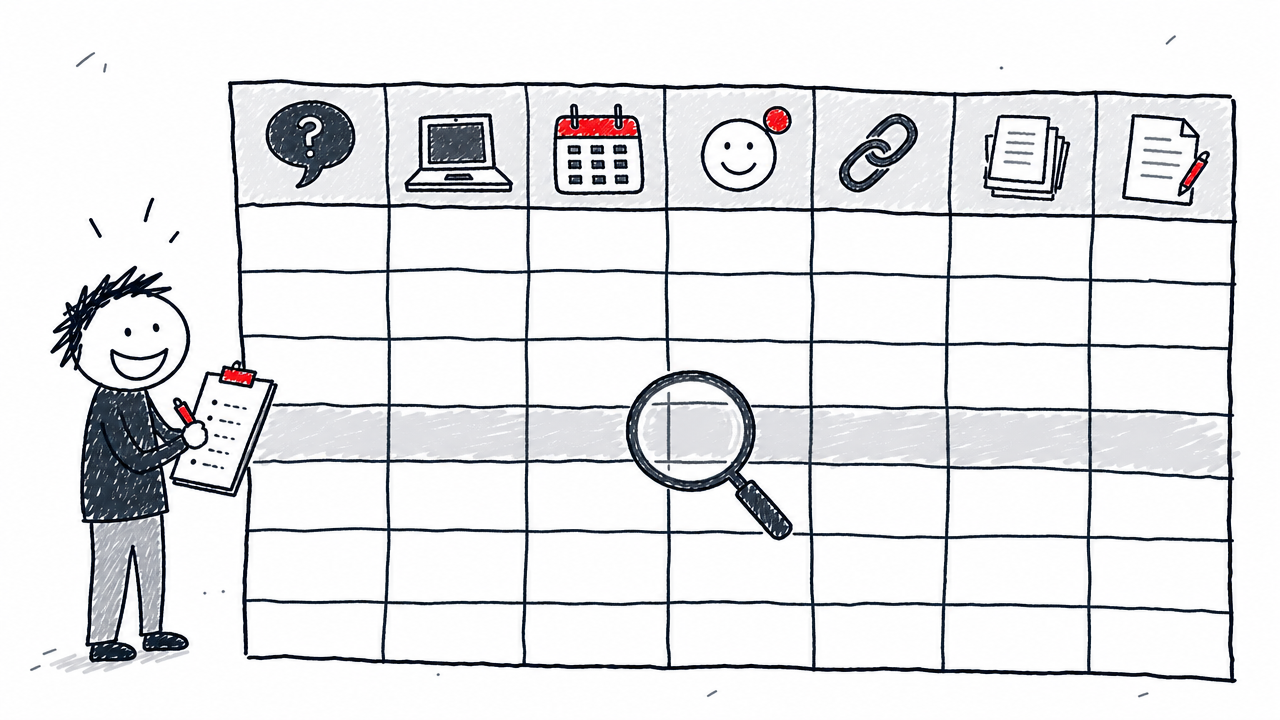
Before editing a page, record a baseline:
- Target questions and prompt variations you will test
- Platform (Google AI Overviews, ChatGPT, Perplexity, etc.)
- Date, time, location, and device
- Whether your page or brand appeared
- Whether the result was a citation or only a mention
- The cited URL, if displayed
- Competing sources shown in the same answer
- Organic impressions, clicks, CTR, and position from Google Search Console
- AI referral traffic from your analytics platform
- Conversions or assisted conversions
For Google, use the Generative AI performance report in Search Console to track appearances in Google's generative AI features.
Do not infer success from one manual prompt or one session. Google warns that search results vary by time, location, device, and search history. Test the same query set after publication over weeks, across platforms, and record each observation separately.
How to diagnose what is not working
Follow this diagnostic order. Each level assumes the previous one is resolved:
- No organic visibility: Fix crawlability, indexing, relevance, and content quality first. Nothing downstream works until the page is in the index and matching intent.
- Organic visibility but no answer inclusion: Improve question alignment, answer directness, passage completeness, and source quality. The page ranks but is not being selected for extraction.
- Mention without citation: Clarify the entity (consistent brand name, organization markup, author information). Add attributable evidence that makes the page a credible source to link to.
- Citation without traffic: Assess whether the query is inherently zero-click or whether the platform suppresses outbound links for that answer type. This may not be a content problem.
- Inconsistent results: Repeat testing over time. Separate platform-side changes (model updates, UI changes) from content changes. A single disappearance is not diagnostic.
Common answer engine optimization mistakes
- Starting with schema or
llms.txtbefore the page is crawlable, indexed, and useful. Markup on an inaccessible page accomplishes nothing. - Mass-producing thin FAQ pages to target every query variation. Google warns against this. Merge related questions onto strong, thorough pages.
- Forcing every heading into a question form. This harms readability and signals that the page was written for bots, not people. Mix question and statement headings.
- Treating 40–60 words as a hard rule. Use it as an editorial starting point, not a specification. Write the answer as long as it needs to be, putting the conclusion first.
- Expecting FAQPage JSON-LD to cause AI citations. No authoritative source establishes this causal relationship. Schema supports machine readability; it does not guarantee selection.
- Using vague measurement. "We appeared in ChatGPT once" is not evidence. Define your query set, record baselines, test over time, and track by platform.
- Ignoring conventional SEO while chasing AI-specific tactics. Generative search retrieves from the index. If the SEO foundation is broken, no amount of answer-first formatting will help.
FAQ
What should I work on first for answer engine optimization?
Confirm crawlability, indexing, and content quality. Then rework your highest-value pages around real user questions with extractable, self-contained answers. Schema and optional files like llms.txt come last, after the content is genuinely useful and technically accessible.
Does answer engine optimization replace SEO?
No. AEO is an execution layer on top of SEO. Generative search retrieves pages from the search index, so conventional SEO foundations (crawlability, indexing, relevance, content quality) remain prerequisites. For a detailed breakdown of how AEO and SEO differ and overlap, see the AEO vs SEO comparison.
How long does AEO take to produce results?
No fixed timeline exists. Results depend on existing organic visibility, content quality, platform indexing cycles, and the specific queries you test. Measure over weeks, not days. Track by platform and query set, and separate content changes from platform-side model updates that affect which sources get selected.
Is llms.txt required for answer engine optimization?
No. It remains a proposal, not a ratified standard. Google says it is not needed for Google Search or its generative AI features. Complete the core content and technical work first. Treat llms.txt as optional secondary housekeeping for systems that may choose to read it.
How do I track citations in AI-generated answers?
Define your terms: a citation is an attributed link, a mention is your brand appearing without a link, and visibility is presence for a tracked prompt. Record a baseline query set with platform, date, and device details. Test across platforms over time. For Google, use the Generative AI performance report in Search Console. A single manual check is not reliable evidence of consistent visibility.