
Anthropic Is Watermarking Claude's Text - What It Actually Means
Anthropic now embeds an invisible Claude watermark in supported models' text output.

Anthropic's Claude Help Center says that supported Claude models will embed an imperceptible, machine-readable watermark directly into generated text at the model level, applied worldwide with no disclosed opt-out. Only models launched on or after August 2, 2026 support marking at launch; older models are still being retrofitted, so most Claude output may not yet carry a mark. A detected watermark signals that content may have been processed by Claude. It does not prove Claude authored it, and a missing mark proves nothing about whether AI was involved.
What Anthropic announced
On August 11, 2026, TechCrunch reported that Anthropic had updated its support documentation to describe a new content-marking system. The primary source is a Claude Help Center article titled "How Claude marks AI-generated content", not a company blog post.
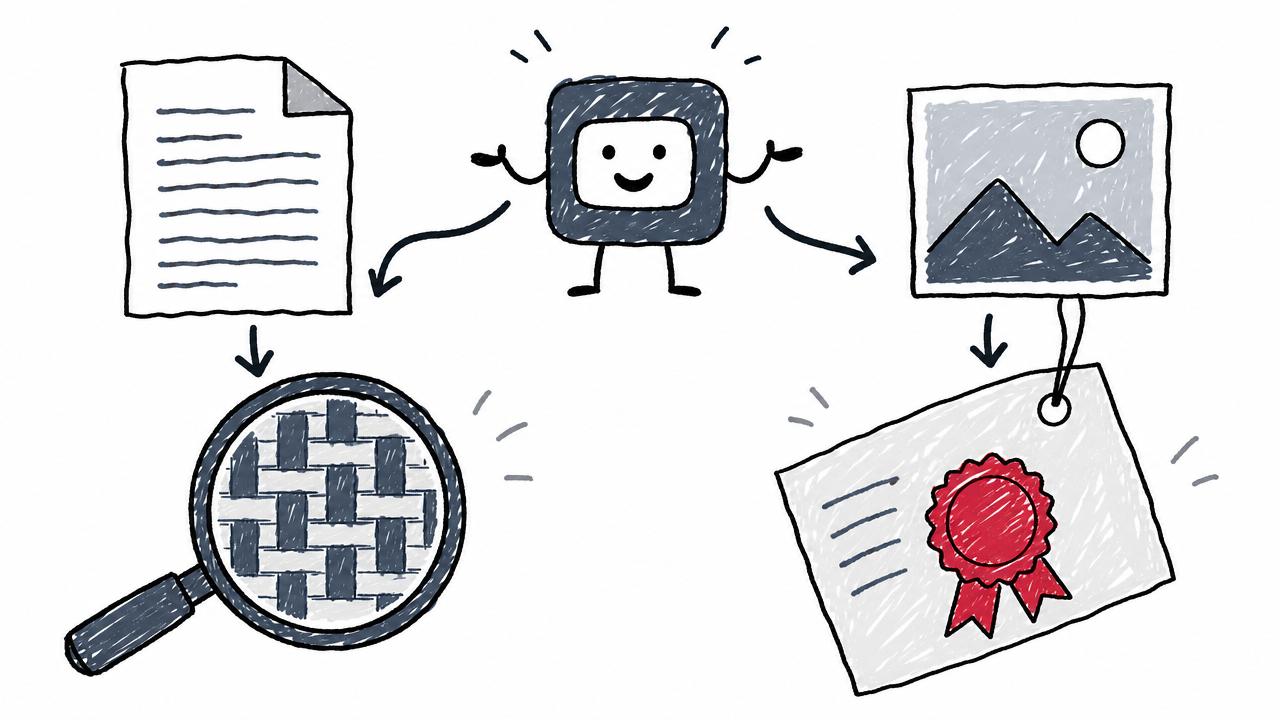
Anthropic describes two distinct approaches to marking:
- An imperceptible embedded text watermark applied to text output at the model level.
- Signed C2PA provenance metadata attached to supported generated files (such as images).
These are separate technologies solving different problems. This article focuses on the text watermark; C2PA metadata is addressed briefly in a later section. The announcement states that marking applies globally wherever supported models are used, not only in the European Union.
What is the Claude text watermark?
The Claude text watermark is a machine-readable pattern embedded during text generation at the model level. According to Anthropic's Help Center, it does not change the response's meaning, quality, or readability. The mark travels with text when copied and pasted and "may persist through some editing."
A useful (if imperfect) comparison: think of it as a pattern woven into the fabric of a document rather than printed on top. Copying the document reproduces the pattern, but enough rewriting can unravel it. The analogy captures both the persistence and the limits.
Anthropic has not published the exact technical mechanism. The Help Center does not describe the sampling method, the statistical test used for detection, or the confidence threshold. For a general explanation of how model-level text watermarking works, see the technical deep dive on how AI text watermarks work.
Which Claude models and surfaces are covered?
Models launched in the EU on or after August 2, 2026 support marking at launch. Anthropic says it is working to add marking to models released before that date, but the Help Center does not confirm that retrofitting is complete or provide a full model inventory. As of the reviewed documentation, older Claude models still in production may not yet carry the watermark.
Confirmed surfaces
Marking is applied at the model level, so a supported model carries the watermark regardless of which surface or integration delivers the output. For a broader comparison of which AI providers mark their text, see the provider-by-provider watermarking comparison.
Does the watermark apply worldwide or only in the EU?
Anthropic's Help Center states that marking applies worldwide wherever supported Claude models are offered. The regulatory driver is the EU AI Act, but the implementation is not geo-fenced: a user in the United States, Japan, or Brazil using a supported model receives watermarked output.
Does a detected mark prove Claude wrote the text?
No. A positive detection means the content may have been processed by Claude. Processing is a broad category that includes generation, proofreading, translation, summarization, and format conversion.
Consider this workflow: a marketing manager drafts a product description by hand, then asks Claude to proofread it for grammar. The returned text may carry a watermark even though a human originated every idea and most of the wording. Calling that text "authored by Claude" would be inaccurate.
The following terms are not interchangeable:
Anthropic's own wording is deliberately cautious: a mark "does not establish full provenance or original authorship." The watermark is a provenance signal, useful for flagging that Claude may have touched the text, but unable to assign credit or blame.
What does a missing watermark mean?
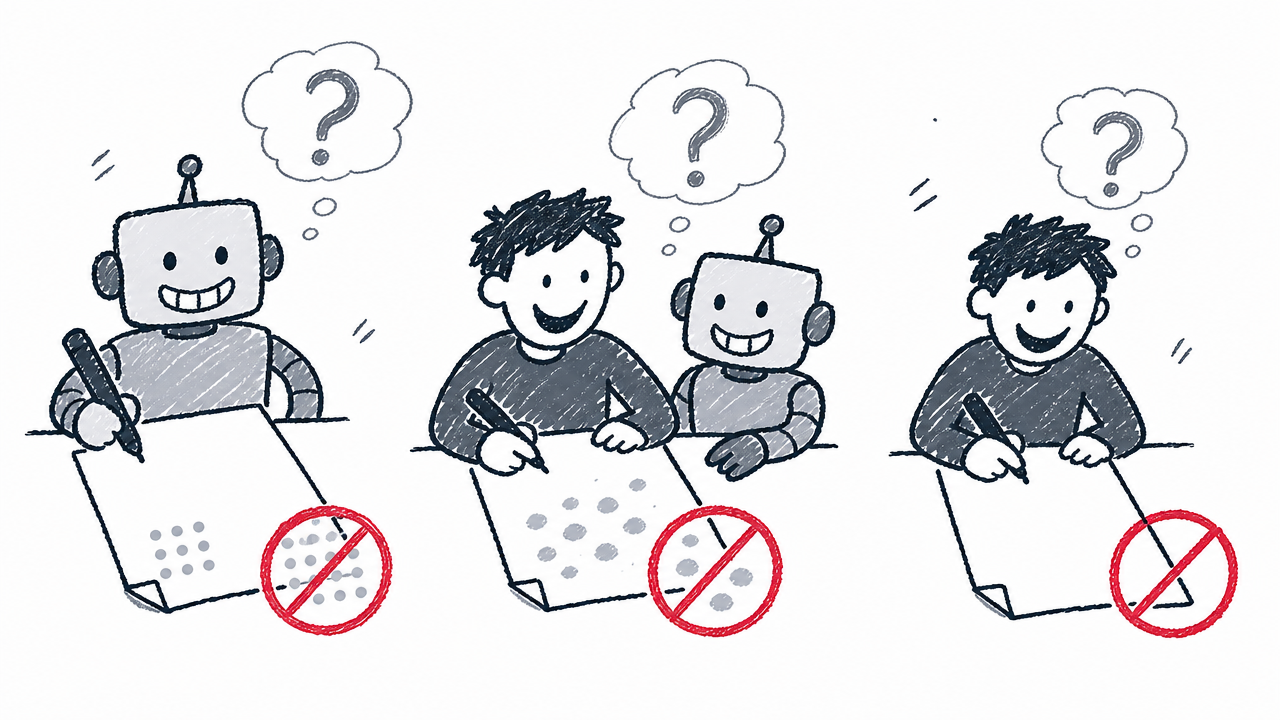
A missing watermark does not establish that content was human-written or that no AI was involved.
Anthropic's Help Center identifies several situations where a mark may be absent or undetectable:
- Older unsupported models that have not yet been retrofitted.
- Heavy editing of Claude output by a human or another tool.
- Paraphrasing that substantially restructures the text.
- Translation into another language.
- Mixing AI-generated and human-written text.
- Very short passages that may not carry enough statistical signal.
- Unsupported platforms or features outside the confirmed surface list.
- Stripped file metadata (relevant to C2PA, not the text watermark itself).
No one should treat an undetected watermark as proof that content is human-written.
Is there an official Claude watermark detector?
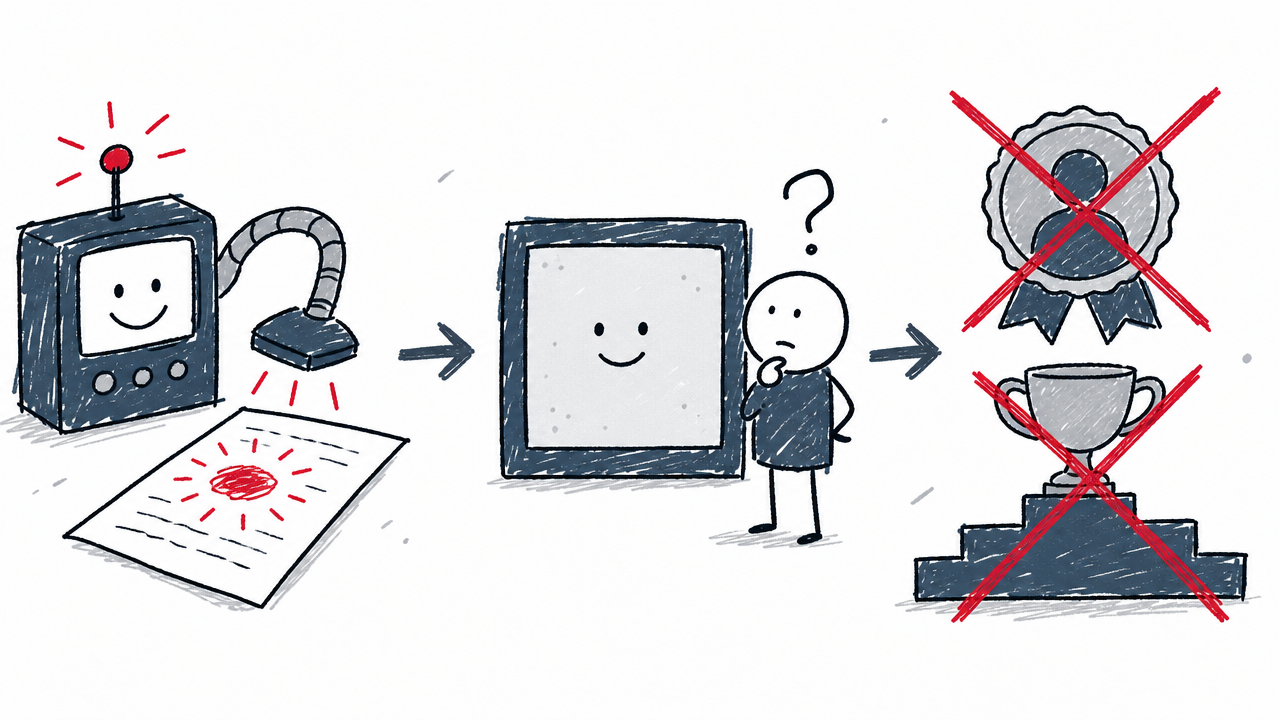
As of the Help Center article reviewed for this piece, no public detection mechanism or API is available. Anthropic says it will support detection by users and third parties and will publish technical documentation, but no specific release date has been disclosed. Readers should check Anthropic's Help Center for the latest detection status.
Third-party "AI detector" tools available today were generally trained on stylistic patterns, not on Anthropic's proprietary watermark signal. No basis exists for assuming those tools can identify or verify Claude's specific watermark.
Text watermark vs. C2PA file metadata
Anthropic describes two marking approaches, and they should not be confused:
The Coalition for Content Provenance and Authenticity (C2PA) is an industry standard for attaching tamper-evident provenance records to media files. It is a different technology from an embedded text watermark and addresses a different problem.
Why is Anthropic doing this?
The EU AI Act is the central regulatory driver. Article 50 of Regulation (EU) 2024/1689 imposes transparency obligations on providers of certain AI systems, requiring that generated or manipulated content be marked in machine-readable form and made detectable. These obligations took effect on August 2, 2026, according to the European Commission's transparency guidelines.
Anthropic has signed the EU Code of Practice on Transparency of AI-Generated Content, a voluntary compliance-support framework. The Code supports adherence to Article 50 by setting expectations around marking, detection, and labeling, but the Code itself is not binding law: the binding obligation is Article 50 of the AI Act. The European Commission's Article 50 FAQ clarifies that Article 50 obligations fall on providers (like Anthropic) and separately on deployers, with different requirements for each.
The obligation on a provider can apply even when the provider is based outside the EU, if the system's output is used within the EU. Downstream publishers and content teams may face separate deployer obligations, but those are legally distinct from the provider's marking duty. For a detailed legal analysis, see the full breakdown of AI content watermark laws.
This article provides general information and is not legal advice. Consult qualified legal counsel for compliance questions specific to your situation.
Can users opt out?
No opt-out has been disclosed in the reviewed Help Center material. Forbes reported that users cannot opt out of the watermark; the reviewed version of Anthropic's Help Center does not describe an opt-out setting for any tier (free, paid, API, enterprise, or partner surfaces). Because this detail may evolve, readers should check Anthropic's current documentation for the latest policy.
What this means for content teams and publishers
The Claude watermark is a provenance signal. It does not indicate content quality, and Google's ranking documentation does not reference proprietary AI watermarks as a ranking factor.
Where the watermark may matter is in editorial transparency policies, client disclosure expectations, and internal content governance. A content team that uses Claude for drafting, editing, or research should understand:
- What the mark can say: This content may have been processed by Claude.
- What it cannot say: Who originated the ideas, how much was human-written, or whether the quality meets any particular standard.
- What an absent mark means: Nothing conclusive.
Before adjusting workflows or policies, teams should wait for Anthropic's promised detection documentation and assess what the signal reveals in their specific context. For SEO-specific implications, read the analysis of whether AI watermarks affect search rankings. For practical considerations about watermark persistence and editing workflows, see the guide on avoiding AI text watermarks.
FAQ
Can you see a Claude watermark with the naked eye?
No. The watermark is imperceptible to human readers. It does not alter the text's meaning, quality, or readability. Only a machine-based detector can identify the statistical pattern.
Does the watermark survive heavy editing or paraphrasing?
The mark may persist through some editing, but Anthropic lists heavy editing, paraphrasing, and translation among its stated limitations. No specific threshold for removal has been published.
Does a Claude watermark mean Google will penalize my content?
No evidence supports this claim. Google's ranking documentation does not reference proprietary AI watermarks as a ranking signal. For a fuller analysis, see the breakdown of whether AI watermarks affect SEO.
Is Claude the only AI model that watermarks text?
Other providers have announced or researched text watermarking as well. For a detailed comparison, see the guide to which AI models watermark text.
When will a public Claude watermark detector be available?
Anthropic says detection documentation is forthcoming but has not published a specific release date as of the reviewed Help Center article.
Sources
Anthropic documentation
- How Claude marks AI-generated content: Claude Help Center; primary source for all operational claims about the watermark.
EU and regulatory sources
- Code of Practice on Transparency of AI-Generated Content: European Commission.
- Transparency obligations under Article 50 of the AI Act (FAQ): European Commission.
- Guidelines on transparency obligations for providers and deployers of certain AI systems: European Commission.
- Regulation (EU) 2024/1689: EUR-Lex; the AI Act's official text including Article 50.
Press reporting
- Anthropic says it will watermark text generated by its AI models: TechCrunch, August 11, 2026.
- Claude Will Put Invisible Watermarks On AI Text And Images: And The Internet Isn't Happy: Forbes, August 11, 2026.
Technical background
- Scalable watermarking for identifying large language model outputs: Nature. Background on SynthID-Text research; not evidence of Anthropic's specific implementation.