
AI Watermarking Is Here, and It's Not Just Claude. - Is AI Content Dead?
Is AI content dead? No. Watermarking from Claude, Gemini, and others changes provenance, not viability. Learn what shifted and what content teams should do now.

No, AI content is not dead. But the era of anonymous, unedited, publish-at-scale AI output is getting harder to defend. Watermarking is spreading across major providers as a probabilistic provenance signal: a faint statistical pattern embedded in word choices during text generation that a matched, provider-specific detector can later flag. A watermark is not an authorship verdict or a universal AI detector. The content teams that win treat AI as a drafting tool under human editorial control, not a publish button.
What changed in August 2026
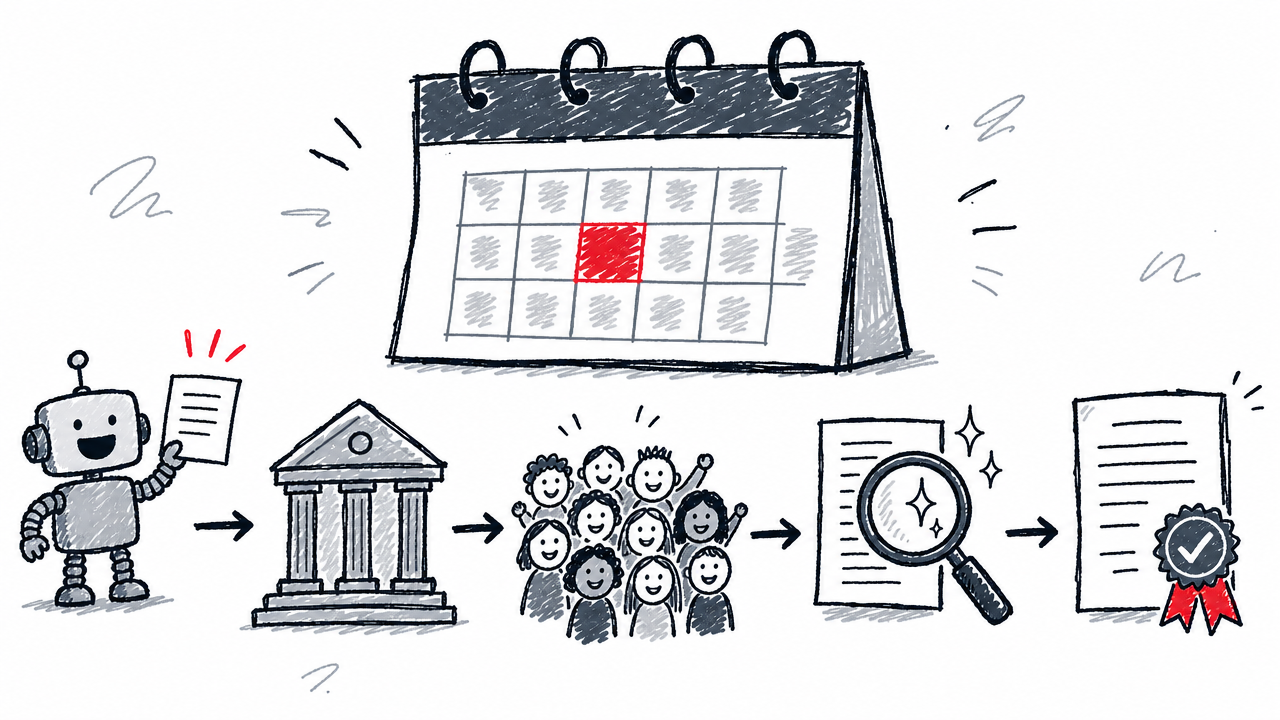
Three of the largest AI providers now have text-provenance programs in motion, and close to 200 organizations have signed the EU's voluntary transparency code. The ground shifted fast.
Anthropic announced marking support for new supported Claude models, with embedded text watermarks intended to work worldwide wherever those models are offered. Supported models launched in the EU on or after August 2, 2026 are planned to include marking at launch, and Anthropic says older models are being worked on. A detected mark means content "may have been processed by Claude," not that Claude authored it. Detection documentation is described as forthcoming. (Anthropic Help Center)
Google DeepMind's SynthID Text is already deployed in the Gemini app and web experience. The system adjusts token probability scores during generation, embedding an imperceptible watermark. A large-scale study assessed feedback from nearly 20 million Gemini responses and reported no change in standard benchmark performance or human side-by-side quality ratings. (Google DeepMind; Nature)
OpenAI supports C2PA metadata and SynthID watermarks for supported images, and SynthID for supported audio. OpenAI has stated a goal to expand provenance signals to all modalities, including text. That text expansion remains a stated goal, not a verified live capability. (OpenAI Help Center)
On the regulatory side, about 190 organizations signed the EU Code of Practice on Transparency of AI-Generated Content by the end of July 2026. Section 1 signatories (providers committing to marking and detection) include Anthropic, Google, Meta, Microsoft, Mistral, OpenAI, and others. Article 50 transparency obligations under the EU AI Act apply from August 2, 2026. The Code itself is voluntary; the underlying Article 50 obligations are legal requirements. (EC signatory announcement; EC Code of Practice page)
This is general information, not legal advice.
What an AI text watermark is (and what it is not)
A provenance signal, not an authorship verdict
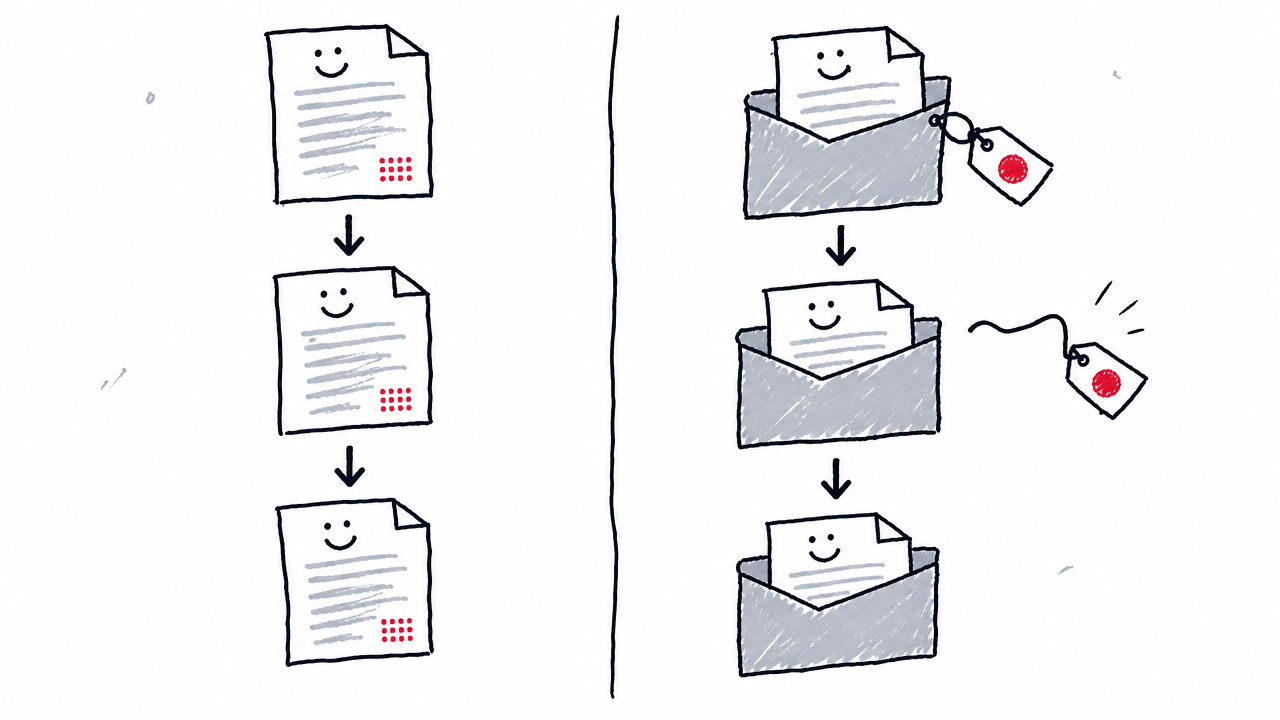
A text watermark is a statistical pattern woven into word choices during generation. Think of it as a faint serial number stamped into the grain of the text, readable only by the provider's own scanner. The pattern is invisible to a human reader, but a matched, provider-specific detector can flag it as likely present.
A positive detection means content may have been processed by that provider. It does not prove the provider authored the content. It says nothing about accuracy, quality, or editorial intent. A missing mark does not prove content was written by a human or was not AI-generated.
Two key distinctions matter:
These solve different problems. The terminology around them is not interchangeable: "AI-generated," "AI-assisted," "processed by Claude," and "authored by Claude" each carry different weight. Anthropic uses the qualified phrase "may have been processed by Claude" for good reason.
Why AI content is not dead
The watermarking trend is real, but four structural realities keep AI content commercially viable.
Detection is probabilistic and provider-specific
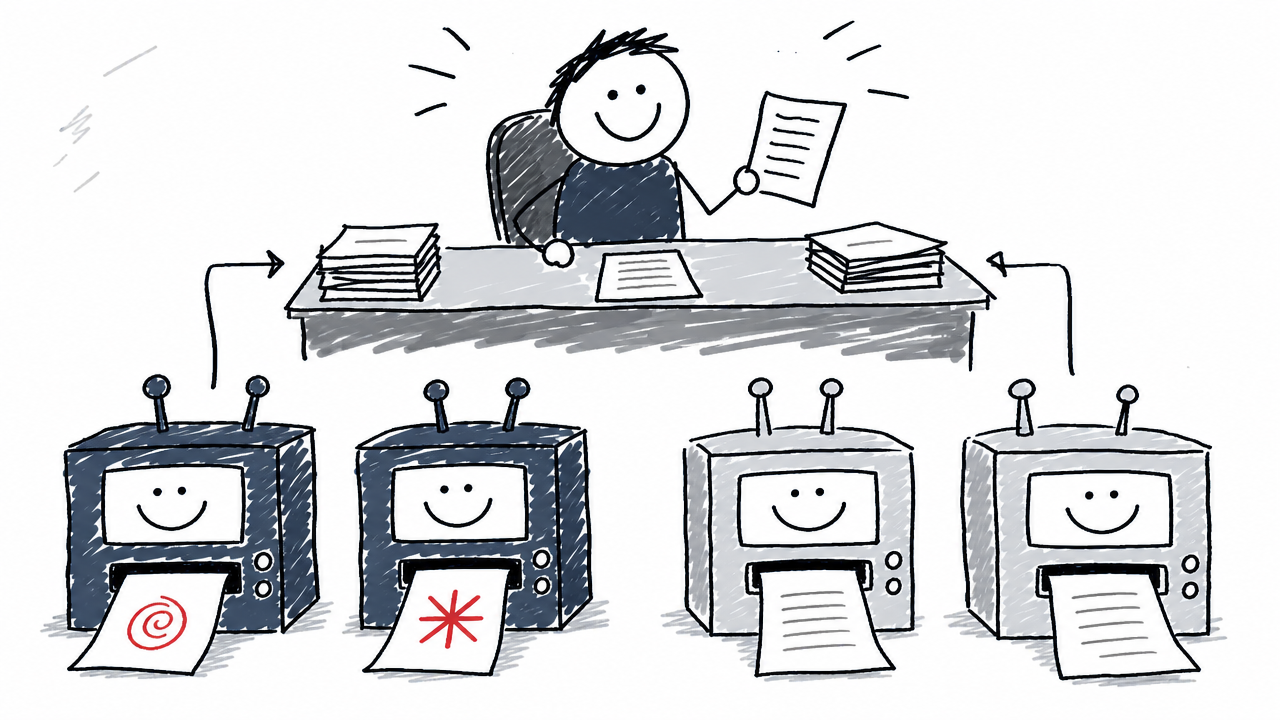
Each provider uses its own secret key and detection system. No single universal AI detector reads all watermarks. SynthID's detector, for example, can return three results: "watermarked," "not watermarked," or "uncertain." (Google AI for Developers)
That fragmentation means no one scan settles the question across all AI providers. A piece of content could pass one provider's detector and never be tested against another's. The ecosystem is keyed and siloed, not unified.
Marks can be weakened or lost
Anthropic lists heavy editing, paraphrasing, translation, mixing with other material, short passages, and unsupported features as limitations that can affect whether a mark survives. (Anthropic Help Center)
A preprint stress test (not established consensus) reported high removal rates across three watermark implementations after paraphrasing. In one tested configuration, all initially detected KGW and Unigram watermarks were lost, and a 98.3% removal result was reported for its SynthID configuration. (arXiv preprint)
These figures should not be generalized to Anthropic's undisclosed method or to every watermarking system. Watermark robustness depends on the method, detector, text length, transformations applied, and threat model. Durability should not be treated as guaranteed in either direction.
Does Google penalize AI or watermarked content?
No. Google's documented position is clear: it rewards high-quality content regardless of how it was produced, and using AI is not against its guidelines. The line it draws is against using automation primarily to manipulate search rankings, which it classifies as spam. (Google Search Central, AI content guidance)
An Ahrefs observational study of 331,000 pages found that 5.3% of top-ranking positions 1–3 were categorized as 100% AI-generated. The study argues that Google penalizes poor content, not AI content. (Ahrefs)
Qualification: this is a detector-based observational study, not evidence that Google uses the same detector or reads proprietary Claude or SynthID watermarks as ranking signals. No source shows that Google applies a ranking penalty based on a text watermark's presence.
For a deeper look at how watermarking intersects with search rankings, see our analysis of AI text watermarking and its SEO impact.
Open-weight models and the fragmentation gap
Open-weight models (those whose weights are publicly released for local or self-hosted use) do not necessarily carry any provider watermark. Marking is tied to closed, proprietary model infrastructure. Some outputs carry marks; many do not.
A watermark's absence proves nothing about origin. The content could be human-written, or it could come from an unmarked model, a pre-marking version, or a workflow that degraded the signal. The gap is structural, not temporary.
The real shift: a two-tier provenance environment
Watermarking is not killing AI content. It is creating a divide in how content provenance works.
On one side, commercial closed-model outputs (from Claude, Gemini, and eventually ChatGPT text) carry provider-specific provenance signals. On the other, open-weight model outputs, heavily transformed text, mixed-origin content, and output from unsupported features or older model versions may carry no detectable signal.
This makes provenance a useful trust and workflow signal for publishers, clients, and platforms, without making it proof of authorship. A content team can use a provenance check to verify whether a draft passed through a specific model. A client can ask for disclosure. But no watermark replaces editorial judgment.
Human editorial control becomes a premium in this environment. It adds what a watermark cannot: factual checking, originality, source attribution, contextual understanding, and editorial responsibility. The Register reported skepticism about watermark robustness and noted possible customer concerns around provenance disclosure versus the availability of open-weight alternatives. (The Register)
For a full provider-by-provider breakdown of which models carry text watermarks, see which AI models watermark text.
What content teams should do now
The right response to watermarking is not panic or abandonment. It is tightening the gap between "AI-drafted" and "editorially responsible."
Use AI for research, outlining, drafting, and iteration. It remains a powerful production tool. Nothing about watermarking changes the utility of AI for brainstorming, restructuring, or speeding up a first draft.
Assign a human owner for every published piece. That person handles accuracy, originality, and final editorial judgment. This is the single most important workflow change.
Set a real quality bar. Original insight, primary-source checking, concrete examples, and useful analysis beat undifferentiated AI-generated summaries. Google's guidance recommends asking whether content provides original information, analysis, or research, and whether it offers clear value compared with existing results. (Google Search Central, helpful content)
Keep an internal record of AI involvement when client policy, platform rules, or regulatory context requires it. Knowing which model was used, what prompts were given, and how the output was edited is a basic accountability step.
Choose models deliberately based on capabilities, privacy posture, provenance behavior, and publishing requirements. Different models carry different marks, and some carry none. For more on lawful model-choice and publishing workflow considerations, see how to approach AI text watermarks in your workflow.
Do not treat watermark removal as a quality or compliance strategy. If the content needs the mark stripped to be publishable, the problem is the content or the workflow, not the watermark.
FAQ
Does Claude watermark all AI-generated text right now? Anthropic's Help Center says supported Claude models launched on or after August 2, 2026 are planned to support embedded text watermarks at launch, with older models being worked on. This is not a blanket claim that every historical Claude output is already marked, and detection documentation is described as forthcoming. (Anthropic Help Center)
Can editing or paraphrasing remove an AI watermark? Potentially. Anthropic lists heavy editing, paraphrasing, translation, and mixing as limitations. Robustness varies by method, text length, and transformation. No publicly available tool can certify removal without access to the provider's specific detector.
Is AI-assisted content the same as AI-generated content? No. AI-assisted means a human used AI for brainstorming, drafting, or another limited task and applied editorial judgment. AI-generated means the content was produced substantially by an AI system. The distinction matters for disclosure, trust, and workflow accountability.
Should marketers disclose when content is AI-assisted? It depends on jurisdiction, platform policies, and client agreements. The EU AI Act places transparency obligations on providers and, in some cases, deployers. Publishers should assess their own disclosure practices based on applicable rules and audience trust. (Not legal advice.)
Will AI content become a two-tier market? Increasingly likely. Closed-model outputs may carry provenance signals while open-weight or heavily edited content may not. Provenance and human editorial responsibility are becoming differentiators, not binary gates. The teams that invest in editorial quality, original analysis, and genuine expertise hold the premium position regardless of which tools they use.
Sources
- Anthropic, How Claude marks AI-generated content: https://support.claude.com/en/articles/16266773-how-claude-marks-ai-generated-content
- European Commission, Strong backing for the Code of Practice: https://digital-strategy.ec.europa.eu/en/news/strong-backing-code-practice-transparency-ai-generated-content
- European Commission, Code of Practice on Transparency of AI-Generated Content: https://digital-strategy.ec.europa.eu/en/policies/code-practice-ai-generated-content
- Google DeepMind, SynthID: https://deepmind.google/models/synthid/
- Google AI for Developers, SynthID Text tools: https://ai.google.dev/responsible/docs/safeguards/synthid
- Nature, Scalable watermarking for identifying large language model outputs: https://www.nature.com/articles/s41586-024-08025-4
- OpenAI Help Center, Provenance signals in OpenAI-generated content: https://help.openai.com/en/articles/8912793-provenance-signals-content-credentials-synthid-in-openai-generated-content
- Google Search Central, Google Search's guidance about AI-generated content: https://developers.google.com/search/blog/2023/02/google-search-and-ai-content
- Google Search Central, Creating helpful, reliable, people-first content: https://developers.google.com/search/docs/fundamentals/creating-helpful-content
- Ahrefs, Google Doesn't Punish AI Content: https://ahrefs.com/blog/google-doesnt-punish-ai-content/
- arXiv preprint, AI Watermark Evidence Fails Forensic Readiness: https://arxiv.org/html/2607.16010
- The Register, Anthropic pledges to embed watermarks: https://www.theregister.com/ai-and-ml/2026/08/11/anthropic-pledges-to-embed-watermarks-to-help-discern-ai-slop-in-sop-to-eu/5285792