
Generative Engine Optimization Examples - Brands Getting Cited by AI Search
Five verified GEO examples show how Tally, Convert, AdsPower, Looktech, and Bee Pontoon earned AI citations, what they changed, the reported outcomes.

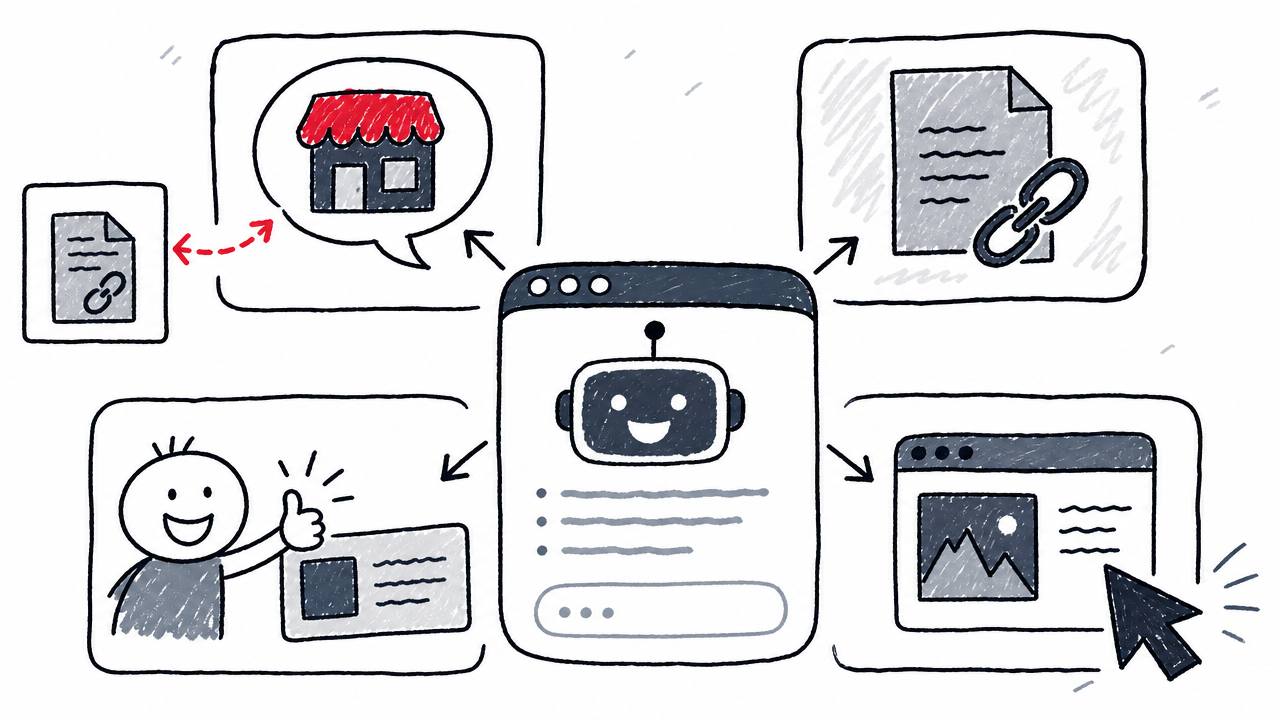
Generative Engine Optimization (GEO) is the practice of improving content and web presence so AI search systems can discover, understand, and cite a brand. Five named, verified cases show how this works: Tally, Convert, AdsPower, Looktech, and Bee Pontoon. For each, you will see what the company did to earn citations, mentions, or recommendations in ChatGPT, Perplexity, and Google AI Overviews, the outcomes, and the limits of what each case proves.
What is GEO and why do these examples matter?
GEO addresses a retrieval layer between a brand's content and the user. When someone asks ChatGPT, Perplexity, or Google AI Overviews a question, the system searches the web, selects sources, and builds an answer with inline citations. Brands that appear in those answers gain visibility that traditional blue-link rankings alone no longer guarantee.
The Princeton-led GEO study, published at KDD 2024, tested optimization methods across a large benchmark. Source-backed, citation-rich content improved visibility by up to 40% in generative-engine responses. Adding statistics, quotations, and source attribution outperformed keyword stuffing by a wide margin (Aggarwal et al., arXiv / KDD 2024).
Google's official documentation states there are no technical requirements beyond indexation and snippet eligibility for appearing in AI Overviews. No special AI schema, llms.txt file, or machine-readable format is required (Google Search Central: AI Features and Your Website).
Generic checklists repeat the same advice: "write helpful content," "use structured data," "build authority." Real cases are more useful because they show the context, the exact changes, the platforms that responded, and the limits of the evidence.
What is the difference between a brand mention and an AI citation?
Not all AI visibility is the same. Four distinct outcomes exist, and mixing them up distorts measurement:
A Semrush analysis of 3,981 domain appearances across 115 prompts and four AI search engines found that 61.7% were "ghost citations": the source was linked, but the brand was not named in the answer. Only 13.2% included both a citation and a brand mention (Semrush: "Why 62% of AI citations don't lead to brand mentions").
Each example below specifies which outcome was observed.
Case-by-case comparison at a glance
The table below summarizes the five brands. Detailed breakdowns follow.
Tally: comparison content and community presence drive AI signups
Context and visibility problem
Tally is a bootstrapped form-builder SaaS competing against established tools like Typeform and Google Forms. For commercial comparison queries such as "best free online form builder," Tally needed to appear in AI-generated answers, not just traditional search results.
What Tally did
Tally's approach combined three elements:
- High-intent comparison content. The team created listicle-style pages targeting queries like "best free online form builders," structured so each tool's strengths and limits were stated in extractable passages.
- Active community presence. Tally maintained the
r/TallyFormssubreddit and joined relevant Reddit threads where users asked for form-builder recommendations. This created third-party mentions on a platform both ChatGPT and Perplexity retrieve. - Attribution tracking. An onboarding question asked new users how they found Tally, letting the team measure AI-assisted acquisition directly.
Reported outcome
The Foundation case study reports that ChatGPT facilitated 25% of new signups during the analyzed period. Tally appeared at the top of a Perplexity response for "what is the best free form builder?" with one Tally listicle cited repeatedly within the conversation. The outcome was both a recommendation (Perplexity presented Tally as a top option) and an AI referral (signups tracked back to ChatGPT) (Foundation: How Tally Tapped into GEO to Drive 25% of New Users).
Lesson and caveat
A smaller brand can combine a page that directly targets a commercial comparison question with authentic community discussion and attribution tracking. The repeatable elements: own the comparison narrative on your site, join conversations where users discuss the category, and measure the outcome.
The result is reported by Foundation and relies partly on company statements. No controlled experiment proves that Reddit participation or the comparison page alone caused the signups.
Convert: prompt baselining, digital PR, and citation-ready content
Context and visibility problem
Convert is an A/B testing and conversion-rate optimization platform. Despite strong traditional SEO, the company had gaps in AI-assisted buyer research. When prospects asked ChatGPT or similar tools about CRO platforms, Convert was not cited consistently.
What Convert did
The Omniscient Digital case study describes a measurement-first approach:
- Prompt-level baseline. The team recorded starting metrics for prompt-level visibility, brand mentions, and citation share across target commercial prompts.
- Competitive source analysis. They mapped which referring domains competitors had that AI systems were already citing, spotting gaps in Convert's third-party presence.
- Targeted digital PR. A shortlist of about 400 high-quality referring domains was built for outreach, focused on sites AI platforms already retrieved for relevant queries.
- Citation-ready owned content. Topic clusters around A/B testing, UX testing, and CRO were designed with direct, evidence-backed answers that AI systems could easily summarize and attribute.
Reported outcome
Over 60 days, the case study reports LLM prompt visibility rose from 31% to 55% and AI citation share from 15% to 35%, described as a 140% increase (Omniscient Digital: Convert Case Study).
Lesson and caveat
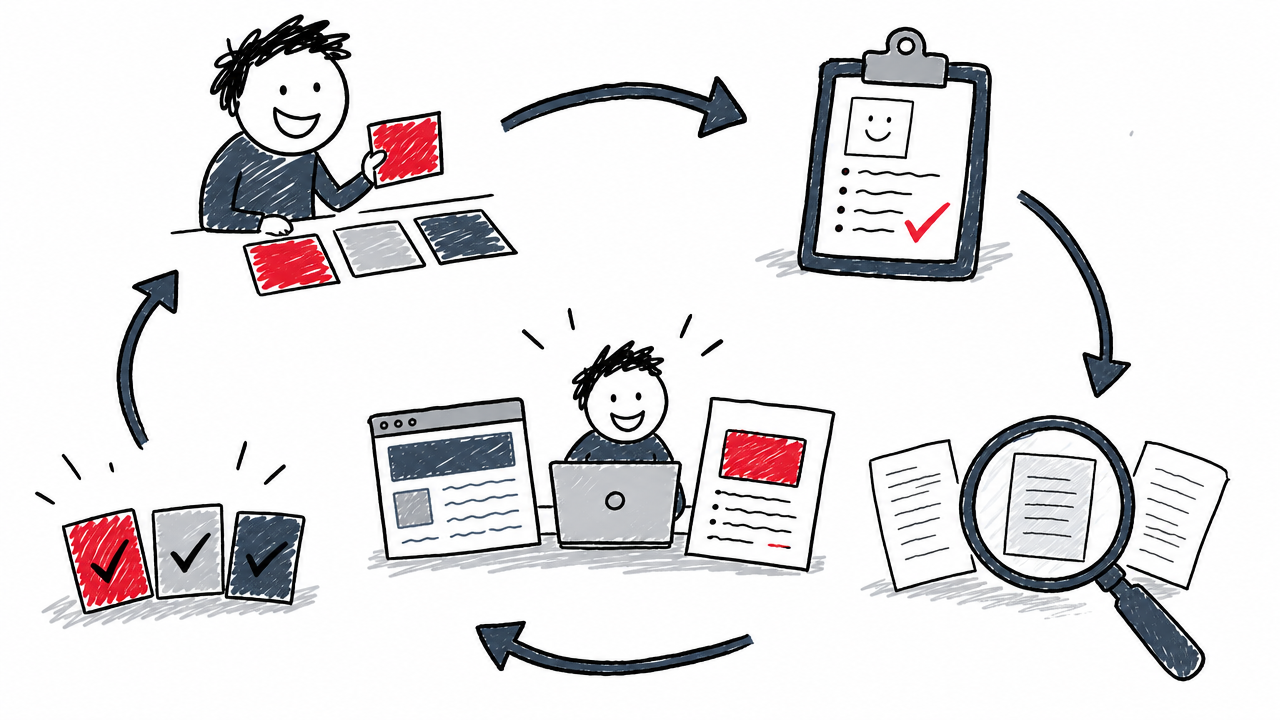
The transferable system is the measurement loop, not any single tactic:
- Define commercial prompts your buyers actually use.
- Record starting visibility and identify which sources AI already retrieves.
- Build owned content and third-party authority in parallel.
- Re-test the same prompts on a regular cadence.
The figures come from an agency case study without a public controlled test isolating each step. Treat changes as reported campaign outcomes, not proof that any single tactic drove the results.
AdsPower: multi-platform tracking and cross-channel consensus
Context and visibility problem
AdsPower is anti-detect browser and multi-account management software. Before its optimization program, AI systems often framed AdsPower as a budget alternative to Multilogin. It was rarely placed first for generic category queries like "best anti-detect browser."
How did AdsPower build consensus across AI platforms?
The GenOptima case study describes a three-part prompt taxonomy:
- Brand-trust prompts (e.g., "Is AdsPower safe?")
- Competitor-comparison prompts (e.g., "AdsPower vs. Multilogin")
- Generic category-ranking prompts (e.g., "best anti-detect browser")
On the content side, AdsPower strengthened entity definition across product pages, comparison content, and review platforms. It published comparison pages and use-case guides, used high-authority PR distribution, and built presence across Reddit, YouTube, Trustpilot, GitHub, and G2.
Reported outcome
The case study reports analysis of 1,500 model outputs across 15 commercial prompts and seven AI models during December 2025 to March 2026:
Citation sources included adspower.com, Reddit, YouTube, Trustpilot, GitHub, and G2 (GenOptima: AdsPower AI Recommendation Case Study).
Lesson and caveat
The strongest transferable idea: separate branded trust queries from generic category queries. Brand-name queries naturally inflate mention rates because the AI already knows the brand is relevant. Generic category queries are the more meaningful measure of whether a brand has entered the AI consideration set.
The source is a vendor case study with proprietary methods and unusual "used rate" phrasing (note the 122.3% figure for adspower.com, which exceeds 100%). Do not treat these figures as an independent industry benchmark.
Looktech: making product facts parseable for AI crawlers
Context and visibility problem
Looktech is a challenger smart-glasses brand competing with Ray-Ban Meta. The brand had detailed product specs, but key information was client-rendered in JavaScript widgets, hidden behind interactive tabs, or available only through video without transcripts. AI crawlers could not reliably access or extract these facts.
What Looktech changed
The DeepLumen case study describes a content restructuring program:
- 46 core AI-oriented pages created: product pages, feature pages, comparison pages, a privacy architecture document, press pages, and FAQs.
- Interactive comparison widget converted to a static table, making spec-by-spec comparisons crawlable.
- Transcripts and structured captions added to demo videos, converting visual information into indexable text.
- Privacy summary moved higher on the homepage, surfacing a key differentiator that had been buried.
- Comparisons structured around specific attributes: privacy architecture, prescription compatibility, battery life, AI-model support, data retention, weight, and camera specs.
Reported outcome
Comparing February 15 to April 15, 2026, with the prior period, the case study reports:
(DeepLumen: Looktech Case Study)
Lesson and caveat
A brand may have every fact an AI needs to recommend it, yet remain invisible if those facts are locked inside JavaScript widgets, images, videos without transcripts, or collapsed tabs. Surface important product information in ordinary, crawlable text and static tables.
This is a first-party agency case study. It does not isolate which change caused each result, and the reported results do not confirm Google AI Overview citations specifically (the platforms measured were ChatGPT, Perplexity, Claude, and Gemini).
Can a small or new website win AI citations? The Bee Pontoon case
Context and visibility problem
Bee Pontoon is a small Shopify e-commerce site selling bee watering-station products. It had limited domain authority, no established backlink profile, and a brand name ("Bee Pontoon") that could easily be confused with unrelated entities.
What Bee Pontoon did
The practitioner case study by Svetlana Sosnova describes four primary steps:
- Answer-first section structure. Every H2 section opened with a standalone 40- to 60-word answer that could function as an independent passage, making each section citable on its own.
- Entity clarification with structured data. Organization, WebPage, Article, and HowTo schema helped disambiguate the brand from unrelated "bee" or "pontoon" entities.
- Entity connections to established references. The brand entity was connected to recognized reference sources using
sameAsand other entity-linking approaches. - Focused content cluster. A tight cluster of content was built around a specific high-intent problem (bee watering), building topical authority on a narrow topic.
Reported outcome
By mid-2026, the case study reports:
- Three separate in-text citations within one Google AI Overview for the same query.
- A named recommendation in ChatGPT for the product.
- Image-plus-link citations in Perplexity.
- By August 2026, four of five cluster pages plus the pillar page appeared in AI-driven Google surfaces.
The author also documents citation volatility: a page cited for the query "bee watering station" one morning was no longer cited later the same day (Svetlana Sosnova: Google AI Overview Citations Case Study).
Lesson and caveat
This case shows that a new or small domain can earn citations for narrow, high-intent queries. Entity disambiguation matters when a brand name overlaps with common words. One page can contain several independently citable passages if each section delivers a self-contained answer.
The author states this is an uncontrolled case with several variables changed at once. It shows viability, not causation.
What these examples prove (and what they do not)
Patterns worth replicating
1. Make content easy to retrieve. Looktech's results improved after converting JavaScript widgets and video-only information into crawlable text and static tables. AI systems using retrieval-augmented generation (RAG) can only cite what they can read.
2. Answer the question directly in the first sentences of a section. Both Bee Pontoon and Tally structured content so that a 40- to 60-word direct answer preceded any elaboration. This gives AI systems an extractable passage that works as a standalone citation.
3. Publish evidence others can cite. The Princeton GEO study found that adding statistics, quotations, and source attribution outperformed generic content. Convert and Tally both created original, evidence-backed material designed for easy summarization (Aggarwal et al., arXiv / KDD 2024).
4. Build third-party context where AI already looks. AdsPower's citation sources included Reddit, YouTube, Trustpilot, GitHub, and G2. Tally's Reddit community contributed to its Perplexity visibility. AI platforms retrieve from diverse sources, not just a brand's own website.
5. Measure generic queries separately from branded queries. AdsPower's prompt taxonomy shows why: branded queries naturally produce high mention rates. Generic category queries reveal whether a brand has genuinely entered the AI consideration set.
6. Expect and track volatility. Bee Pontoon's documented experience (cited one morning, absent later the same day) confirms that AI citations are not fixed rankings. Treat GEO visibility as a trend over repeated prompt checks.
Does schema markup help with GEO?
Google's official documentation states there is no special AI schema, llms.txt file, or machine-readable format required for AI Overviews (Google Search Central: Optimizing Your Website for Generative AI Features). Schema markup is not a guaranteed route into AI answers.
Structured data does have documented Search benefits. Google's own examples include Rotten Tomatoes reporting a 25% higher click-through rate on pages with structured data, Food Network seeing a 35% increase in visits, and Nestlé observing an 82% higher click-through rate for rich results (Google Search Central: Introduction to Structured Data). Bee Pontoon used schema for entity disambiguation, and the practitioner attributed part of its AI visibility to clearer entity signals. Schema is valuable for entity clarity and broader Search understanding; do not treat it as a GEO shortcut.
What not to conclude
- Schema is not a guaranteed AI shortcut. Google has said no special schema is required for AI Overviews.
- One citation is not durable visibility. AI citations can appear and vanish within hours.
- Agency-reported uplift is not causal proof. Every case study here was reported by a practitioner or agency, not through a controlled experiment.
- Brand mention is not the same as source citation. Semrush found 61.7% of AI citations did not include a brand mention in the answer text.
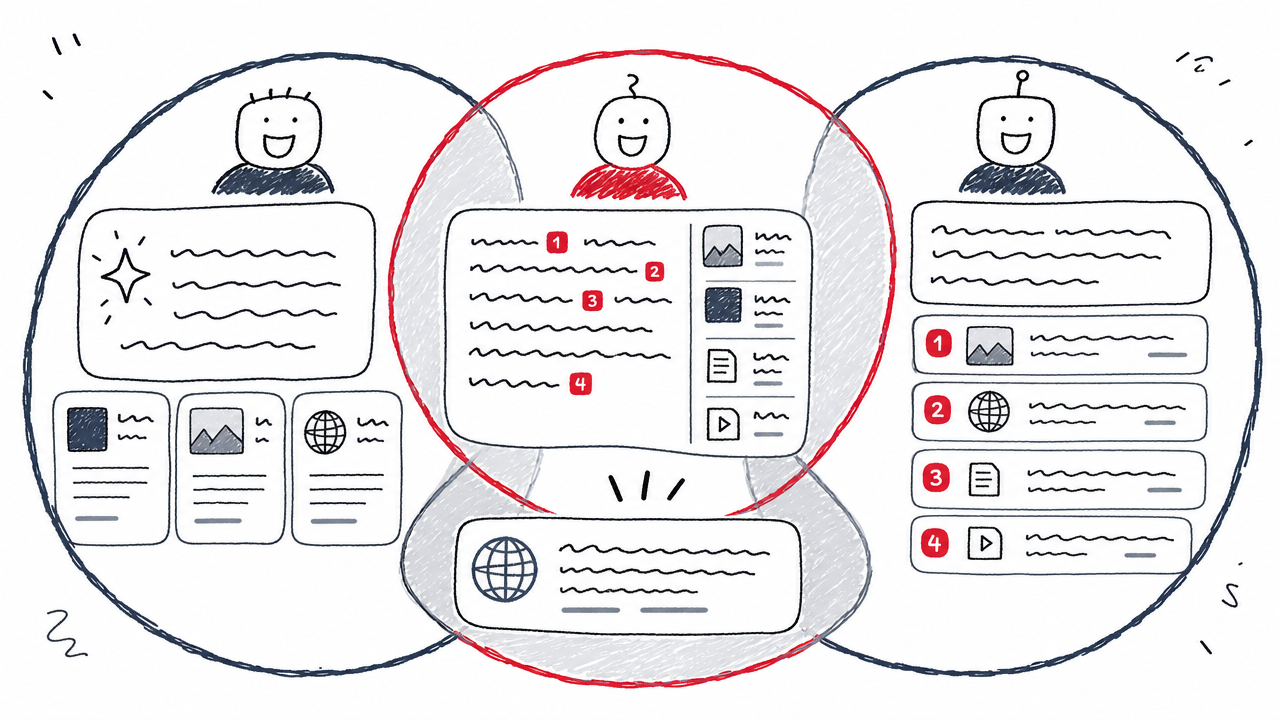
- Google AI Overviews, ChatGPT, and Perplexity are not one channel. ChatGPT Search rewrites prompts into web searches and displays a Sources panel (OpenAI Help Center: ChatGPT Search). Perplexity searches the internet in real time and provides numbered citations (Perplexity Help Center: How Does Perplexity Work?). Google AI Overviews use core Search systems with retrieval-augmented generation. Each platform retrieves and displays sources differently and should be measured separately.
How should a company measure GEO visibility?
Prompt-level tracking, visible across the Convert and AdsPower cases, is the most actionable approach. Four key metrics define GEO measurement:
The workflow: define a consistent set of commercial prompts, run them across ChatGPT, Perplexity, and Google AI Overviews at regular intervals (weekly or biweekly), and record whether the brand is mentioned, cited, recommended, or absent. Separate branded queries from generic category queries to avoid inflating results.
Google Search Console now offers a generative AI performance report that shows impressions for AI Overview appearances, providing a first-party data source for the Google side of the equation (Google Search Console: Generative AI Performance Report).
FAQ
How do brands get cited by ChatGPT?
ChatGPT Search rewrites user prompts into targeted web searches, retrieves current pages, and displays inline citations or a Sources panel (OpenAI Help Center: ChatGPT Search). Brands appear by publishing direct, evidence-backed answers on crawlable pages and building third-party mentions on sources ChatGPT already retrieves, such as Reddit, review platforms, and authoritative publications.
Are GEO results stable, or can citations disappear?
AI citations are volatile. The Bee Pontoon case documents a citation appearing in a Google AI Overview one morning and vanishing later the same day (Svetlana Sosnova: Google AI Overview Citations Case Study). Treat GEO visibility as a trend measured over repeated prompt checks, not a fixed ranking.
Is being mentioned by ChatGPT the same as being cited?
No. A mention means the AI names the brand in the answer text. A citation means it links to a specific source URL. Semrush found 61.7% of AI citations did not include a brand mention in the answer (Semrush). These are different outcomes with different measurement needs.
Does llms.txt help a website appear in Google AI Overviews?
Google's official documentation states there is no special llms.txt file, AI-only schema, or machine-readable format required for AI Overviews. Standard indexation and snippet eligibility are the stated requirements (Google Search Central: AI Features and Your Website).
What can marketers realistically replicate from these GEO examples?
The repeatable elements: answer-first content structure, crawlable product facts (not locked in JavaScript or video), third-party authority on platforms AI already retrieves, prompt-level baseline measurement, and regular re-testing across platforms. No single tactic guarantees a citation.