
Generative Engine Optimization Statistics - 40+ Numbers on AI Search in 2026
Explore 40+ generative engine optimization statistics from primary sources covering AI Overview prevalence, citation overlap, CTR impact, and AI referral traffi

Generative engine optimization (GEO) is now a measurable discipline. AI Overviews appear on up to 24.61% of tracked queries, position-one CTR drops an estimated 58% when an AIO is present, AI referral traffic grew 357% year over year, and 76.1% of Google AIO citations come from the top 10 organic results. The 40+ statistics below, all from primary sources, are grouped by theme so marketers can find and cite the exact figure they need.
What is generative engine optimization (and why track its statistics)?
Generative engine optimization is the practice of increasing a website's visibility, citation rate, and referral traffic within AI-generated search responses. It applies to Google AI Overviews, Google AI Mode, ChatGPT Search, Perplexity, Gemini, and Microsoft Copilot.
GEO overlaps with, but is not the same as, traditional SEO or answer engine optimization (AEO). Traditional SEO targets organic rankings. AEO focuses on featured snippets and voice-assistant answers. GEO adds a layer: making sure content is retrieved, cited, and surfaced by large language models that build answers from several sources. The term and its benchmark were introduced by Aggarwal et al. in the GEO paper.
Google's own documentation confirms that AI Overviews and AI Mode use "query fan-out," breaking a user query into sub-queries across topics and data sources (Google Search Central). This makes the retrieval process very different from a single-keyword ranking.
The statistics below draw from user-level browsing panels (Pew), keyword-level databases (Semrush, seoClarity), clickstream estimates (Ahrefs, Similarweb), controlled experiments (GEO paper, competitive GEO study), and Google's official documentation. Each study's method is labeled so that figures are not mixed across incompatible denominators.
AI search adoption and AI Overview prevalence
How many people encounter AI-generated search results?
Most U.S. search users already see AI-generated content during routine browsing. Pew Research Center tracked real browsing behavior rather than self-reported surveys, making these figures especially useful for gauging actual exposure.
These are user-exposure rates from a behavioral panel, not keyword-database prevalence figures. The 58% measures "share of people who saw at least one AIO," while 18% measures "share of searches that triggered one."
What percentage of queries trigger an AI Overview?
The answer depends on the data source, device, and date. No single number is final. The table below shows how prevalence estimates split across methods.
Sources: Pew (July 2025), Semrush AI Overviews Study, seoClarity Impact Report
Why do these numbers differ? Pew uses a browsing panel capturing real user behavior. Semrush tracks a keyword database across devices. seoClarity's Research Grid contains over 500 million keywords and reports desktop separately. AIO rollout was also volatile: Semrush recorded a peak of 24.61% in July 2025 that fell to 15.69% by November 2025 (Semrush). Marketers should track the feature by month and query set rather than relying on one static benchmark.
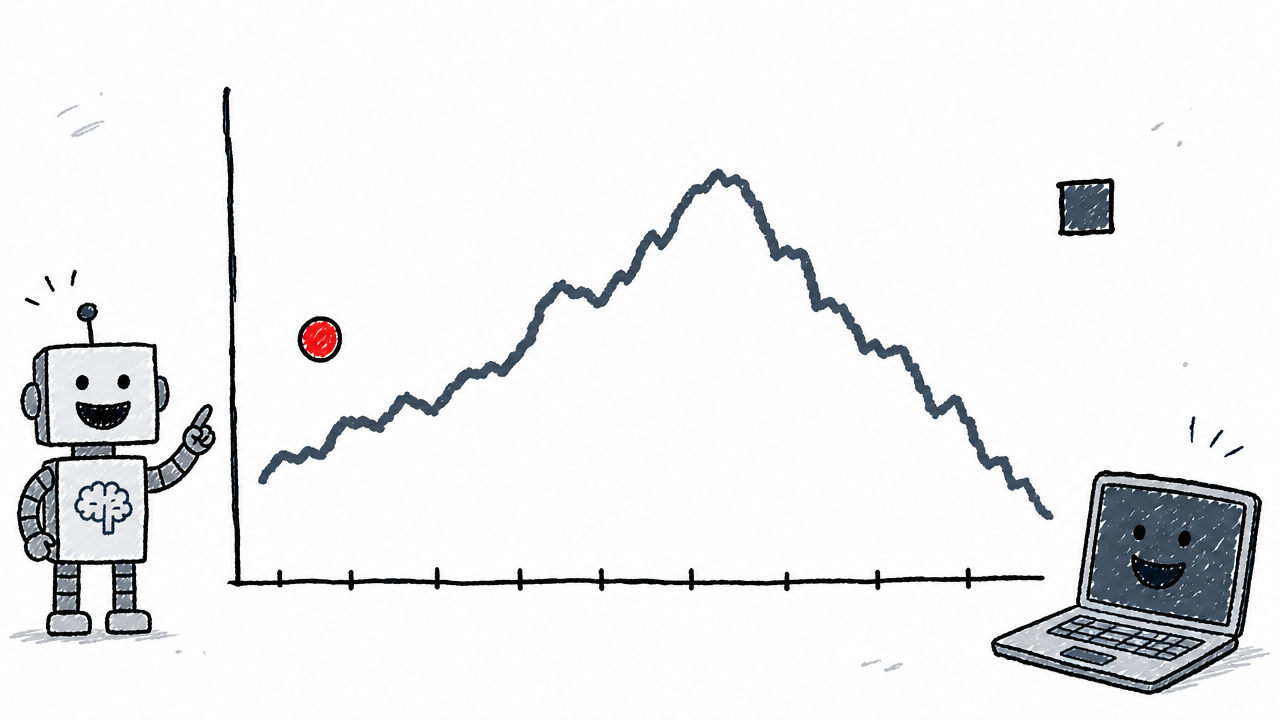
How the AI Overview intent mix is shifting beyond informational queries
AI Overviews are no longer just an informational-query feature. Commercial and transactional GEO now demands attention.
Semrush's initial 10M+ keyword study found the informational share of AIO-triggering queries fell from 91.3% in January 2025 to 57.1% by October 2025. In the same period, commercial queries rose from 8.15% to 18.57%, transactional from 1.98% to 13.94%, and navigational from 0.84% to 10.33% (Semrush).
A follow-up Semrush study (November 2025 through April 2026, 600,000+ U.S. desktop keywords, 10 industries) confirmed the trend: commercial-intent SERPs with AI Overviews grew 71%, while transactional-intent SERPs with AIOs declined 5%. Finance had the largest commercial AIO increase at 231.25%. Google Ads and AI Overviews appeared together roughly twice as often as a year earlier (Semrush).
seoClarity's September 2025 data showed a different breakdown: about 84% of AIOs were informational, with transactional keywords at 12.54% (seoClarity). The gap likely reflects different keyword samples, device splits, and classification methods.
Bottom line for marketers: Product pages, comparison content, and pricing pages are increasingly exposed to AI Overviews. Paid and organic teams should analyze AIO exposure alongside advertising visibility, especially in finance and other high-value verticals.
Do longer and question-based searches trigger AI Overviews more often?
Long-tail and conversational queries are the primary GEO battleground. Pew's July 2025 analysis found a steep link between query length and AIO trigger rate:
Source: Pew Research Center (July 2025)
Content teams should model complete user questions, not only short keyword strings. If your target queries are conversational or long-tail, most of those SERPs may already carry an AI summary.
How AI engines select and cite sources
Google AI Overview citation overlap with organic rankings
For Google's own AI Overviews, traditional organic ranking strongly predicts citation. Ahrefs analyzed 1.9 million citations from 1 million AI Overviews and found that 76.1% of cited pages ranked in Google's top 10. The median organic rank of the first AIO citation was position 2; for the second citation, position 4; for the third, position 5.
Ranking is not a guarantee, though. 14.4% of cited pages did not rank in Google's top 100 at all, and 9.5% ranked between positions 11 and 100 (Ahrefs).
seoClarity's separate study (362,000 U.S. desktop queries, 5.1 million citations, October 12, 2025) adds nuance. The denominator changes the conclusion:
Sources: Ahrefs, seoClarity
The reconciliation: most AIOs overlap with at least one top-ranked page, but many individual citations come from lower-ranked or unranked pages. Strong organic rankings increase eligibility, but GEO demands more than position alone.
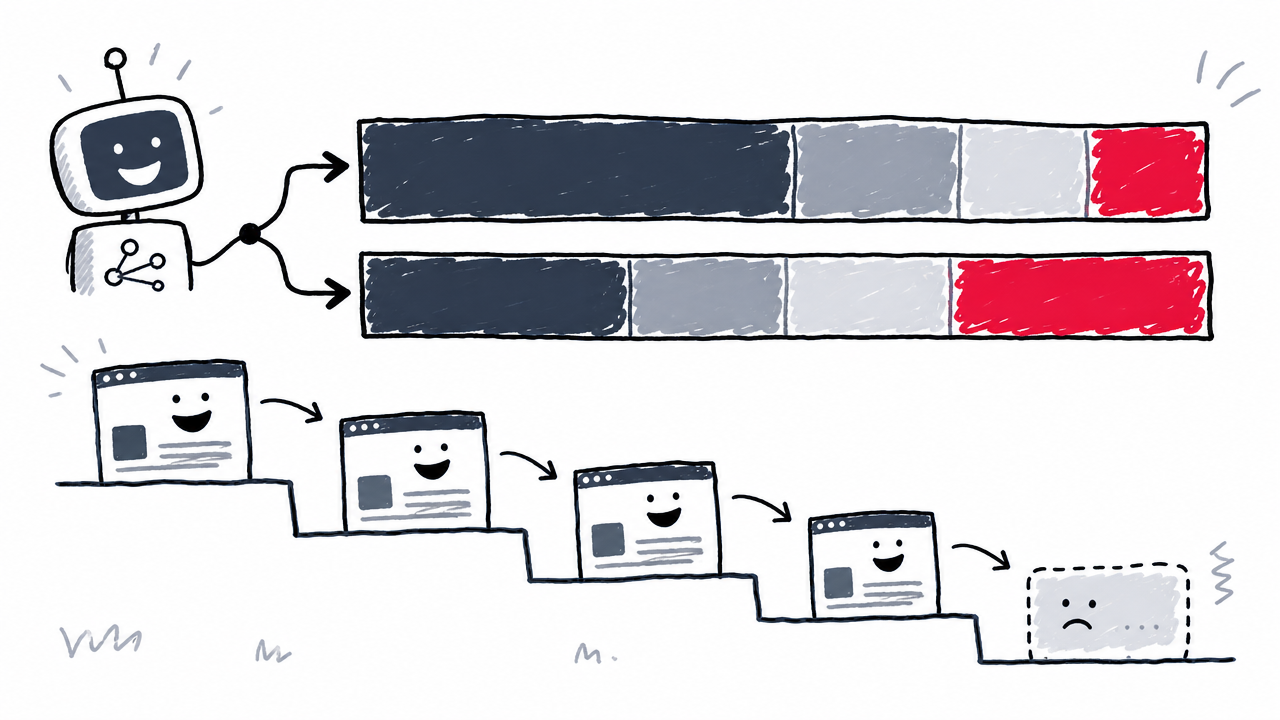
Do ChatGPT, Gemini, and Copilot citations match Google rankings?
They largely do not. Ahrefs tested 15,000 long-tail prompts across six platforms (Google, Bing, ChatGPT, Gemini, Copilot, Perplexity) and found very different citation behavior outside Google's own ecosystem.
Source: Ahrefs
These are fundamentally different retrieval systems. ChatGPT, Gemini, and Copilot often select sources that answer the underlying information need through topic coverage and entity relevance rather than matching a single keyword query. Ranking for one exact query in Google is not enough for cross-platform GEO.
Which AI search engine cites the most sources?
Perplexity stands out for citation density. Its citation-first product design attaches inline sources to nearly every claim, and it showed the highest Google-overlap rate at 28.6%. Google AI Overviews average about three citations per AIO from the top 20 results. ChatGPT, Gemini, and Copilot vary widely; their citation counts depend on the query type and response format. Direct comparison data on citation volume per response is limited, but Perplexity's design makes it the most transparent citation source among the major AI assistants.
Zero-click searches and CTR impact of AI Overviews
Are AI Overviews reducing organic click-through rates?
User-level data says yes: clicks roughly halve when an AI summary is present. Keyword-level modeling puts the position-one CTR drop at an estimated 58%.
User-level (Pew, March 2025):
Source: Pew Research Center (July 2025)
Keyword-level (Ahrefs, 300,000 keywords, December 2025):
Ahrefs estimated that AIO presence was associated with a 58% lower CTR at position one. For AIO-triggering keywords, position-one CTR fell from 0.073 to 0.016. A counterfactual estimate (what the CTR would have been without AIOs, controlling for broader informational CTR decline) was 0.037 (Ahrefs).
Estimated CTR impact by SERP position (Ahrefs):
Source: Ahrefs
The 58% figure is a modeled observational estimate, not a randomized experiment. Use "associated with" language when citing it.
What do zero-click studies show?
Different methods produce different conclusions. Semrush analyzed more than 200,000 keywords before and after AIO appearance and found zero-click rates declined from 33.75% to 31.53% for the same keyword set. This contrasts with Ahrefs' finding and may reflect differences in keyword selection, measurement timing, and what counts as a "zero-click" event.
seoClarity's CTR study (about 750 million impressions, 32 million clicks, 12 million queries) showed steep declines at mid-SERP positions: desktop position-three CTR fell from 4.88% to 2.47% year over year, and position-four from 2.79% to 1.05% (seoClarity).
Marketers should avoid claiming that AI Overviews "cause" a specific CTR loss. The evidence shows a strong association, but study design, query mix, and SERP feature changes all influence the outcome.
AI referral traffic from ChatGPT, Perplexity, and other platforms
How much referral traffic do AI platforms send?
AI referral traffic is growing fast from a small base, with ChatGPT dominating the channel. Similarweb estimated 1.13 billion AI-platform referral visits to the top 1,000 websites in June 2025, up 357% year over year. In the same period, Google Search generated about 191 billion referrals to the same domain sample.
ChatGPT accounted for more than 80% of AI referrals to top domains. AI referrals to news and media sites increased 770% year over year (Similarweb). A separate May 2025 analysis counted 1.3 billion referral visits from eight AI platforms to the broader web.
AI referrals were significant and accelerating but remained a fraction of Google's volume at the time of measurement.
Which websites receive the most AI referral traffic?
Large, authoritative domains dominated AI referral lists. These figures should not be generalized to all sites.
Similarweb's 2025 GenAI report estimated a 7% conversion rate for GenAI referrals to transactional sites. This is a Similarweb estimate, not a universal benchmark, but it suggests AI-referred visitors carry high intent.
What content traits help pages get cited by AI?
Citations, statistics, and quotations boost visibility in GEO experiments
Evidence-rich content is a defensible, testable GEO tactic, though benchmark gains are not the same as guaranteed live-traffic results. The original GEO paper evaluated 10,000 queries in GEO-Bench and found that GEO methods increased source visibility by up to 40% in generative-engine responses and by up to 37% on Perplexity specifically.
Adding citations, quotations, and statistics produced roughly 30%–40% relative improvement on the paper's position-adjusted visibility metric and about 15%–30% improvement on its subjective impression metric (Aggarwal et al.).
These are benchmark gains from a controlled experiment. They show that evidence density improves retrieval, but the exact lift will vary by engine, query, and competitive context.
Relevance, freshness, and completeness outweigh formatting
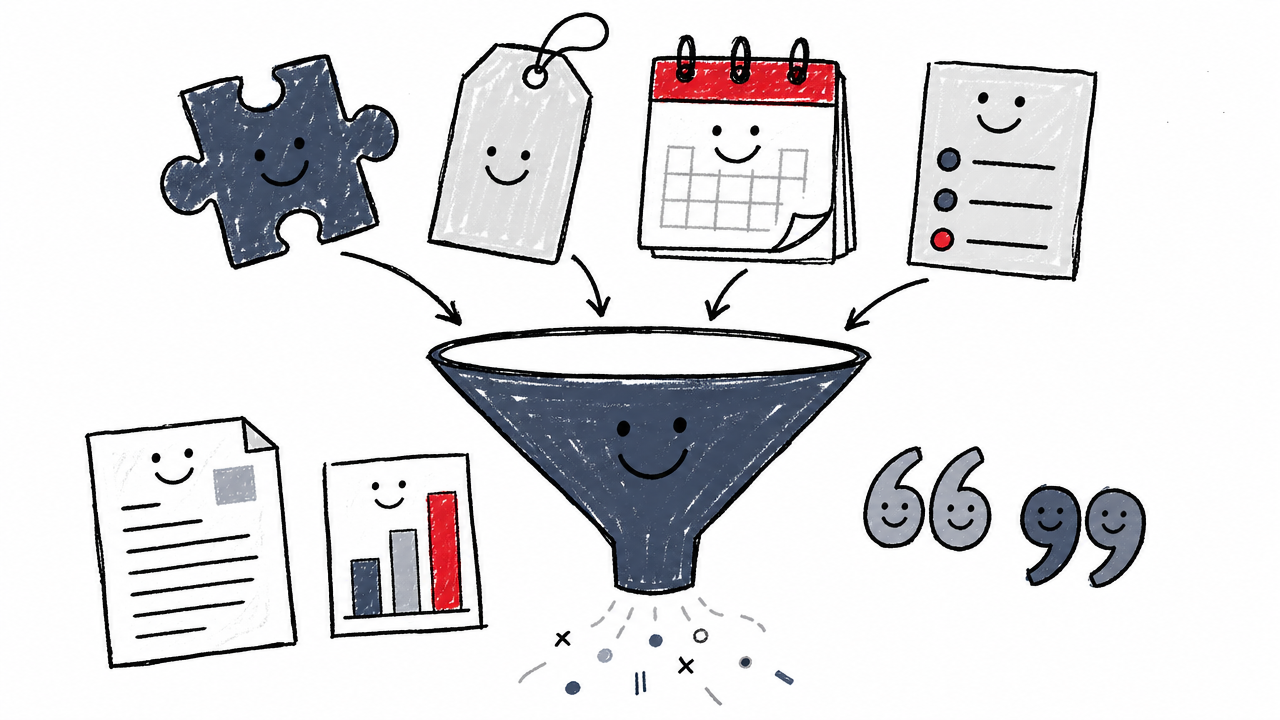
A 2026 competitive GEO study ran 252,000 trials across six LLMs and 18 content factors. The results clarify what moves the needle.
Key takeaway: Relevance, completeness, freshness, and trust should come before cosmetic formatting changes. For product and comparison content, include current prices, specifications, and a clear match to the query before testing layout tweaks.
Google's own guidance on AI features and indexability
Google Search Central states three practical points:
- AI Overviews and AI Mode may use query fan-out, issuing sub-queries to retrieve broader information (Google Search Central).
- There are no extra technical requirements beyond being indexed and snippet-eligible in normal Google Search (Google Search Central).
- AI feature performance is reported within the Web search type in Google Search Console (Google Search Central).
Technical SEO basics remain a prerequisite. Covering subtopics fully improves the chance of being retrieved via fan-out.
How to interpret these numbers without misleading yourself
The statistics above come from different methods, time periods, and platforms. Here is how to avoid common mistakes:
- Tell Google AIOs apart from AI assistants. Google AI Overviews cite top-ranked pages 76% of the time; ChatGPT and Gemini overlap with Google's top 10 only ~12% of the time. These are different retrieval systems with different citation behavior.
- Separate visibility, citation, click, and conversion. Being cited does not guarantee a click. Pew found only 1% of sessions with an AI summary led to a click on a link inside it. Citation visibility can still build brand awareness, but measure each step on its own.
- Do not combine user-level and keyword-level data. Pew's 18% query trigger rate and Semrush's 24.61% peak are not directly comparable. Label the study date, sample size, and device type every time you cite a figure.
- Use "associated with" language. A 58% lower CTR at position one is an observational estimate, not a proven causal loss. Other SERP features, query mix changes, and user behavior shifts also play a role.
- Label study dates. AIO prevalence moved from 6.49% to 24.61% to 15.69% within a single year. A figure from January 2025 is not the same as one from July 2025.
- Do not stretch benchmark results to live performance. The GEO paper's 30%–40% visibility improvement was measured on a controlled benchmark, not on live website traffic.
FAQ
Is GEO replacing traditional SEO?
No. Traditional SEO remains a prerequisite, especially for Google AI Overviews, where 76.1% of citations come from top-10 organic results. GEO adds a layer of optimization for citation, mention, and referral across AI answer engines, but it does not remove the need for strong indexability, authority, and ranking.
How should marketers measure GEO performance?
Track citation visibility across AI platforms using tools like Ahrefs Brand Radar or seoClarity Research Grid. Check AI referral traffic in analytics (Similarweb data, server logs filtering AI user agents). Use Google Search Console's Web search type for AIO-related impressions. Measure brand mentions in AI-generated responses as a leading indicator.
What is query fan-out in AI search?
Google's AI Overviews and AI Mode may break a single user query into sub-queries across topics and data sources, then combine the results (Google Search Central). Covering subtopics fully improves the chance of retrieval because the system searches more broadly than the original query string.
Does adding statistics to content guarantee an AI citation?
No. The GEO paper showed that adding statistics, citations, and quotations improved visibility on a benchmark metric by 30%–40%, but benchmark gains do not equal guaranteed live citations or traffic. The 2026 competitive GEO study found that topical relevance and freshness are stronger gatekeepers than any single content formatting tactic.
How large is AI referral traffic compared with Google Search referrals?
In June 2025, Similarweb estimated ~1.13 billion AI referrals to the top 1,000 domains versus ~191 billion from Google Search. AI referrals were growing at 357% year over year but remained roughly 0.6% of Google's referral volume to the same domain set.