
Best AI SEO Tools in 2026 - Top Picks Compared
Best AI SEO tools compared: Semrush for all-in-one, Surfer for content scoring, Otterly.ai for GEO, open-source OpenSEO for agent workflows, and free Bing citation data.

The best AI SEO tools are Semrush for all-in-one SEO plus AI visibility, Surfer SEO for content scoring, Bing Webmaster Tools for free AI citation tracking, Otterly.ai for dedicated GEO monitoring, and OpenSEO for open-source, agent-driven stacks. No single platform leads at both classic Google rankings and AI search visibility (ChatGPT, Perplexity, AI Overviews, Copilot). Build a dual-track stack: one tool for classic SEO data, plus another tool or a free report for generative engine visibility.
How we selected these tools (methodology)
We scored each tool on two tracks: traditional SEO (keywords, backlinks, technical audits, rank tracking) and AI/GEO visibility (citations in ChatGPT, Perplexity, Google AI Overviews, Gemini, and Copilot). Pricing was checked against public vendor tiers in July 2026 and is date-stamped below. Most of the lineup was researched from vendor docs, public plans, and cited third-party tests; hands-on checks focused on content scoring workflows, free console reports, and how clear each product is about first-party versus proxy citation data. Criteria included dataset depth, prompt or citation coverage, content scoring quality, and whether AI features feel mature or bolted on. One disclosure: Timothe AI (this site) offers its own keyword volume tool, which appears in the specific-needs section below labeled as ours. Every other pick in this guide is a third-party product we have no stake in.
Presenc AI research found that all-in-one platforms score about 22% lower on GEO-specific capabilities than dedicated AI visibility tools. That finding shapes this guide: we label each product SEO, GEO, or Both, and we recommend stacks rather than one "winner." Editorial picks favor clear use-case fit over the longest feature lists.
Quick comparison table
Shortlist by job-to-be-done, budget, and track (SEO, GEO, or both). Starting prices reflect public plans checked in July 2026; confirm on the vendor site before you buy.
Best all-in-one AI SEO platforms
All-in-one platforms now mean more than keywords and backlinks. In 2026 they combine classic rank and site data with AI visibility features (prompt databases, AI Overview tracking, brand mentions in AI answers). They work well as hubs, but dedicated GEO tools still lead on pure AI-citation depth.
Semrush: best all-in-one for SEO + AI visibility
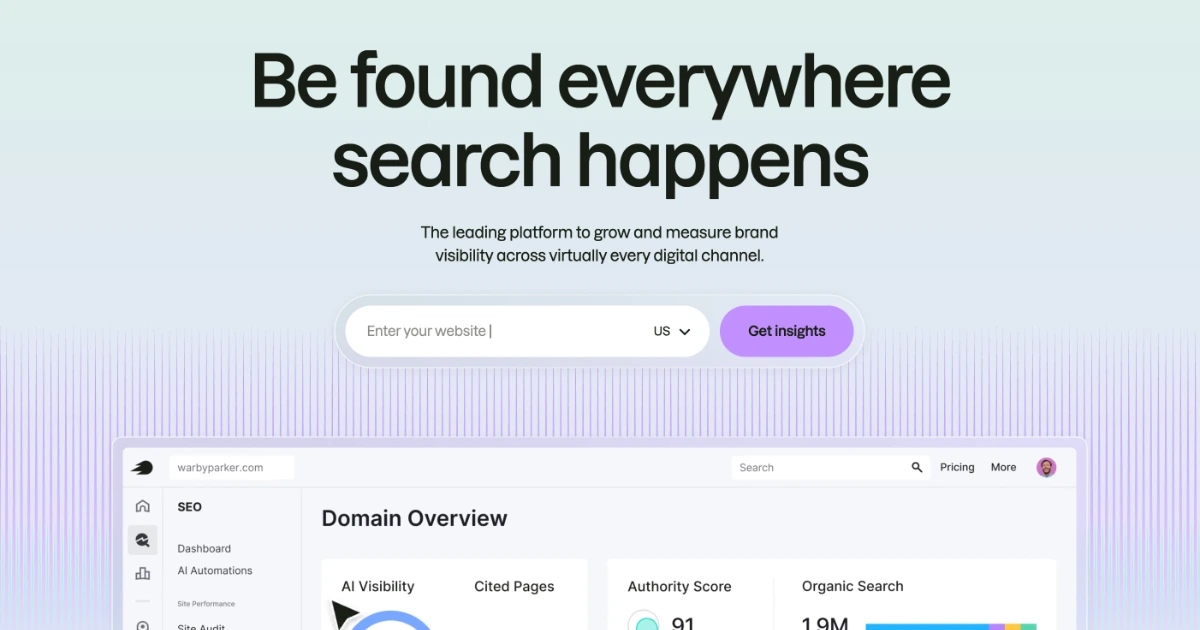
Semrush (including Semrush One, Copilot, and the AI Visibility Toolkit) is a full SEO suite with one of the deepest AI-search layers among generalist platforms. Agencies and mid-to-large businesses that need keyword research, audits, competitor intel, and AI visibility in one login get the most from it.
Its standout trait is prompt-scale AI visibility research. According to Freddie Chatt's testing, Semrush monitors on the order of 261 million prompts across 32 countries. Semrush’s own expanded 2026 AI Visibility Index is built on analysis of 126 million AI search prompts, which informs how the product frames AI Overview volatility and domain churn.
Limitation: premium pricing and a steep learning curve. Pro is commonly listed around $139.95/mo; full AI visibility workflows often sit on higher tiers. Teams that only need writing help will overpay.
If you are wiring Semrush into broader workflows, pair it with process design from SEO Automation: The Complete Guide to Automated SEO Tools & Workflows so Copilot outputs feed content and reporting pipelines instead of sitting in another dashboard.
SE Ranking: best value all-in-one with AI tracking
SE Ranking is a traditional SEO suite (rank tracking, audits, research) with an AI Overview Tracker aimed at teams that care about Google’s generative results without stacking AI add-ons on a flagship suite. Small businesses and freelancers who want one login for rankings plus AI Overview monitoring are the core fit.
Standout trait: AI Overview tracking bundled into its regular plans (roughly $129–$279/mo depending on limits) rather than gated behind higher-tier AI modules the way flagship suites often price it. That makes dual-track monitoring realistic before you can fund an agency stack.
Limitation: smaller datasets and ecosystem breadth than Semrush or Ahrefs. Power users who live in backlink graphs or need the largest prompt indexes will eventually outgrow it.
Ahrefs: best for backlink data + emerging AI features
Ahrefs remains a research platform built on crawl and link data, now extending into AI-oriented products such as Brand Radar and Content Helper. SEO professionals who still win or lose on backlinks, competitive content gaps, and technical crawl insight, and who want AI visibility as an add-on layer, are the best fit.
Standout trait: a leading backlink index plus newer brand/AI visibility surfaces through Brand Radar. Pricing is commonly discussed from about $129/mo (Lite-class) into the $449/mo range for fuller plans, depending on tier.
Limitation: AI and GEO features are still maturing versus dedicated citation trackers. If Share of AI Voice across ChatGPT and Perplexity is your primary KPI, plan to add a GEO-native tool.
Best AI content optimization tools
Content optimizers use NLP, entity coverage, and SERP-derived scoring to guide briefs and drafts. They improve structure and topical completeness. They do not erase quality risk: Ahrefs’ 600,000-page study found no ranking penalty for AI content, but purely AI-generated pages made up only 4.6% of top-20 results and rarely reached #1. Use these tools to brief and score; keep experts in the loop where accuracy and trust matter.
This section focuses on Surfer, Clearscope, and Frase because they dominate and compare cleanly on SERP scoring, briefing, and entry price. Broader topic-modeling suites such as MarketMuse and general AI writing platforms such as Jasper appear in many round-ups; treat them as adjacent options if you already need enterprise topic authority modeling or brand-voice generation, then still pair them with crawl, link, and citation data elsewhere.
Surfer SEO: best for content optimization and SERP analysis
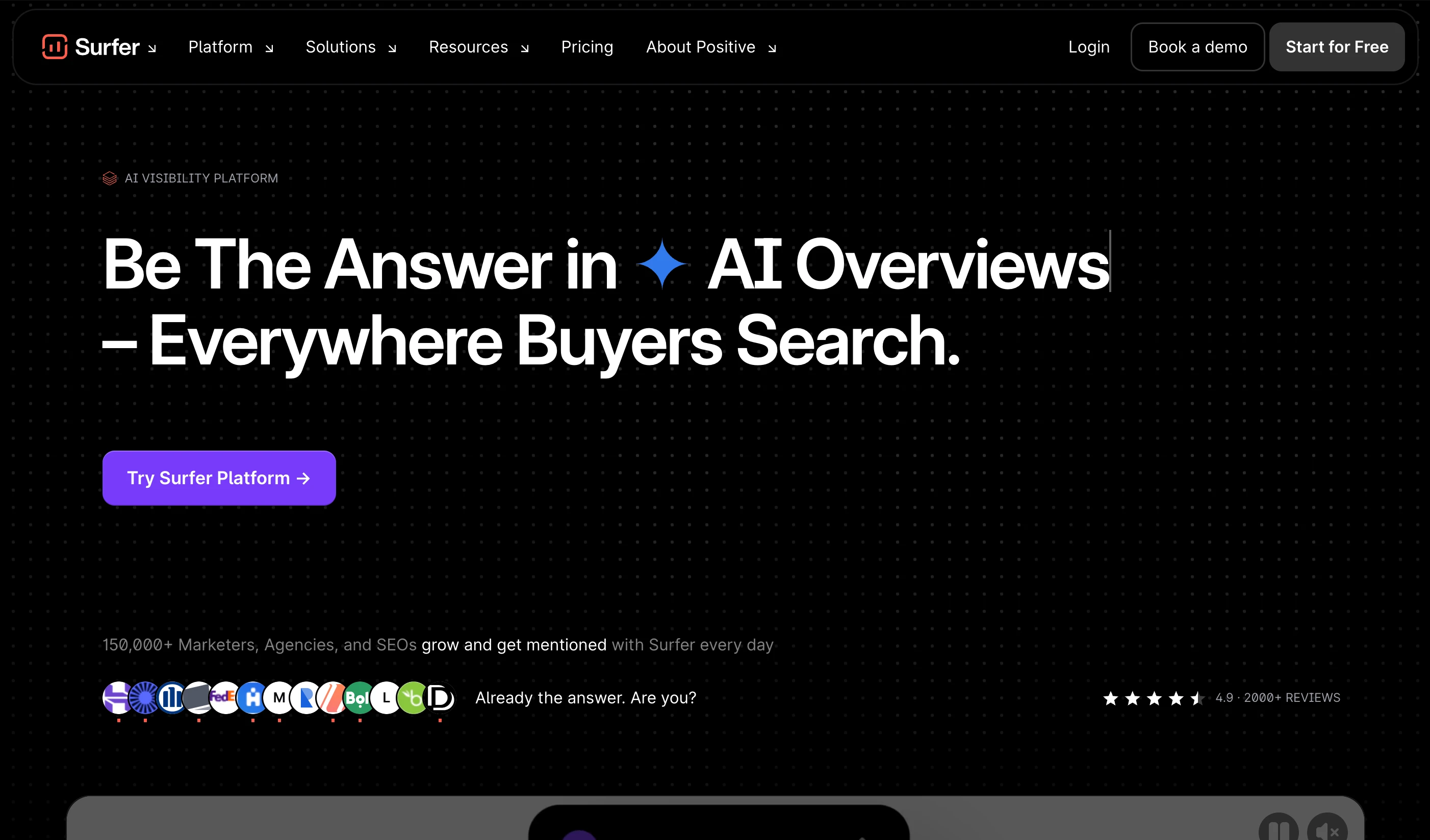
Surfer SEO combines SERP analysis with on-page scoring through features such as AI Mode, Auto-Optimize, and Humanizer. Content teams and freelance writers who draft in-browser and want live feedback against competing pages get the most from it.
Standout trait: real-time content scoring plus Humanizer-style controls aimed at more natural tone after AI drafting. Public pricing often lands around $119–$359/mo, with costs rising as seats, articles, or add-ons scale.
Limitation: spend can climb with usage tiers. Surfer does not replace full keyword or backlink suites.
For how optimizers fit automated briefs and publishing pipelines, see What Are Automated SEO Tools? How They Work and When to Use Them.
Clearscope: best for enterprise content teams
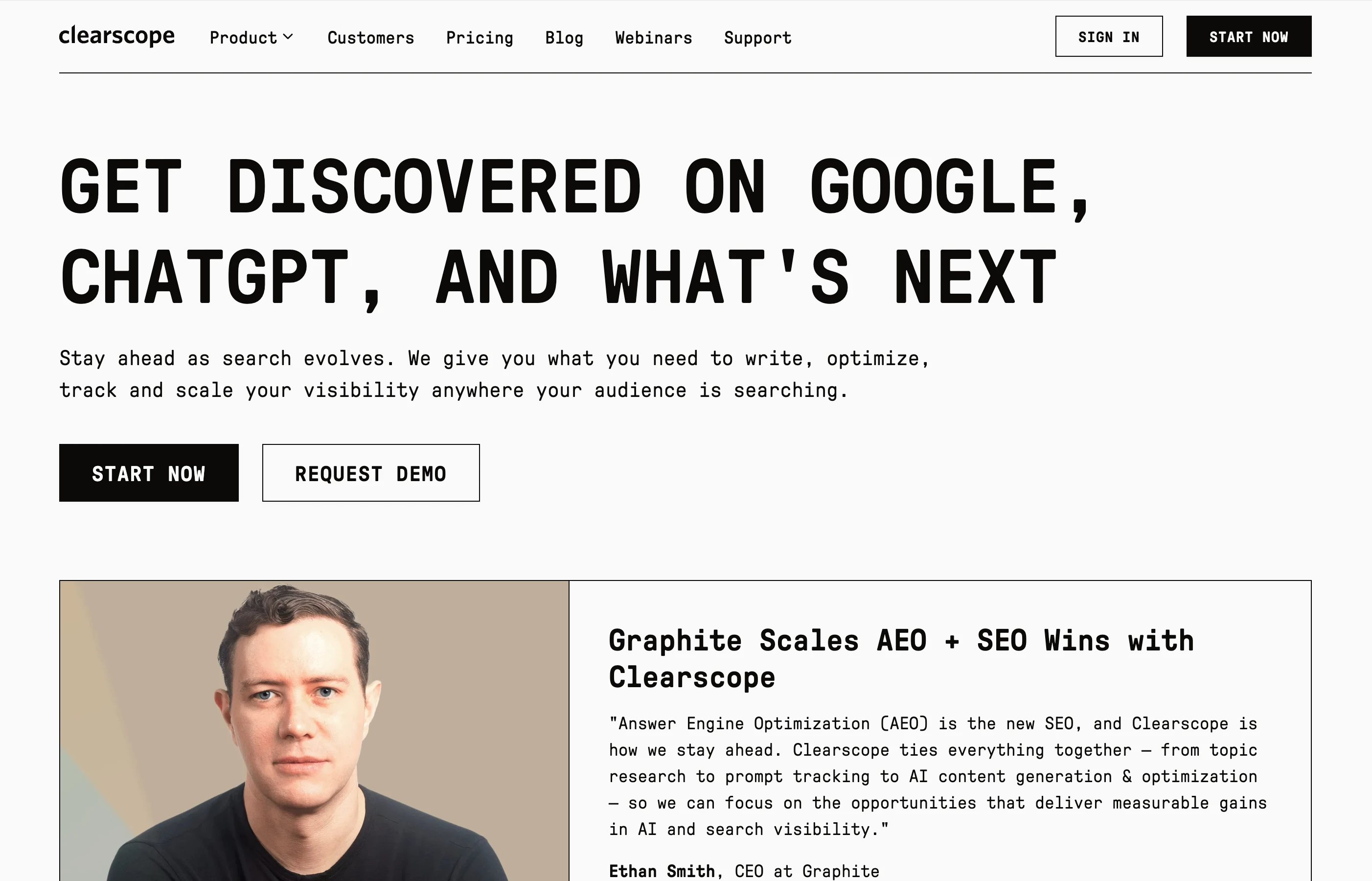
Clearscope is an NLP-driven content grading and briefing platform built for consistent editorial standards. Enterprise and in-house editorial teams that run many writers against shared term targets and review workflows are the core buyers.
Standout trait: clean, highly actionable content briefs that editors can enforce without drowning writers in vanity metrics. Starting price is the highest in this tier, commonly about $129–$399/mo.
Limitation: cost. Solo operators and small blogs rarely need Clearscope’s depth at that entry point when Frase or Surfer cover the core scoring job for less.
Frase: best budget content tool with GEO scoring
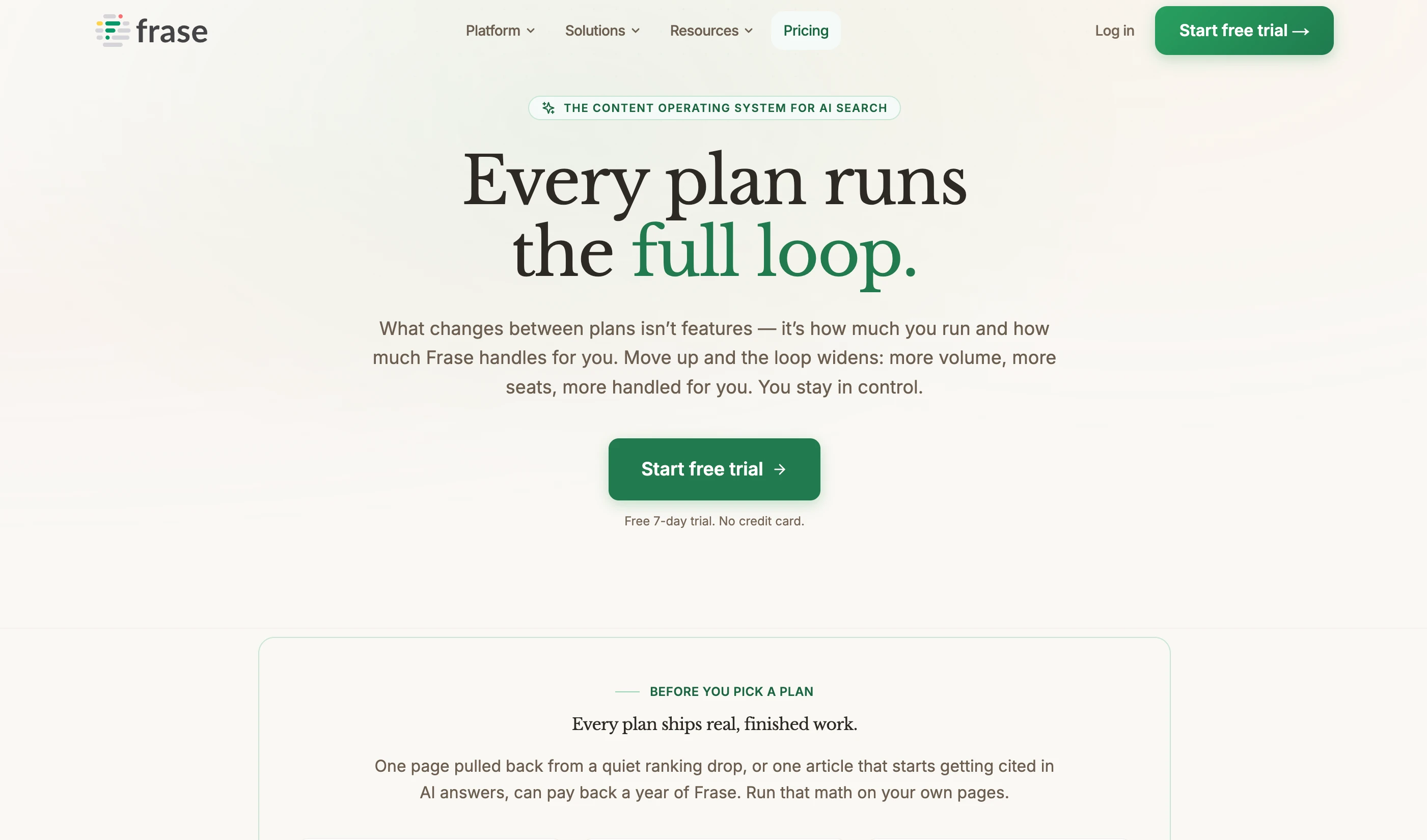
Frase focuses on research-to-brief workflows, alongside agentic SEO workflows and GEO scoring aimed at generative visibility, not only classic SERPs. Solo SEOs and small content teams that want AI-assisted briefs without enterprise invoices are the best fit.
Standout trait: agentic workflows plus GEO-oriented scoring at one of the lowest price points in the category (about $39–$299/mo depending on plan and source).
Limitation: keyword research and competitive datasets are thinner than full all-in-ones. Many teams keep Frase for content/GEO drafting and rely on SE Ranking, Ahrefs, or free tools for market data.
Best dedicated AI visibility / GEO tools
GEO (Generative Engine Optimization) and AEO (Answer Engine Optimization) mean earning citations and brand mentions inside AI answers, not only blue-link rankings. Dedicated tools exist because, per Presenc AI, no all-in-one matches specialists on GEO-specific capability. Prefer products that clarify first-party citation data (for example, search engines reporting how their own AI experiences cite you) versus proxy estimates scraped or inferred across third-party answers.
Otterly.ai: best entry-level AI visibility tracking
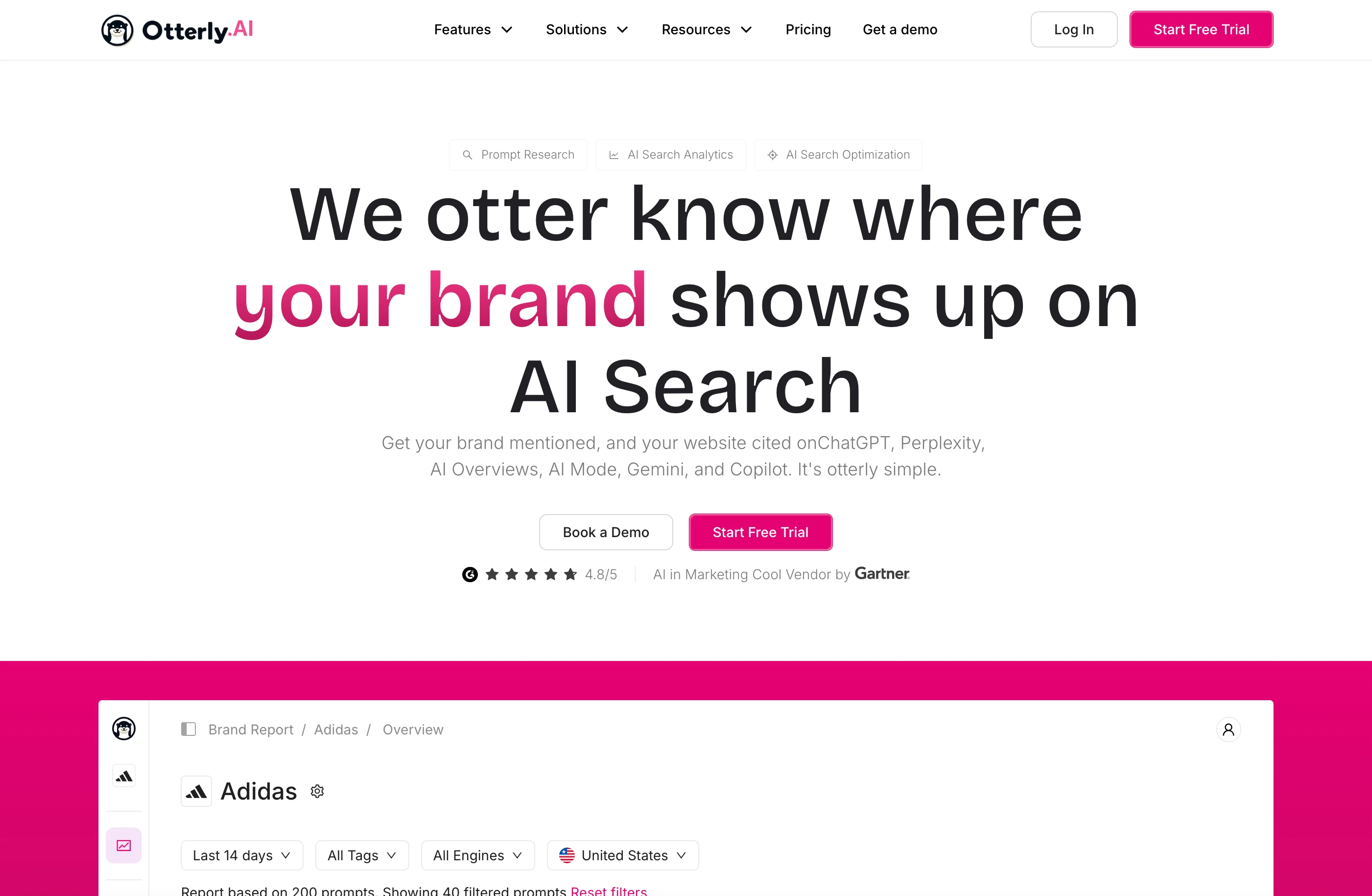
Otterly.ai tracks brand visibility across major AI experiences such as ChatGPT, Perplexity, Google AI Overviews, and Gemini. SMBs starting GEO who need a dedicated panel without enterprise procurement are the core fit.
Standout trait: one of the lowest entry prices for multi-engine tracking, often around $29/mo. That makes “are we even showing up in AI answers?” measurable before you fund a full analytics suite.
Limitation: newer platform with a smaller historical dataset than decades-old SEO indexes. Treat it as a trend and presence panel; keep classic rank and console data for blue-link truth.
Profound: best for agency-level AI search analytics
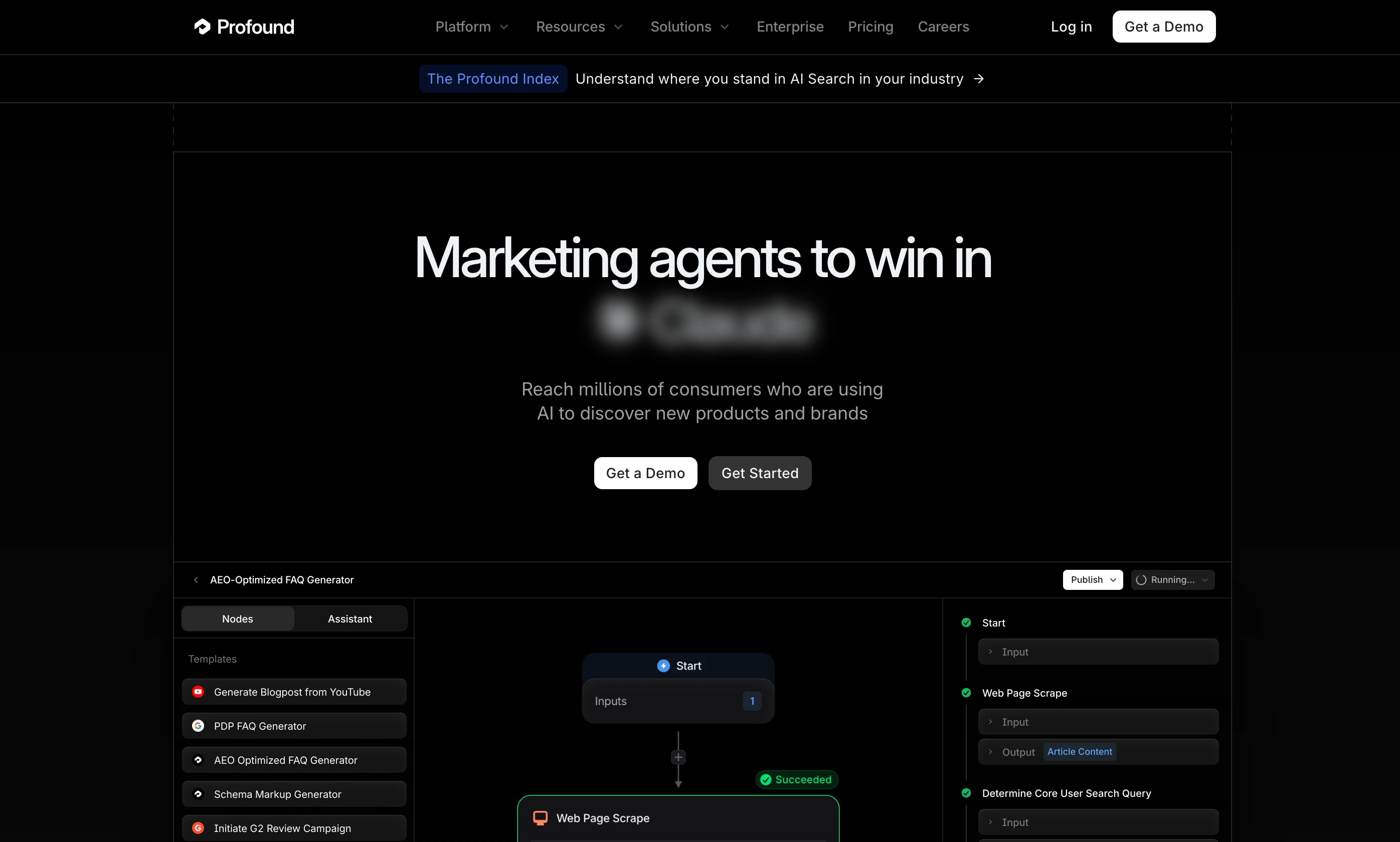
Profound focuses on Share of AI Voice, prompt-level analytics, and agency-style reporting. Agencies and multi-brand teams that segment prompts, clients, and competitive AI share the way they once segmented rank trackers get the most value.
Standout trait: multi-client dashboards and prompt segmentation that map cleanly onto retainer reporting.
Limitation: complexity and cost at scale. Public plans run about $99–$399/mo, with enterprise tiers above that. Solo operators usually start with Otterly.ai or free engine reports before graduating here.
Best free AI SEO tools
Paid software is optional for a baseline dual-track setup. Several free products already surface AI-search performance.
Bing Webmaster Tools (AI Performance report)
Bing webmaster tools is the standout free GEO data source for Microsoft’s stack. GoGoChimp’s case study shows how teams use it to read real Copilot citation behavior (in their example, Copilot citations scaled from 144 in an early 30-day window to 2,898 in a later window between late April and June 2026, a dramatic Copilot-to-Google imbalance in their footprint). Limitation: first-party to Bing/Copilot only, not a full ChatGPT or Perplexity panel.
Google Search Console’s Gen AI report
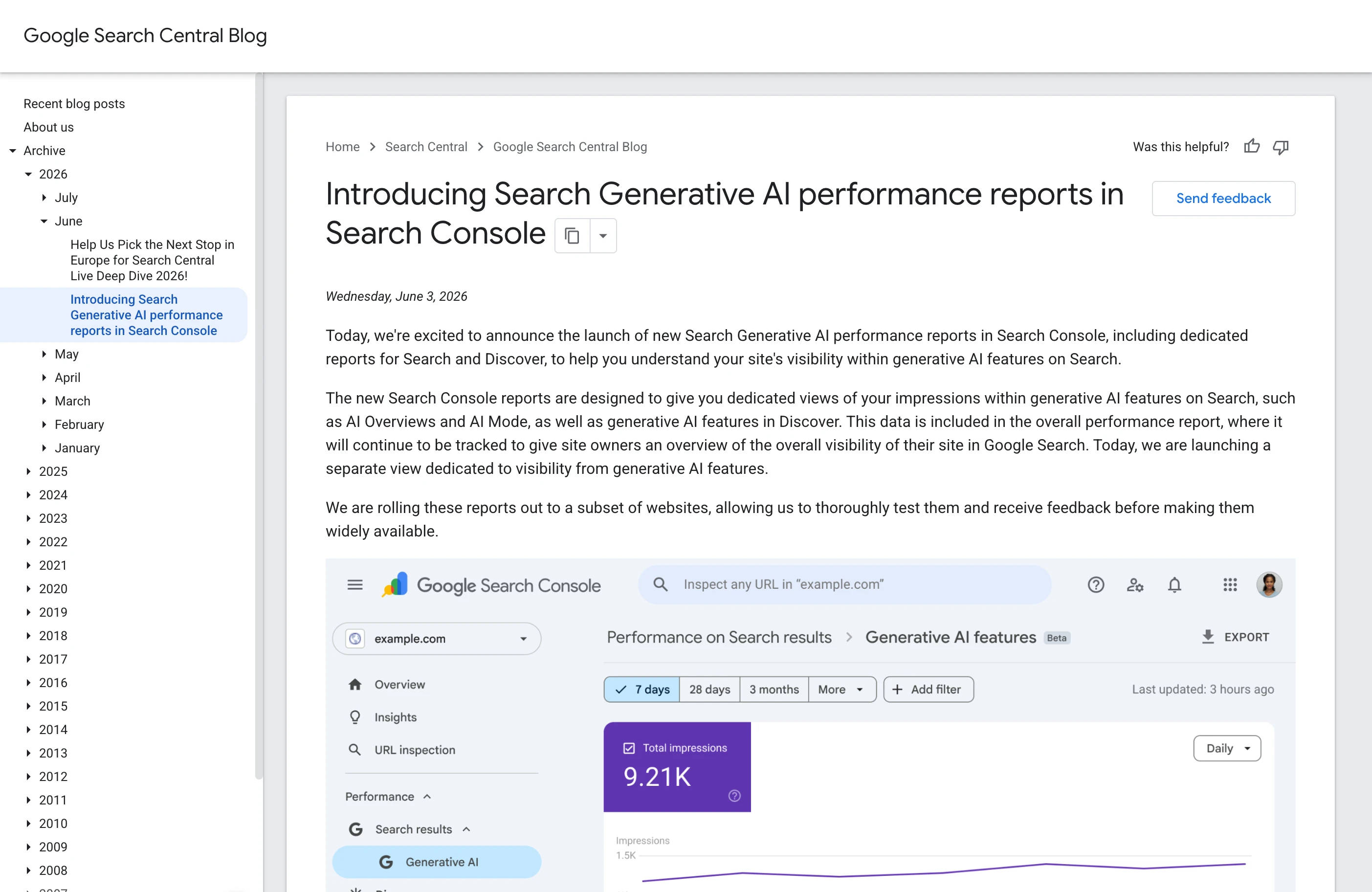
Google Search Console's Gen AI report helps you see how Google’s generative experiences interact with your properties. Because it is first-party data straight from Google, treat it as ground truth for AI Overviews exposure and pair it with Bing’s report to cover both major first-party surfaces before paying for proxy trackers.
Limitation: Google-centric; it will not replace multi-engine GEO trackers.
HubSpot AEO Grader
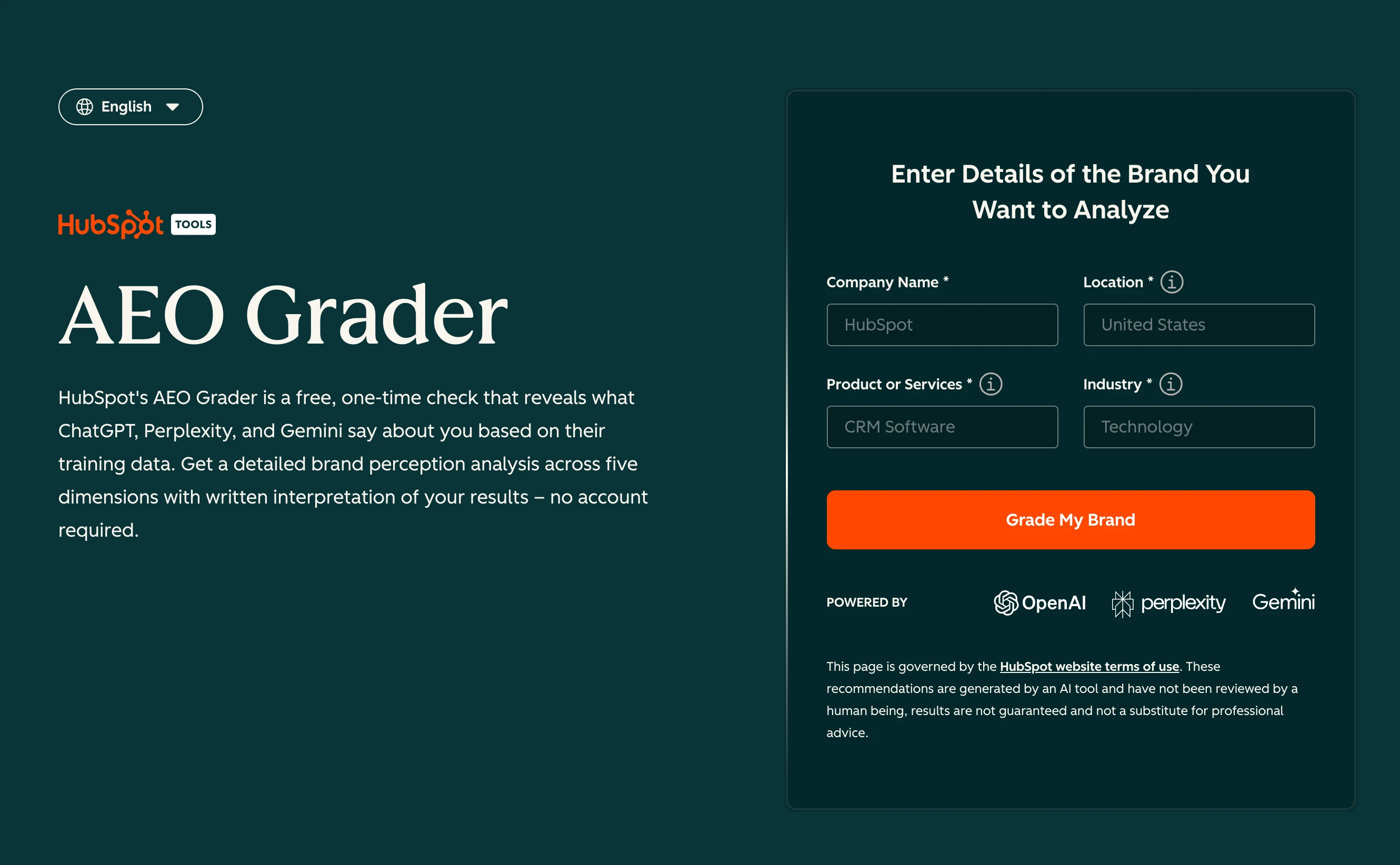
AEO Grader is a prompt-style visibility grader useful for quick diagnostics and stakeholder demos.
Limitation: point-in-time grading. Continuous rank and citation operations still need consoles or paid trackers.
SparkToro / Gumshoe-style audience research
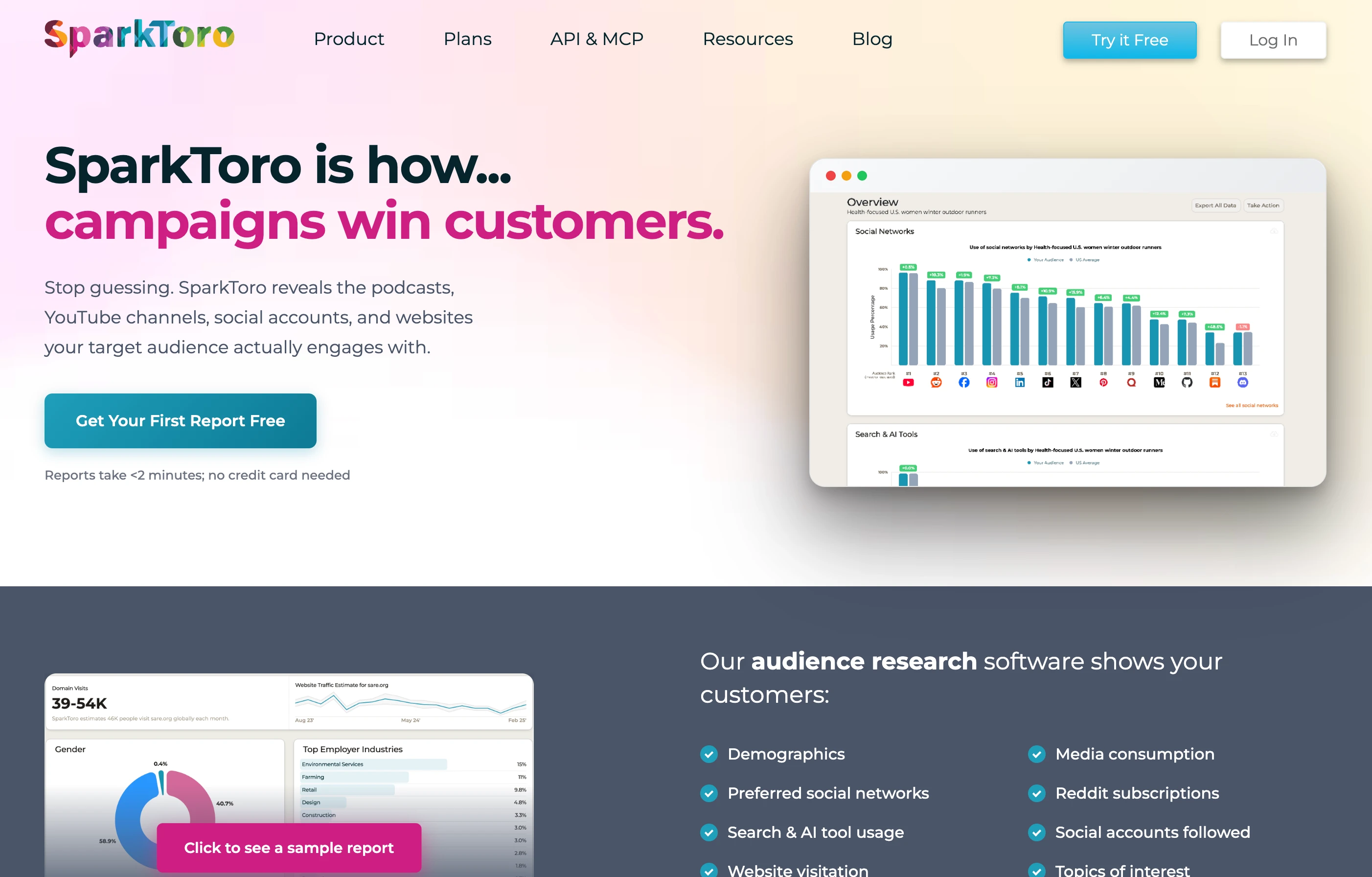
Sparktoro still helps you learn where people pay attention (including AI-era sources) when you build mention and PR strategies. Limitation: not a substitute for technical SEO audits or on-page scoring.
HARO and Connectively (revived by Featured.com)

HARO is back as a free source-request email digest after Featured.com acquired the brand from Cision in April 2025, and in May 2026 Featured also revived Connectively as the platform layer on top: the same media opportunities at connectively.us with filtering, response tracking, and workflow management. Answering journalist queries earns brand mentions and links on authoritative publications, which are exactly the sources AI engines tend to cite, so digital PR doubles as a GEO lever rather than a separate discipline.
Limitation: it is an earned-media channel, not analytics; competition per query is high, and paid tiers on the Featured/Connectively side are separate from the free HARO digests.
Together, Bing WT + GSC + a free grader cover the monitoring many teams postpone until they buy dedicated AI SEO software, and HARO or Connectively adds the earned-media channel on top.
Best AI SEO tools for specific needs
Best for small business
Choose SE Ranking or Frase, then add free Bing Webmaster Tools and Google Search Console. You get core rankings or content/GEO scoring without funding an agency-grade multi-tool stack. The cost-to-capability ratio beats stacking three mid-tier point tools you will not log into weekly.
Best for one-off keyword volume checks
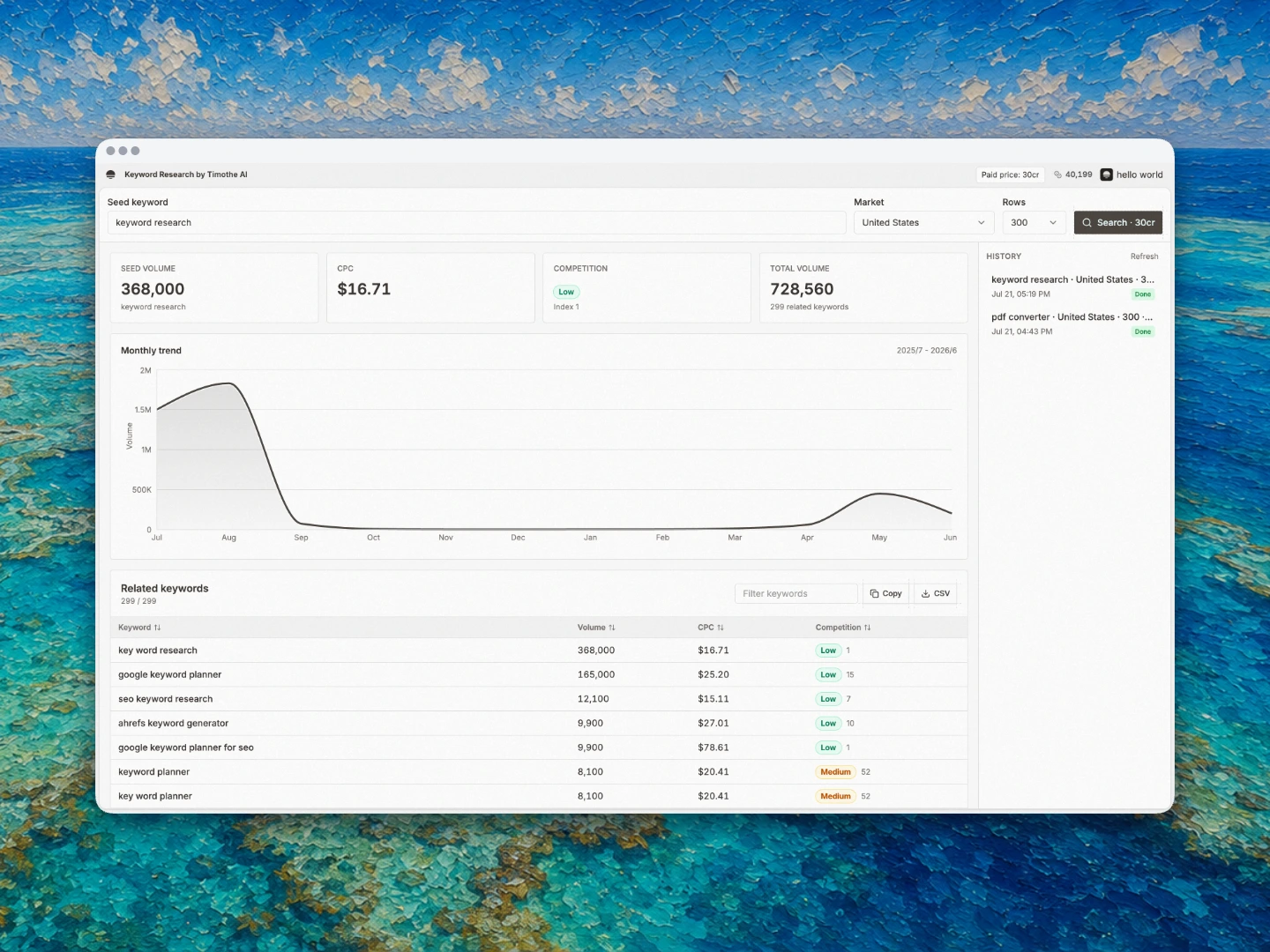
Timothe's Keyword Research is the best. We built it because chat models will happily quote search volumes that are guesses, and a full suite subscription is overkill when the job is validating demand for a topic before it enters a content calendar. It returns volume, related keywords, CPC, and trend data for a seed keyword, priced per search instead of per month.
Best for agencies
Run Semrush as the research and reporting backbone and Profound (or a similar Share of AI Voice platform) for multi-client AI visibility. Agencies need shared process, white-space research, and prompt-level AI reporting clients can understand. That two-tool split matches the Presenc finding that all-in-ones lag dedicated GEO depth.
Best for WordPress sites
Rank Math AI and Yoast’s AI+ tier add in-dashboard help (titles, meta, draft help, workflow shortcuts) on top of classic on-page plugin controls. Rank Math often appeals to teams that want broader feature surface area per dollar; Yoast AI+ fits editorial teams standardized on Yoast’s mentorship-style guidance. Neither replaces a crawler, a backlink index, or a multi-engine GEO tracker. Use the plugin for page-level execution; keep GSC/Bing WT and one research suite for market data.
Best for developers and API-first stacks
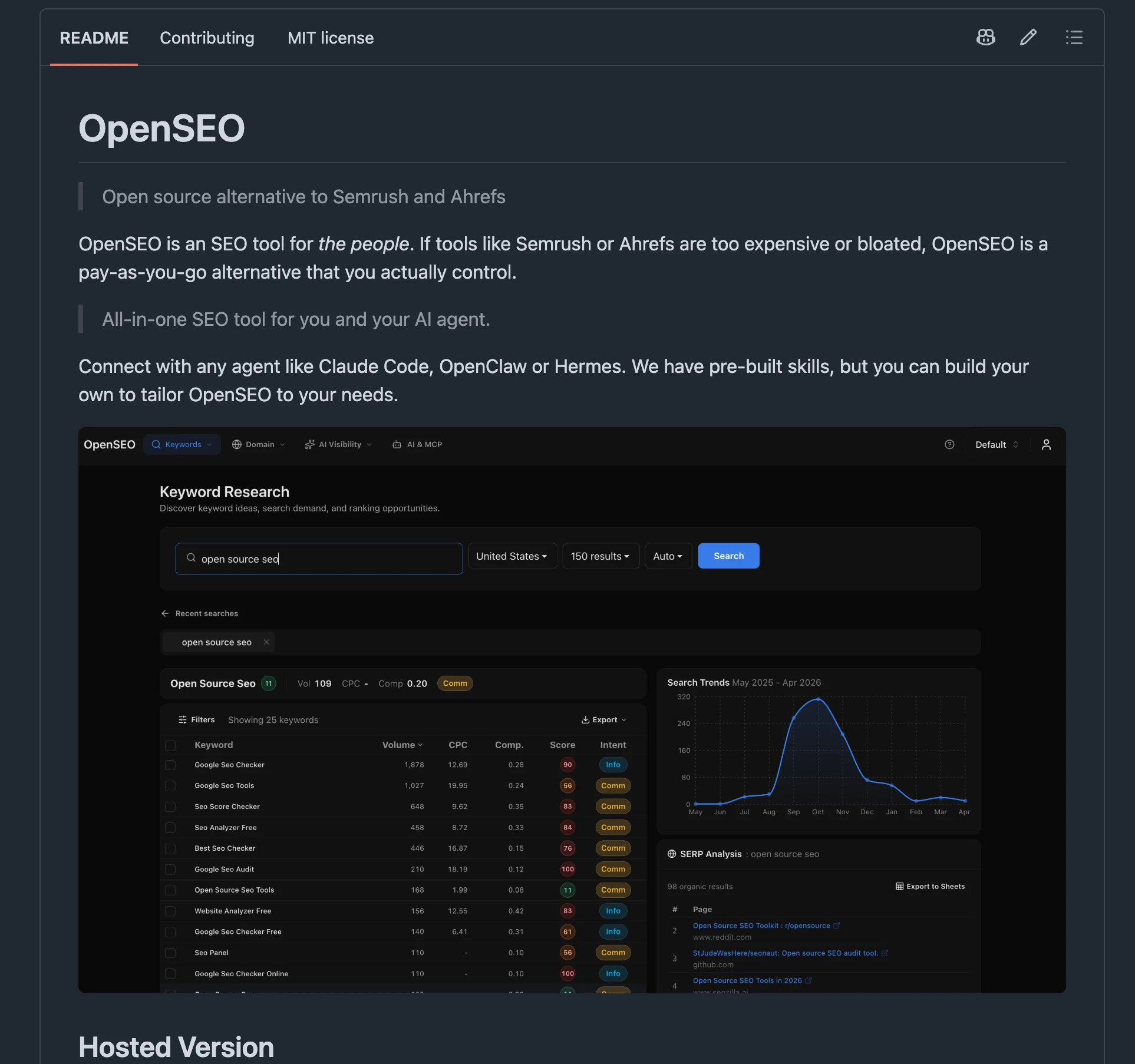
Choose DataForSEO as the data layer and OpenSEO as the interface if you would rather pipe SEO data into your own pipelines and agents than pay for another dashboard. DataForSEO sells raw SEO data as pay-as-you-go APIs (SERP, keyword data, backlinks, on-page crawls, plus an AI Optimization API with LLM-mention tracking) with a $50 minimum deposit and per-call pricing; it is the dataset behind many of the retail tools in this guide, bought at wholesale. OpenSEO is an open-source alternative to Semrush and Ahrefs that puts a product on top of that data: keyword research, rank tracking, backlink analysis, site audits, and AI visibility reports, billed usage-based on the hosted version or free to self-host, with your own DataForSEO API key supplying the data. Its MCP server lets coding agents such as Claude Code run keyword research or audits directly, the same integration pattern flagged in the FAQ below.
Limitation: both assume technical comfort. You manage API budgets yourself and, if self-hosting, the deployment. Non-technical teams get faster time-to-value from SE Ranking or Frase.
Is Surfer SEO or Clearscope better for content optimization?
Surfer SEO is better for real-time writing and SERP-led scoring; Clearscope is better for enterprise briefs and editorial governance. Surfer’s scoring loop suits freelancers and content pods drafting against live competitor patterns, typically at roughly $119–$359/mo. Clearscope’s briefs and grading suit larger editorial machines that care about consistency across many contributors, commonly about $129–$399/mo.
Choose Surfer when speed-to-publish and in-doc iteration matter most. Choose Clearscope when managers need standardized entitlements, cleaner briefing, and tighter review culture. If budget is primary and you also want GEO-oriented scoring, try Frase before paying enterprise content-grader rates.
Recommended tool stacks by budget
Stacking a traditional SEO data tool with a GEO monitor beats forcing one platform to do both jobs. That follows the Presenc AI gap between all-in-ones and dedicated GEO products.
Spend increases should buy dataset authority or clearer reporting, not duplicate content scorers. Most mid-market teams waste money on two NLP graders and still lack Copilot or ChatGPT citation monitoring.
When you don't need an AI SEO tool
You may not need a paid "AI SEO" license yet.
First, many practitioners run Claude or ChatGPT with tight custom prompts for outlines, entity lists, and QA passes, covering work that used to justify $119–$399/mo content tools. That does not replace crawl data or citation tracking, but it does replace blank-page drafting.
Second, buying a content optimizer does not fix quality problems. Ahrefs’ AI content research points the same way: purely AI-generated pages rarely take the #1 spot, and nearly all top performers blend AI with human input. Tools score terms; they do not supply expertise.
Third, free Bing and Google reports already answer “are AI surfaces touching our brand?” for many sites.
Fourth, operator culture is skeptical of rebrands. ToHuman’s analysis of Reddit and demand data notes that high-engagement threads treat "AEO/GEO" as buzzwords when teams already practice solid SEO, with sentiments such as "AEO and GEO are just SEO — IF you've been doing SEO right." The same write-up cites DataForSEO-linked demand growth (roughly 2x–5x on terms like AI overview, GEO SEO, and AEO between April 2025 and March 2026, with Reddit volume on related topics growing even faster). Interest is real; mandatory software spend is not.
Skip paid tools until a concrete gap appears: no rank data, no content QA at volume, or no AI-answer monitoring after free reports show risk.
Do AI SEO tools actually improve rankings?
No tool directly causes rankings. AI SEO products improve workflow speed, coverage of SERP and prompt data, and how fast you notice change. Outcomes still come from content quality, entitlement, technical health, and distribution.
Treat AI visibility as more volatile than classic rank tracking. Semrush’s AI Overviews volatility research found that when consistently appearing AI Overviews changed their cited URLs, the cited domains changed 96% of the time within a one-month window (October 2024 sample, with similarly high churn on individual URLs). Tools help you watch and adapt to that churn. They do not lock a citation in place. Measure success with shipping cadence, verified fixes, and stable first-party search consoles, not with dashboard vanity scores alone.
FAQ
What are the best AI SEO tools for small business?
SE Ranking for affordable all-in-one tracking (including AI Overviews), Frase if content/GEO scoring is the bottleneck, plus Bing Webmaster Tools and Google Search Console. A practical stack starts around $39/mo with Frase; budget roughly $130/mo and up if you choose SE Ranking.
What is the best free AI SEO tool?
Bing Webmaster Tools’ AI Performance report is the best free starting point when you care about real Copilot citation data. Google Search Console’s Gen AI report is the second essential free panel for Google’s generative surfaces.
How much do AI SEO tools cost?
Expect $0 for console-class tools, roughly $29/mo entry for dedicated GEO trackers like Otterly.ai (about $99–$399/mo for Profound-class analytics), about $39–$399/mo for content optimizers, around $139.95/mo for Semrush Pro-class suites, and $500+/mo once you combine a flagship suite with agency GEO analytics or enterprise platforms.
Can I just use ChatGPT or Claude instead of a dedicated AI SEO tool?
For drafting, critique, and light analysis, yes: many operators do. You still lack native keyword volumes, large-scale SERP crawls, backlink indexes, and continuous multi-engine citation tracking. Use general LLMs as a complement to data tools, not as the entire stack.
What is GEO and do I need a tool for it?
GEO (Generative Engine Optimization) is the practice of earning visibility inside AI-generated answers (AI Overviews, ChatGPT, Perplexity, Copilot, and similar). You need at least monitoring. Free Bing/GSC reports cover basics; paid tools add multi-engine tracking and Share of AI Voice when AI referral or brand presence is a KPI.
Do I need separate tools for traditional SEO and AI search visibility?
Often yes. All-in-ones are adding AI modules, but Presenc AI found they still trail dedicated GEO products on pure AI-visibility depth. A common pattern is one SEO data hub (Semrush, Ahrefs, or SE Ranking) plus a GEO tracker or free Bing/GSC AI reports.
Are AI-written articles bad for SEO?
Not inherently. Ahrefs’ study of 600,000 pages found no correlation between AI content and Google rankings, and 86.5% of top-ranking pages already contain some AI. The catch: purely AI-generated pages rarely reached #1. Search engines care about helpful, accurate pages. Use AI for outlines and drafts, then apply expert review, original evidence, and editing before you publish.
What integrations should I look for in an AI SEO tool?
Prioritize API access for reporting and custom pipelines, CMS plugins or exports (for example WordPress) so briefs reach the page, and connections into the research stack you already pay for. Teams building agent workflows should also check support for MCP or other LLM tooling so the SEO dataset can sit inside Claude, ChatGPT, or internal assistants without copy-paste. If you would rather build than buy, the developer stack above (DataForSEO as the data API, OpenSEO as the open-source interface with MCP) turns this integration checklist into the product itself.
Pricing verification & update note
Pricing and plan names in this article were cross-checked against widely reported public tiers and industry round-ups as of July 2026. Vendors change limits, annual discounts, and AI add-ons frequently. Confirm current numbers on each vendor’s official pricing page before you purchase or renew, and re-verify seats, credit caps, and which AI modules are included in the base plan.