
Programmatic SEO Examples: 7 Real-World Case Studies
Explore 7 programmatic SEO examples from Zapier, Wise, Tripadvisor, Canva, and more — with keyword patterns, data sources, templates, and lessons from each case


Programmatic SEO examples: 7 real-world case studies
Programmatic SEO uses templates and structured data to create many landing pages, each targeting a specific long-tail keyword. The best examples share a common formula: repeatable search demand, reliable data, and pages that are genuinely useful on their own. Below are seven real-world case studies from Zapier, Wise, Tripadvisor, Nomad List, Zillow, Canva, and Webflow. For each company you will see the keyword pattern, data source, page template, conversion path, and the lesson that makes the approach work.
What makes a programmatic SEO page valuable, not spammy?
A programmatic SEO page is valuable when it holds enough original, accurate data to answer a real search query on its own. It becomes spam when thousands of pages exist mainly to game rankings while giving users little in return.
Google's spam policies define scaled content abuse as producing many pages mainly to manipulate search rankings, no matter whether automation, humans, or a mix created them. The policy warns against low-value pages that swap keywords without providing useful answers.
Google's helpful content guidance adds that content should offer original information, be thorough enough to meet the user's need, and be written for people rather than search engines.
The creation method does not matter. What matters is user value, originality, and data quality. Programmatic SEO is not the same as AI-generated content. It is database-driven publishing where each page draws on structured, verifiable data.
Every case study below is judged through this lens: does the page hold enough distinct, accurate data to stand on its own? Each follows the same framework: keyword pattern, variable vs. fixed elements, data source, user utility, conversion path, lesson, and limitation.
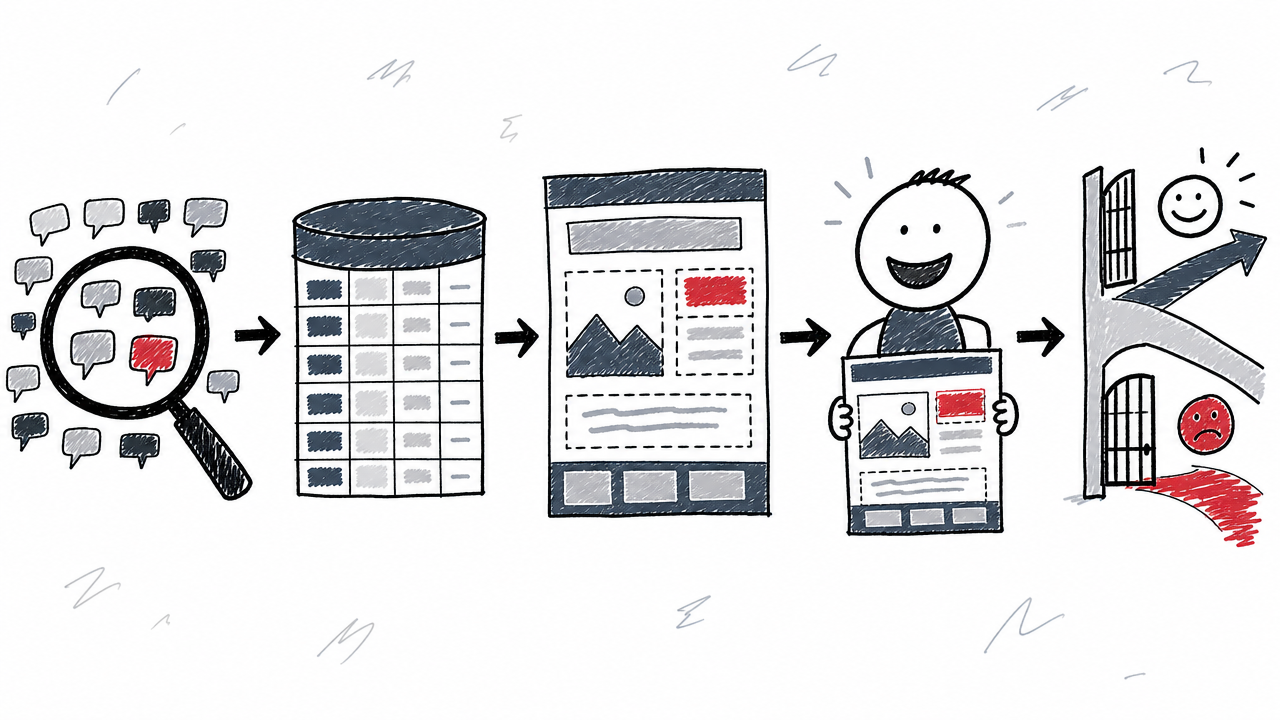
7 programmatic SEO examples: case-by-case breakdown
Each example follows the same structure: keyword pattern, what changes page to page, what stays the same, the data source, why users find the page useful, the business outcome, a lesson, and a limitation.
1. Zapier: app integration pages
Zapier generates thousands of integration pages, each targeting a bottom-of-funnel query like "[App A] + [App B] integration." These pages work because they answer a specific, action-oriented question with functional, proprietary data.
Keyword pattern: "Google Sheets and Notion integration," "Slack and Trello integration," and thousands of similar app-pair combinations.
Variable elements: App names, available triggers, actions, workflow templates, and the number of supported integrations for each pair.
Fixed elements: Page layout, CTA to build a Zap, category navigation, and related app suggestions.
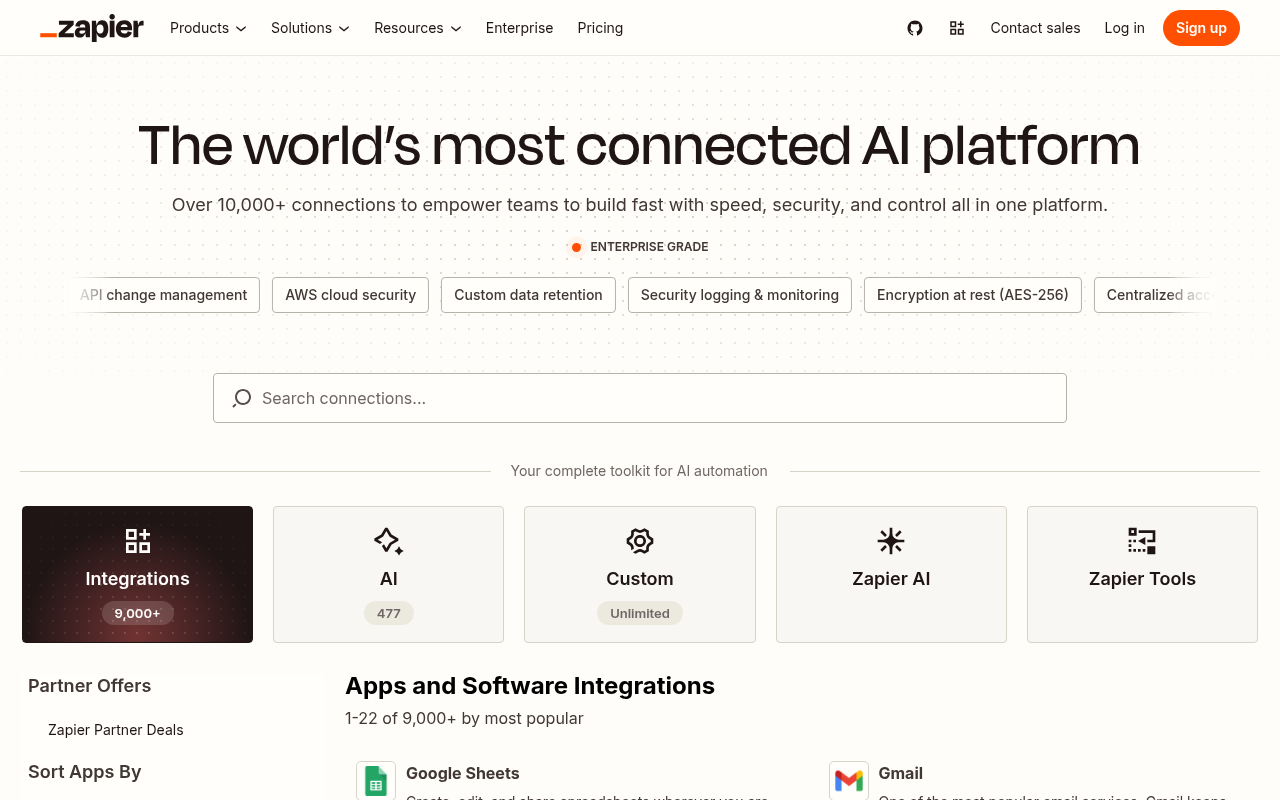
Data source: Zapier's proprietary integration database, which lists 9,000+ integrations across hundreds of apps, including 477 AI apps in its category navigation.
User utility: A visitor can see at once whether two apps connect, what specific workflows are possible, and start building an automation without leaving the page.
Conversion path: Workflow activation → free-tier signup → paid plan upgrade as usage grows.
Lesson: Pages succeed because they answer a bottom-of-funnel query with functional, proprietary data. Boilerplate text with swapped app names would fail. Zapier's own blog post on programmatic SEO describes how each page is backed by app information, triggers, actions, and workflow use cases.
Limitation: This model requires proprietary product data most small businesses lack. Without a real integration database, the pages would be thin.
2. Wise: currency conversion pages
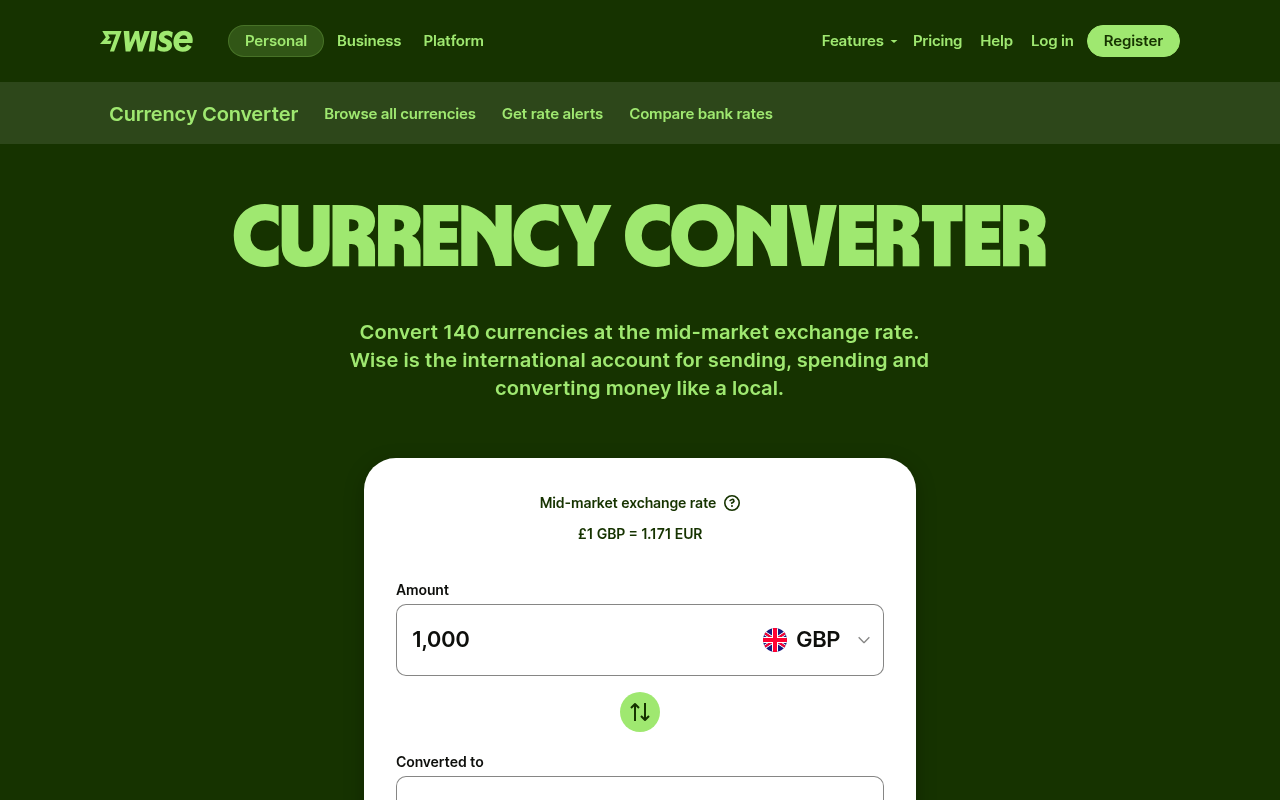
Wise creates currency-pair pages that each contain a working converter, live exchange rates, historical charts, and provider comparisons. The page is a functional financial tool, not a keyword-stuffed text block.
Keyword pattern: "USD to EUR," "GBP to INR," and similar "[Currency A] to [Currency B]" queries across 140 supported currencies.
Variable elements: Currency pair, live exchange rate, historical chart (up to five years), conversion table with common amounts, and a provider fee comparison.
Fixed elements: Converter tool, transfer CTA, navigation to related currency pairs, and educational content about exchange rates.
Data source: Live exchange rates refreshed every 60 seconds, supporting 140 currencies. Wise states that customers and businesses move over £12 billion each month (this is Wise's own claim, not independently audited).
User utility: A searcher can convert a specific amount at the current rate, view historical trends, compare provider fees, and start a transfer, all from one page.
Conversion path: Convert or send money → Wise signup → recurring transfers.
Lesson: Each page contains a working tool and dynamic data. A page that only swaps "USD" and "EUR" in boilerplate copy would be far weaker. The Semrush programmatic SEO guide identifies Wise's currency-pair pages as a model of tool-driven programmatic content.
Limitation: Real-time financial data requires infrastructure, API integrations, and regulatory compliance. This is not a pattern most businesses can replicate cheaply.
3. Tripadvisor: destination and activity pages
Tripadvisor combines location modifiers with structured marketplace inventory, user-generated reviews, ratings, and booking features. The depth and freshness of community-sourced data make each page different from the next.
Keyword pattern: "Things to do in Rome," "seafood restaurants in Barcelona," "museums in New York City," and variations combining activity type, cuisine, or theme with a city or neighborhood.
Variable elements: City, attraction type, cuisine, neighborhood, individual listing details, user reviews, ratings, prices, and images.
Fixed elements: Rating system, review counts, price ranges, booking links, category filters, and map integration.
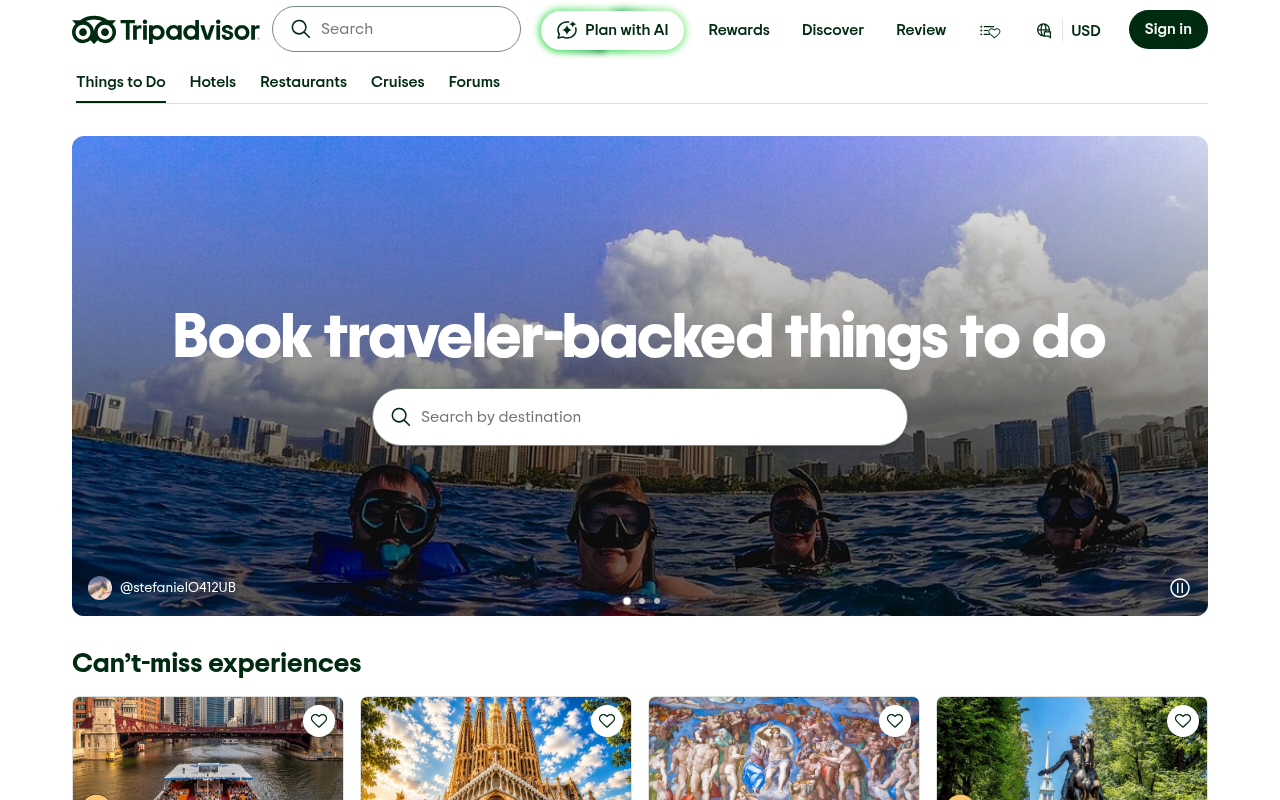
Data source: Marketplace inventory combined with user-generated reviews and partner pricing. The Tripadvisor Attractions page presents traveler-backed activities by destination, with narrower thematic collections for food, nightlife, museums, and adventure experiences.
User utility: A traveler can compare options across several criteria, read verified reviews, see current prices, and book directly.
Conversion path: Booking or affiliate click on partner listings.
Lesson: Depth of community-sourced data makes each page materially different. The Zapier blog and Semrush guide both cite Tripadvisor as a canonical example of review-driven programmatic pages.
Limitation: Requires a large-scale review ecosystem built over many years. A new entrant cannot replicate this data advantage quickly.
4. Nomad List: city pages with live data
Nomad List shows that a small team can build defensible programmatic pages when community-contributed data powers genuinely unique content for each location.
Keyword pattern: "Best cities for digital nomads," "Bangkok cost of living for nomads," "Lisbon digital nomad community," and similar queries combining a city with remote-work criteria.
Variable elements: City name, cost-of-living data, internet speed, weather, safety score, air quality, community reviews, current traveler activity, and meetup information.
Fixed elements: Scoring framework, membership CTA, meetup listings, and city comparison tools.
Data source: Dynamic data aggregation and community input. The site has operated since 2014, promotes meetups in 100+ cities, and reports 204 meetups per year. City pages cover destinations including Bangkok, Barcelona, London, Lisbon, Chiang Mai, Tokyo, and Mexico City.
User utility: A remote worker can compare cities across the exact criteria that matter to their lifestyle: cost, connectivity, safety, climate, and community size.
Conversion path: Membership or community subscription for full data access and networking features.
Lesson: Community-contributed data creates a defensible moat. Each city page can hold materially different data and user signals, making it far stronger than pages that only swap the city name in a template. The Zapier blog highlights Nomad List as a small-team programmatic success story.
Limitation: Niche audience, and data accuracy depends on active community participation. If contributions slow, pages become stale.
5. Zillow: location and property listing pages
Zillow's programmatic pages expose a searchable, often-changing inventory of real properties. Each location page is materially different because the underlying listings are real, current, and actionable.
Keyword pattern: "Homes for sale in Virginia Beach," "condos in Austin," "[property type] in [location]," and thousands of city, neighborhood, and filter combinations.
Variable elements: Location, property listings, prices, photos, square footage, bedrooms, bathrooms, property type, and individual listing details.
Fixed elements: Search filters (price, beds/baths, property type), map view, save/contact CTAs, and mortgage inquiry tools.
Data source: Live property inventory with structured listing data. The Zillow homes page displays current results (for example, 1,351 results for a single market at the time of research), each with price, photos, address, and property details.
User utility: A homebuyer can browse real, current inventory with enough detail to take the next step: save a search, contact an agent, or start a mortgage inquiry.
Conversion path: Save search, contact agent, mortgage inquiry, or advertising revenue from agent placements.
Lesson: Genuine supply-side inventory makes each location page materially different. The Semrush guide identifies real estate as a major programmatic SEO use case for this reason.
Limitation: Only works for businesses with real, often-changing local inventory. A business without actual listings cannot replicate this model.
6. Canva: template catalog pages
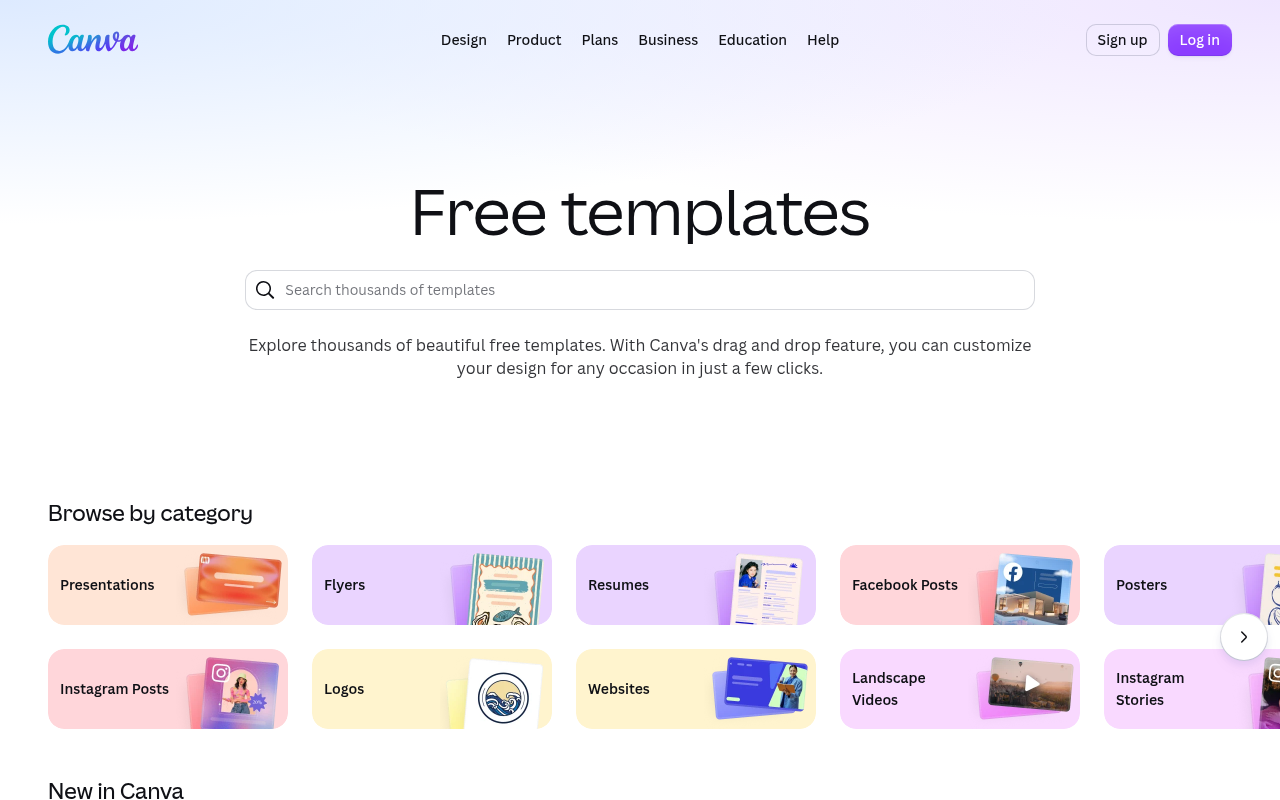
Canva's template pages are both the SEO landing page and the product itself. The page meets the searcher's need right away by showing a usable design and moving the user straight into the editor.
Keyword pattern: "Presentation template," "Instagram post template," "resume template," "[format] template," "[use case] design template."
Variable elements: Template name, design preview, category, free vs. Pro designation, and related template suggestions.
Fixed elements: Category navigation, "Customize this template" CTA, and related template carousels.
Data source: Thousands of continuously updated designs organized by categories including presentations, Instagram posts, flyers, logos, resumes, websites, invitations, business cards, and worksheets. The catalog displays both free and Pro items and features newly added designs.
User utility: A searcher looking for a presentation template can preview a usable design and open it in Canva's editor right away, finishing their task without visiting another site.
Conversion path: Template use → Canva editor → free account or Pro upgrade.
Lesson: The SEO landing page is the product. When the page directly delivers the asset a user searched for, the conversion path is frictionless.
Limitation: Requires a large, growing creative catalog. A small business without a deep library of templates would produce thin pages.
7. Webflow: community template marketplace
Webflow scales its programmatic pages naturally because every new creator submission generates a new structured page. The marketplace model turns outside contributors into a content engine.
Keyword pattern: "Portfolio website template," "real estate HTML template," "[industry] website template," "[style] HTML template."
Variable elements: Template name, category, price, creator, design preview, and tags.
Fixed elements: Marketplace layout, category links, tag navigation, buy CTA, and individual template URLs with full previews.
Data source: Creator-submitted marketplace inventory containing 7,000+ free and premium HTML website templates, organized by categories such as portfolio and agency, technology, blog and editorial, professional services, real estate, retail, and UI kits. Newly added templates include publication dates and prices.
User utility: A user can preview, compare, and buy a ready-to-use website template, filtering by industry, style, or price.
Conversion path: Template sale or Webflow plan signup to host the site.
Lesson: A marketplace model scales because each new creator submission generates another structured page, while category and tag pages create more discovery paths. Internal linking between templates, categories, and creator profiles builds crawlable depth.
Limitation: Quality control is essential. Low-quality submissions dilute page value and risk thin content, so curation and review processes must scale with the marketplace.
What do these examples have in common?
Every successful programmatic SEO case here shares the same formula: repeatable search demand, reliable structured data, genuinely useful page features, and controlled indexation.
None of these companies succeed merely by publishing a large number of pages. Each page holds enough distinct, accurate data to stand on its own as a useful resource. The page count is a byproduct of the data's breadth, not a goal in itself.

Can small businesses use programmatic SEO?
Yes, but they should not try to match the page count of Zapier or Zillow. The parts that transfer are the pattern-identification method, template discipline, and quality thresholds. The parts that do not transfer are millions of listings, proprietary APIs, large review communities, and the infrastructure to serve real-time financial data.
Before committing to a programmatic approach, a smaller business should pass this seven-question test:
- Is there a repeatable keyword pattern? A consistent search structure like "[service] in [city]" or "[product] vs. [product]."
- Does each variation represent a real user need? Not every possible combination deserves a page.
- Is there enough unique data for every page? Each page needs materially different, accurate content.
- Can the data be kept accurate? Stale data erodes trust and page quality.
- Does the page lead naturally to a product, service, or next step? A page with no conversion path wastes the effort.
- Can low-quality combinations be excluded before publication? Not every permutation should be indexed.
- Would the page still be useful if search engines did not exist? This is the strongest filter against thin content.
Launching fewer high-quality pages is always safer than publishing thousands of thin ones. Start narrow, confirm results, then expand.
How to prevent programmatic pages from becoming thin content
Thin content is the biggest risk of programmatic SEO. Use this quality-control checklist before and after any bulk launch:
- Minimum data completeness: Define a threshold (e.g., at least five unique data points per page) and do not publish pages that fall below it.
- Freshness rules: Set update schedules for dynamic data. A currency page with a rate from six months ago is worse than no page at all.
- Duplicate detection: Audit for pages with near-identical content. Keyword cannibalization between similar variations is common.
- Canonical tags: Assign canonical URLs to prevent search engines from splitting signals across duplicate or near-duplicate pages.
- XML sitemaps: Submit programmatic pages in dedicated sitemaps to manage crawl discovery and track indexation rates.
- Crawl-budget management: Use robots.txt and noindex directives to keep search engines focused on your strongest pages.
- Internal-link structure: Link related programmatic pages to each other (e.g., related cities, related templates) to spread authority and improve crawlability.
- Indexation thresholds: Not every generated combination deserves an indexed page. Exclude combinations with too little data or negligible search demand.
- Manual review before bulk launch: Sample a meaningful subset of generated pages and verify quality before scaling.
These principles align directly with Google's helpful content guidance: content should be thorough enough to meet the user's need and written for people, not mainly for search engines.
FAQ
What is programmatic SEO?
Programmatic SEO is the template-driven creation of many landing pages from structured data, each targeting a specific long-tail keyword. It scales content production while keeping a consistent page structure. It is not the same as AI-generated content; it relies on databases, APIs, or user-generated data rather than generative models.
Is programmatic SEO against Google's guidelines?
No. Google's spam policies target scaled content abuse: pages created mainly to manipulate rankings with little user value. The policy applies whether or not automation is involved. Programmatic pages that hold original, useful data and meet a genuine search need are compliant.
How does Zapier use programmatic SEO?
Zapier generates integration pages for thousands of app-pair combinations, each filled with proprietary data about triggers, actions, and workflow templates from its database of 9,000+ integrations. The Zapier blog explains that each page maps to a specific query like "Google Sheets and Notion integration."
What data is needed for programmatic SEO?
A structured, reliable dataset where each record holds enough unique information to make its page genuinely useful. Examples include product specs, live pricing, location attributes, user reviews, or proprietary integration data. If the data does not vary meaningfully from page to page, the resulting pages will be thin.
How many programmatic pages should a site launch at once?
Start with a small batch (tens to low hundreds), check indexation and performance, then scale step by step. Launching thousands of unreviewed pages raises the risk of thin content, crawl issues, and possible spam-policy violations. Manual review of a sample before each expansion is essential.
What types of websites are best suited to programmatic SEO?
Sites that sit on large, structured datasets with clear keyword patterns work best. Common fits include marketplaces, directories, SaaS tools with integration catalogs, template libraries, real-estate platforms, and travel or finance sites with live data. The key test is whether each generated page can hold enough distinct, accurate information to help a real user.
What is the difference between programmatic SEO and traditional SEO?
Traditional SEO typically means writing individual pages by hand, each researched and crafted for a specific topic. Programmatic SEO uses a single template filled by a database to produce many pages at once. The strategy, quality standards, and technical SEO fundamentals (crawlability, indexability, internal linking, structured data) remain the same; only the production method differs.
What metrics should be tracked after launch?
Track indexed page count (via Google Search Console), organic impressions and clicks per template type, crawl stats, page-level bounce rate, conversion rate, and the ratio of indexed to submitted URLs. A growing gap between submitted and indexed pages often signals quality or duplication problems.