
Best AI for SEO in 2026 - ChatGPT vs Claude vs Gemini Compared
We compared ChatGPT, Claude, and Gemini across keyword research, content drafting, technical audits, and more to help you pick the best AI for SEO by task.

No single AI wins across every SEO task. ChatGPT leads for high-volume short-form work and plugin breadth. Claude produces the most natural long-form content and excels at large-context technical audits. Gemini wins any task that needs live search data, thanks to native Google Search grounding. Most SEO professionals combine at least two. Below is an evidence-backed, task-by-task comparison to help you choose.
Side-by-side comparison table
Note: Model versions, context windows, and pricing shift often. Verify current details at OpenAI pricing, Gemini subscriptions, and Anthropic pricing. Hallucination data sourced from the Ahrefs link-accuracy study. Adoption figures from a 2026 survey of 500 US SEO/PR professionals showing 91% use AI in their work, with ChatGPT at 89% usage and Gemini at 56%.

How we tested each AI for SEO tasks
Vibes-based comparisons ("Claude just feels better") mean nothing without data. We scored each model across seven criteria: accuracy, output quality, speed, real-time data access, context-window size, cost, and ecosystem integrations. The core evidence comes from Ahrefs studies on citation overlap with Google rankings and hallucinated link rates, backed by practitioner surveys and official docs. These same criteria matter when choosing dedicated SEO automation tools and workflows.
Keyword research and clustering
No AI chatbot can give you reliable search volume or keyword difficulty numbers. All three help with ideation and grouping, but the data they produce must be checked against tools with live index access. The right workflow: brainstorm with AI, then verify with real keyword databases.
Why AI chatbots cannot replace keyword tools
ChatGPT, Claude, and Gemini lack direct access to live keyword indexes. They cannot query Google's search volume databases or backlink graphs in real time. As Semrush's analysis of AI keyword research explains, chatbots generate plausible-sounding volume estimates from training data, not from query logs. A detailed breakdown of why ChatGPT keyword research gives bad results confirms this: volume figures are often directionally wrong, and difficulty scores are fabricated.
Always check AI keyword suggestions against Google Keyword Planner, Ahrefs, or Semrush before building a content calendar around them.
Which model is best for keyword ideation?
ChatGPT excels at generating large lists fast. Give it a seed keyword and a persona, and it produces dozens of long-tail variations in seconds. Gemini adds a freshness layer: with Google Search grounding enabled, it can surface trending queries and seasonal shifts that a training-data-only model would miss. Claude is strongest at intent-based clustering, organizing raw keyword lists into topical groups aligned to search intent stages (informational, commercial, transactional).
For detailed ChatGPT prompts that maximize keyword ideation output, see our guide on how to use ChatGPT for SEO.
Long-form content drafting and SEO writing
Claude produces the most human-sounding, structurally coherent long-form content among the three. ChatGPT is the fastest drafting engine, but its prose is more readily flagged as machine-generated. Gemini's long-form output tends toward a cautious, encyclopedic tone that lacks persuasive energy. For SEO content writing, Claude's natural style and strong coherence past 2,000 words give it a clear edge.
Detectability matters less than quality. Google's official guidance on AI-generated content makes clear that the search engine judges content on usefulness and E-E-A-T signals, not its production method. A polished Claude draft still needs human expertise layered in: original data, personal experience, and editorial judgment.
ChatGPT's output is the most often flagged by AI detection tools, largely because its phrasing patterns dominate those detectors' training data. Claude's prose is harder to detect. But the real defense against "AI content penalties" is not evading detectors; it is adding genuine value.
For strategies to keep AI-assisted content at a publishable standard, see how to automate content without losing quality.
Meta titles, descriptions, and short-form SEO copy
ChatGPT is the strongest choice for bulk generation of title tags and meta descriptions. Its speed, ability to follow templated instructions, and consistent formatting make it ideal when you need 50 or 200 meta descriptions in a single session.
Claude handles brand voice better. If your client's tone is conversational, witty, or technically precise, Claude follows those stylistic constraints more faithfully across a batch.
Gemini produces adequate meta copy but defaults to cautious, generic phrasing. It works for routine pages but rarely delivers the punch or specificity that earns clicks in SERPs. For any high-stakes pages (homepage, money pages), plan to hand-edit regardless of which model you use.
Technical SEO audits and schema markup
Claude's large context window makes it the strongest option for ingesting crawl exports, log files, and GSC data dumps. You can paste thousands of rows from a Screaming Frog export and ask Claude to spot patterns: orphaned pages, redirect chains, crawl budget waste, or missing hreflang tags. It handles structured analysis of large datasets without losing coherence.
For schema markup, Claude is the consensus pick for producing clean, valid JSON-LD. It generates Product, FAQ, HowTo, and Article schema with fewer syntax errors than ChatGPT or Gemini out of the box.
ChatGPT compensates through its plugin and custom GPT ecosystem, which can connect to third-party SEO tools. Gemini's value for technical SEO is narrower but real: cross-referencing live index data to check whether pages are indexed, or pulling current SERP features for a target query.
None of these replace a proper crawl tool. Use Screaming Frog for the crawl, Google Search Console for index and performance data, and an AI model for the analysis layer on top.
Does Gemini have a real SEO advantage because it's Google's?
Yes, but only for specific tasks, and the advantage is not a ranking boost. Gemini's documented edge is its Google Search grounding mechanism. According to Google's official grounding documentation, when grounding is enabled, Gemini analyzes your prompt, generates search queries against Google's live index, retrieves results, and returns a response with structured groundingMetadata including inline citations to real web pages.
This gives Gemini a genuine technical edge for live SERP analysis, trend monitoring, competitive research, and verifying what currently ranks for a target query. No other general-purpose chatbot has native access to Google's search index.
What it does not mean: content you write with Gemini does not receive preferential treatment in Google Search. Google's ranking systems judge the content itself, not the tool used to create it.
As for Google Search Console and Analytics access: no chatbot connects to your GSC or GA4 account out of the box. Gemini integrates with Google Workspace, which can simplify some data-handling workflows, but it does not have API-level access to your search performance data without custom configuration.
Which AI hallucinates less? What the data shows
"Claude hallucinates less" is a common claim in SEO circles, and the data supports it, with some caveats. Ahrefs studied 16 million unique URLs cited by AI assistants and found that AI chatbots send users to 404 pages 2.87x more often than Google Search.
Claude's clicked-URL 404 rate of 0.58% is notably lower than ChatGPT's 1.01%, though still well above Google's 0.15% baseline. Gemini's cited-URL rate is close to Google's top-20 index rate, likely because its grounding mechanism queries Google's live index.
A separate Ahrefs study on citation overlap found that only about 12% of links cited by ChatGPT, Gemini, and Copilot appear in Google's top 10 for the same query. Roughly 80% of AI citations do not rank anywhere in Google's top 100.
Practical takeaway: always verify any URL an AI model cites before including it in published content. Copy-paste the link, check for 404s, and confirm the source says what the AI claims.
Getting cited BY AI: AEO and GEO differences
Using AI for SEO work and getting your content to appear in AI-generated answers are two separate problems that the SEO community often conflates. Understanding how each model retrieves sources matters for both.
ChatGPT uses its own crawler (GPTBot) and, when browsing mode is active, fetches live web pages. Its citation behavior draws from a mix of training data and real-time retrieval, but its overlap with Google's top results is low (~12% per the Ahrefs study).
Gemini leans heavily on Google Search grounding, meaning its citations track much more closely with Google's organic rankings. Ranking well in Google Search is, in practice, the best path to Gemini citations too.
Claude does not browse the web by default. Its responses draw from training data and, in some configurations, from documents the user provides. Getting cited by Claude requires being prominent enough in training corpora, which correlates with strong topical authority and E-E-A-T signals.
For all three, Google's people-first content guidance remains the best foundation. Original research, clear structure, and demonstrated expertise make content citable by humans and AI engines alike. AI Overviews and AI Mode are accelerating this convergence.
Pricing and free-tier limitations
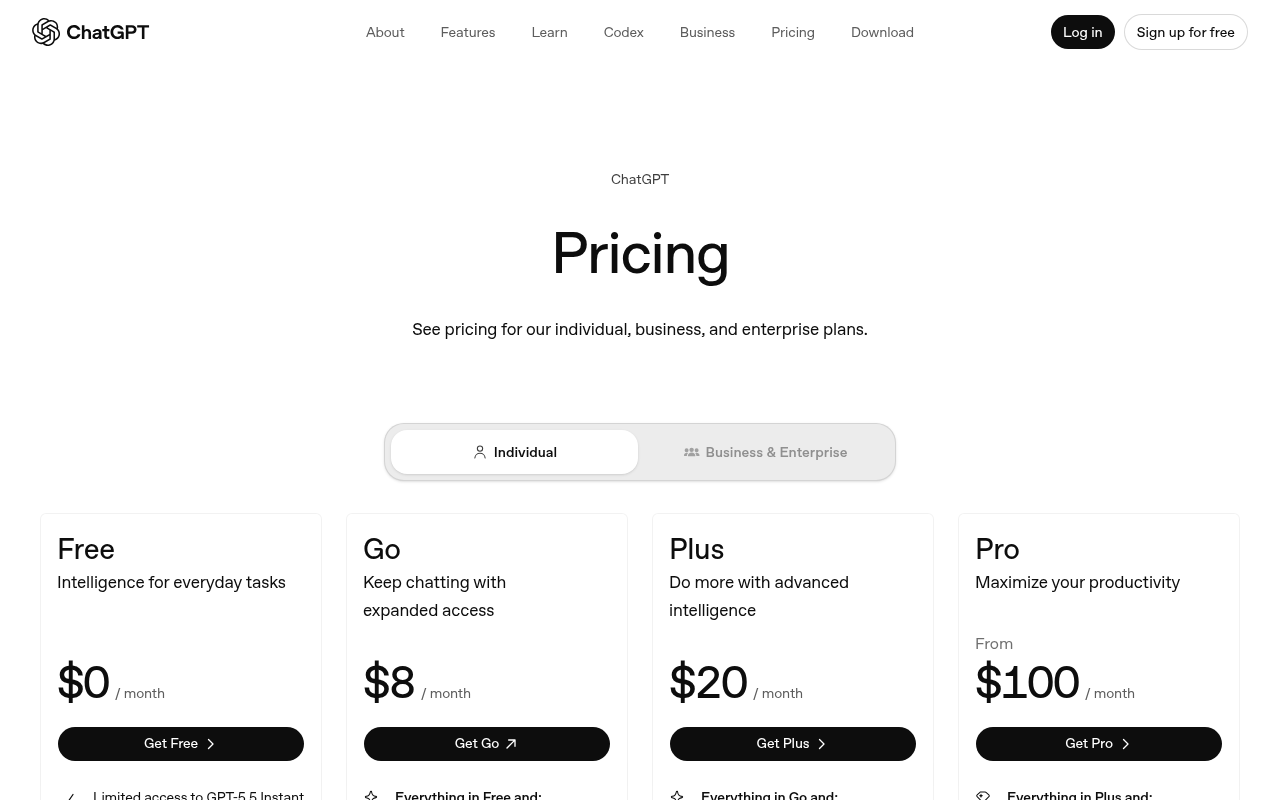
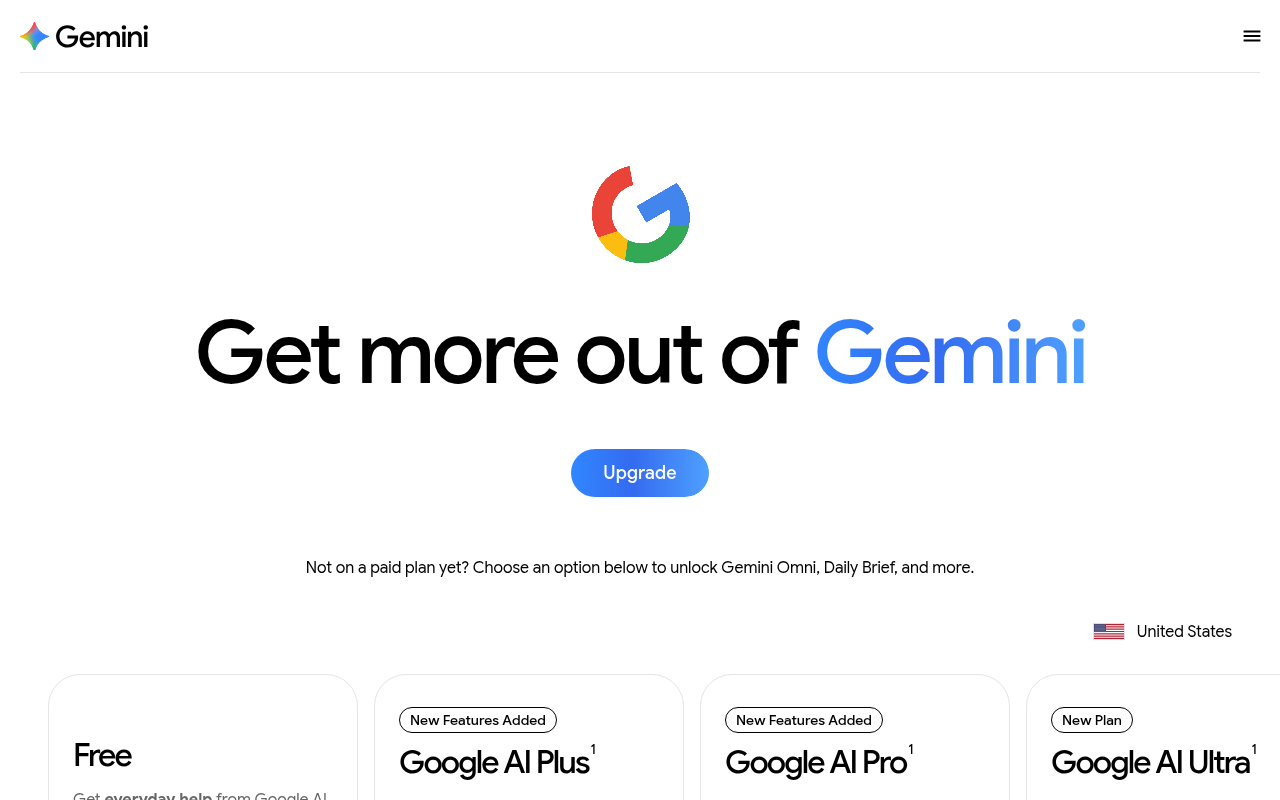
All three paid tiers cluster near $20/month: ChatGPT Plus at $20, Claude Pro at $20 ($17 billed annually), and Google AI Pro at $19.99. The free tiers of each provide access to capable but limited models with reduced message caps, smaller context windows, and restricted features.
For occasional SEO use (a few keyword brainstorms or meta description batches per week), free tiers work. For daily professional workflows that need large context windows, frequent sessions, and the strongest model variants, a paid subscription is essential.
A Brafton survey of 163 marketers confirms that most practitioners use more than one AI tool rather than relying on a single provider. Budget for at least two subscriptions (~$40/month total) if SEO is a core function.
Pricing shifts often. Always verify at the official pages: OpenAI, Google, Anthropic.
Will Google penalize AI-generated SEO content?
No. Google does not penalize content for being AI-generated. It penalizes content for being unhelpful, regardless of how it was produced. Google's official stance states: "Using AI doesn't give content any special gains. It's just content. If it is useful, helpful, original, and satisfies aspects of E-E-A-T, it might do well in Search. If it doesn't, it might not."
The risk is not the tool; it is the output quality. Mass-produced, thin AI content that adds nothing original will underperform, just as mass-produced human content always has. Google's Helpful Content guidance rewards demonstrated experience, expertise, authoritativeness, and trustworthiness. Layer those into any AI-assisted draft and you are on solid ground.
Recommendation by use case: which AI for which SEO job
A 2026 survey of 500 SEO professionals found that 91% use AI in their work and most combine tools. The pragmatic split: use Claude for drafting and strategy, ChatGPT for bulk ideation and short-form tasks, and Gemini for anything that needs live search data. Our guides on building multi-tool SEO automation workflows and specific ChatGPT prompts for SEO tasks walk through how to set up this split.
Worth mentioning: Perplexity is strong for research-heavy tasks where inline citations matter, and Microsoft Copilot integrates well with Bing data and the Microsoft 365 ecosystem. Neither fully replaces ChatGPT, Claude, or Gemini for SEO, but both deserve a spot in your testing rotation.
FAQ
Do AI chatbots replace dedicated SEO tools like Semrush or Ahrefs?
No. Chatbots lack live keyword volume databases, backlink indexes, rank tracking, and site audit crawlers. They are analysis and content layers, not data sources. Use them alongside tools like Ahrefs, Semrush, Google Search Console, and Screaming Frog, not instead of them.
Can I use more than one AI for SEO, and how should I split tasks?
Yes, and most practitioners do. A Brafton survey found only 23 out of 163 AI-using marketers rely on ChatGPT alone. A common split: Claude for long-form drafts, content briefs, and technical audits; ChatGPT for bulk keyword ideation and meta tags; Gemini for live SERP research and trend analysis.
What is GEO / AEO, and does it change which AI I should use?
GEO (Generative Engine Optimization) and AEO (Answer Engine Optimization) focus on getting your content cited in AI-generated answers. Each model retrieves sources differently: Gemini uses Google's index, ChatGPT uses its own crawler, and Claude relies primarily on training data. The best path for all three is building strong E-E-A-T fundamentals and publishing original research rather than gaming any single engine.
Is the free tier of any AI chatbot enough for SEO work?
For occasional use (a few sessions per week), yes. For daily professional workflows, paid tiers open up larger context windows, higher message limits, and access to the most capable model versions. At roughly $20/month each, a paid subscription to your primary tool is a straightforward ROI calculation for anyone doing SEO professionally.
Which AI produces the least detectable content?
Claude is widely regarded as the most human-sounding, and its output is the hardest for current detection tools to flag. That said, detectability depends heavily on prompting technique, post-editing, and the addition of genuine expertise. Google does not penalize content for being AI-generated, so focus on quality over evasion.