
Claude Now Watermarks Everything You Write, With No Opt-Out. Here's the Fallout.
Claude's watermark has no opt-out on any tier—free, paid, or API. Here's what the mark actually proves, why users are angry, and what's still unknown.

Yes, supported Claude models now apply an imperceptible text watermark to their output, and no opt-out exists on any tier: free, paid, or API. But "everything you write" needs a qualifier. The system marks supported Claude output, including text Claude edits or proofreads for you. It does not mark documents you create on your own. A text watermark, in this context, is a statistical signal embedded in word choices, invisible to readers, designed to show that content may have been processed by Claude (Anthropic Help Center; Forbes).
What is Claude actually marking?
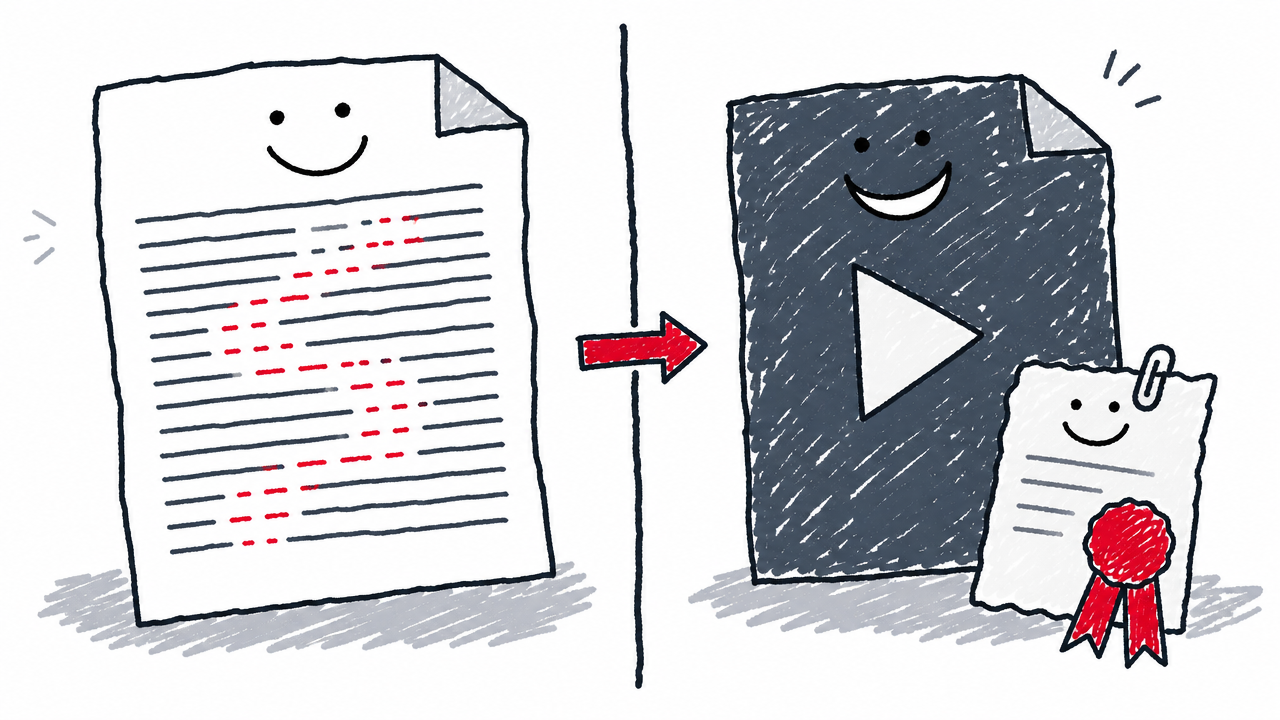
Claude uses two separate marking systems for two types of content. Think of the text watermark as invisible ink woven into a letter, and the file metadata as a signed shipping label stapled to the outside of a package. They solve related but distinct problems through different mechanisms.
Embedded text watermark
When Claude generates or processes text, a statistical signal enters through the model's token-selection process. You cannot see it, and Anthropic says it does not change the meaning, quality, or readability of the output. Copying and pasting carries the watermark with the text, and Anthropic states the signal "may persist through some editing" (Anthropic Help Center).
Signed C2PA provenance metadata for files
For supported generated files (such as images), Claude attaches digitally signed provenance metadata using the C2PA standard. C2PA stands for the Coalition for Content Provenance and Authenticity, a cross-industry effort that embeds verifiable origin information into media files. This is a standards-based digital signature attached to the file itself, not the same mechanism as the text watermark (TechCrunch).
Both systems apply across the Claude Platform API, Claude, Claude Code, Claude Cowork, Claude Tag, and supported access through AWS, Google Cloud, and Microsoft Foundry. The critical cutoff: models launched in the EU on or after August 2, 2026 support marking at launch, and Anthropic says older models are still being brought into the system. Marking applies worldwide, not only in the EU (Anthropic Help Center; TechCrunch).
Can you opt out on paid plans or the API?
No. No opt-out path has been described for any tier. Forbes reports directly that users cannot opt out (Forbes). Anthropic's Help Center describes marking as operating at the model level, not as an account toggle or product setting (Anthropic Help Center).
Free users, Pro and Team subscribers, and API developers building commercial products all receive the same marking on supported models. No premium tier exempts output from watermarking, no API flag suppresses it, and no per-request override has been documented.
Why the EU AI Act is the catalyst
The EU AI Act's Article 50 requires providers of general-purpose AI systems to mark AI-generated output with machine-readable signals. These transparency obligations apply from August 2, 2026 (European Commission guidelines; EUR-Lex AI Act). The European Commission's Code of Practice on Transparency, signed by more than 180 organizations, provides a practical compliance framework but is distinct from the binding law: it does not replace the AI Act or official guidelines (European Commission Code of Practice).
Rather than building a geo-fenced EU-only system, Anthropic chose to apply marking globally wherever supported Claude models are offered. A regulation aimed at the European market has reshaped the product experience for users worldwide.
This section is general context, not legal advice. Consult qualified counsel for questions about specific compliance obligations.
Why users are angry
The backlash is real, documented, and organized around several distinct objections. What follows uses only attributed, sourced reactions.
Proofreaders and editors see their own writing marked
This is the complaint with the sharpest emotional edge. If a user pastes a human-written essay into Claude for grammar corrections, the output receives a Claude mark. The ideas, structure, and voice belong to the user; the mark says the text was processed by Claude.
Forbes reported that Erick Erickson publicly complained that his own writing would be marked after using Claude for proofreading. Users on X described the policy as "hugely problematic" (Forbes).
The frustration is straightforward: using a spelling checker should not brand your writing as AI-generated.
Developers worry about code workflows
Claude Code users raised a different set of concerns. When Claude helps write, refactor, or review code, that output receives the same provenance mark. Developers on Forbes and in a Hacker News thread (442 points, 406 comments) questioned how such marks will be read in code repositories, client deliverables, compliance audits, and open-source contributions (Forbes; Hacker News).
Paying users feel the product bargain changed
The absence of a paid-plan escape hatch is a distinct grievance. Users who chose to pay for Claude, sometimes for professional content work, now face a mandatory feature they did not agree to when they subscribed.
At least one paying user publicly documented cancelling their subscription over the announcement. The Kingy.ai blog published a first-person account titled "Why I Cancelled Claude Over Its Invisible Watermark" (Kingy.ai). This is an individual report, not evidence of mass churn: no independently verified cancellation data was found.
A TechRadar article covering the announcement reportedly quoted a user claiming "Claude is about to start hemorrhaging customers," though the article body could not be fully verified at publication time (TechRadar).
Forbes captured the broader online mood with the headline phrase "the internet isn't happy" (Forbes).
Hacker News and social-media debate
The Hacker News thread surfaced several recurring themes among technical commenters: concern that institutions (employers, publishers, universities) might overread a detected mark as proof of fraud; worry about consequences when Claude merely assisted rather than originated; debate over whether any statistical watermark can meaningfully tell authorship from assistance; and speculation about whether Anthropic's longer-term goal could include identifying AI-generated training data (Hacker News).
These are Hacker News commenters' opinions, not verified technical findings or a representative user survey. But 406 comments on a single thread show the topic struck a nerve in the developer community.
What the mark actually proves (and what it does not)
A detected Claude watermark means content "may have been processed by Claude." That is the precise phrasing from Anthropic's Help Center, and it is the single most important sentence in this entire controversy (Anthropic Help Center).
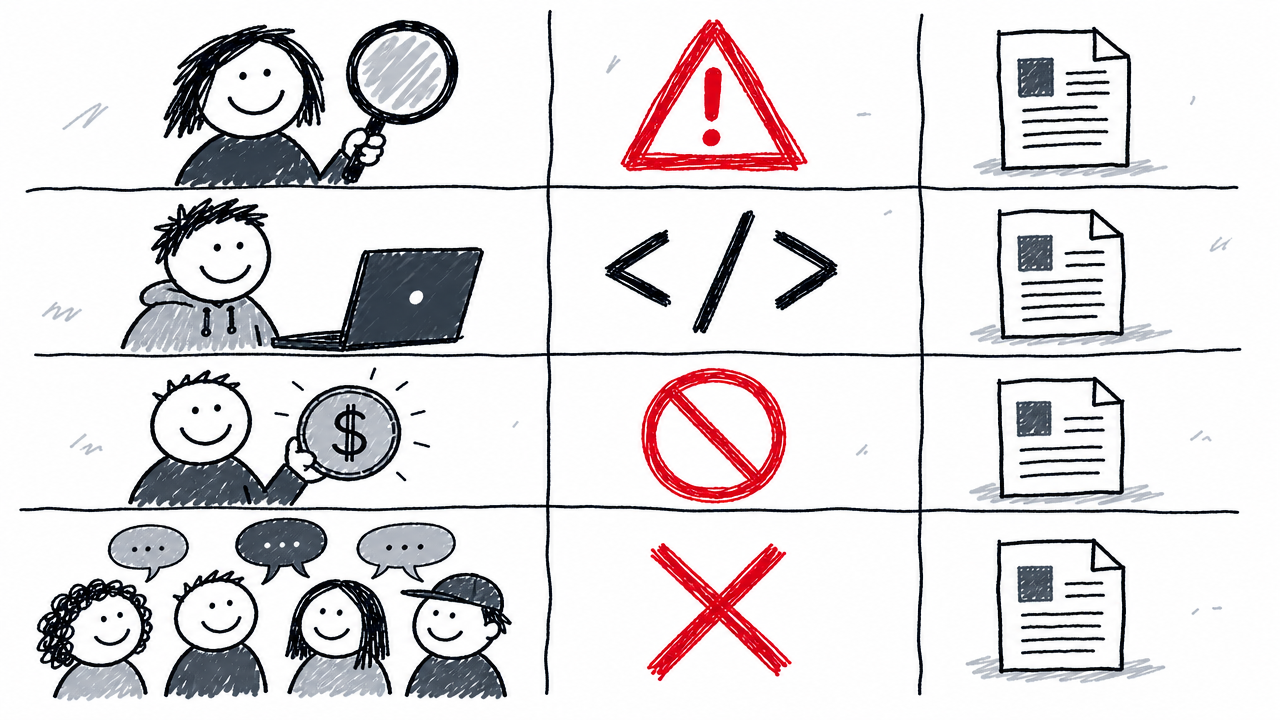
The mark is a probabilistic provenance signal. It tells you a supported Claude model was involved. It does not tell you who deserves credit for the ideas or the writing. Here is what it can and cannot do:
Three terms that should never be treated as interchangeable: "AI-generated," "AI-assisted," and "processed by Claude." A proofreading pass is processing. A full essay prompt is generation. The watermark does not distinguish between them.
Equally important: a missing mark does not establish that content is human-written or was not generated by AI. Heavy editing, paraphrasing, translation, mixing with other text, short passages, and unsupported features or models can all prevent detection (Anthropic Help Center; The Decoder).
What is still unknown
The situation may be less alarming (or more complicated) than headlines suggest, because several key pieces are still missing.
- Complete live model inventory. Anthropic has not published a full list of which specific models currently carry the mark. The August 2, 2026 cutoff sets when new models begin marking, but the progress of retrofitting older models is described only as ongoing.
- Public text-watermark detector. Anthropic says detection documentation and third-party support are forthcoming. No public official text-watermark detector has been identified. Without one, the mark exists but cannot be independently verified by users or third parties.
- Persistence thresholds. Anthropic says the mark "may persist through some editing" but has not published specific thresholds for how much editing removes it.
- Subscription impact. No independently verified data on cancellations or user churn was found. Individual reports exist; totals do not.
- Search engine behavior. No evidence supports the claim that any search engine reads or penalizes the Claude watermark.
The bottom line
Claude's text watermark is mandatory for supported models, applies to every tier including paid and API, and cannot be toggled off. The backlash from proofreaders, developers, and paying subscribers is documented and understandable. But the mark signals processing, not authorship, the rollout covers only models launched after August 2, and no public detector exists yet. The gap between the fear and the current practical impact is wide, and worth understanding before making product or publishing decisions.
FAQ
Does the Claude watermark apply to API output? Yes, for supported models. Marking operates at the model level, so the API receives the same treatment as Claude's consumer products. No API parameter to disable it has been documented.
Does Claude Code watermark code? Claude Code is listed among the supported surfaces in Anthropic's Help Center. The same marking policy applies to code output from supported models.
Can someone see the watermark by reading my text? No. The watermark is imperceptible and does not change the text's meaning or readability, according to Anthropic. It is a statistical pattern in word choices, not visible formatting.
Is there a public detector I can test right now? Not yet. Anthropic says detection support and technical documentation are forthcoming. Check Anthropic's Help Center for the latest status.
Will a Claude watermark hurt my Google rankings? No evidence supports that claim. Google's published documentation does not describe reading or penalizing proprietary AI watermarks.
Sources
- Anthropic Help Center, How Claude marks AI-generated content: https://support.claude.com/en/articles/16266773-how-claude-marks-ai-generated-content
- Forbes, Claude Users Can't Opt Out Of New Watermarks: https://www.forbes.com/sites/maryroeloffs/2026/08/11/claude-will-put-invisible-watermarks-on-ai-text-and-images-and-the-internet-isnt-happy/
- TechCrunch, Anthropic says it will watermark text generated by its AI models: https://techcrunch.com/2026/08/11/anthropic-says-it-will-watermark-text-generated-by-its-ai-models/
- The Decoder, Anthropic watermarks all Claude outputs globally: https://the-decoder.com/anthropic-watermarks-all-claude-outputs-globally-with-marks-that-may-persist-through-some-editing/
- TechRadar, New models will mark AI-generated content from day one: https://www.techradar.com/ai-platforms-assistants/claude/new-models-will-mark-ai-generated-content-from-day-one-claude-will-now-hide-an-invisible-watermark-inside-ordinary-words-heres-how-thats-even-possible-and-how-eu-rules-could-push-openai-and-google-to-follow-suit
- Hacker News discussion: https://news.ycombinator.com/item?id=49250109
- Kingy.ai, Why I Cancelled Claude Over Its Invisible Watermark: https://kingy.ai/blog/why-i-cancelled-claude-watermark/
- European Commission, AI transparency guidelines: https://digital-strategy.ec.europa.eu/en/policies/guidelines-ai-transparency-obligations
- European Commission, Code of Practice on AI-generated content: https://digital-strategy.ec.europa.eu/en/policies/code-practice-ai-generated-content
- EUR-Lex, Regulation (EU) 2024/1689, Artificial Intelligence Act: https://eur-lex.europa.eu/eli/reg/2024/1689/oj