
What Is Power of Attorney? Types, How It Works, and How to Set One Up
Learn what power of attorney is, how the four POA types work together, how to choose an agent, and how to set one up before incapacity makes it too late.

What is power of attorney? Types, how it works, and how to set one up
A power of attorney (POA) is a legal document in which one person, the principal, gives another person, the agent (also called an attorney-in-fact), the right to act on the principal's behalf in specified legal, financial, or medical matters. Signing a POA does not mean the principal loses the right to make decisions, and the agent does not need to be a licensed lawyer. The scope of authority is whatever the document says, governed by state law (CFPB).
Legal disclaimer: The content below is general information for educational purposes, not legal advice. Power of attorney requirements, terminology, and forms vary by state. Consult an attorney licensed in your state for guidance tailored to your situation.
Key terms: principal, agent, and attorney-in-fact
The principal creates the POA and grants authority. The agent (or attorney-in-fact) receives that authority and acts on the principal's behalf. Despite the name, an attorney-in-fact does not need to be a lawyer; the term simply means "a person authorized to act for another" (ABA).
Think of it like handing someone a specific set of keys to your house. You decide which doors those keys open, and you can take them back at any time while you are still capable of doing so.
A successor agent is a backup: someone who steps in if the primary agent dies, resigns, or becomes unable to serve. Co-agents are two or more people who share authority at the same time. Every agent owes a fiduciary duty to the principal, meaning they must act in the principal's best interest, follow the document's instructions, and keep the principal's property separate from their own (CFPB).
An agent's authority comes from the document and state law, not from a family relationship. Being someone's spouse or adult child does not grant you the power to manage their finances or make their medical decisions.
What does power of attorney allow someone to do?
A POA can give an agent authority over financial and property decisions, medical and health care decisions, or both through separate documents. The principal controls the scope, and broad powers should never be granted casually (CFPB).
Financial and property examples:
- Paying bills and managing bank accounts
- Handling investments, brokerage accounts, and retirement accounts
- Filing taxes and managing insurance policies
- Buying, selling, or managing real estate
- Applying for government benefits such as Social Security
Medical and health care examples:
- Consenting to or refusing medical treatment
- Choosing doctors, hospitals, or long-term care facilities
- Accessing medical records
- Making end-of-life care decisions when the principal cannot communicate
The document itself defines the boundaries. A principal can grant authority over every financial matter, or limit it to a single transaction like selling a specific property. The same flexibility applies to health care decisions (CFPB).
Types of power of attorney
POA "types" are not competing categories. They are four different characteristics layered onto one document: subject matter, scope, timing, and durability. Understanding this distinction is the single most important step in knowing what kind of POA you actually need.
The table below maps each question to the relevant POA characteristic:
A single document can be described as, for example, a "limited durable financial POA" or a "springing health care POA." The labels stack; they are not mutually exclusive.
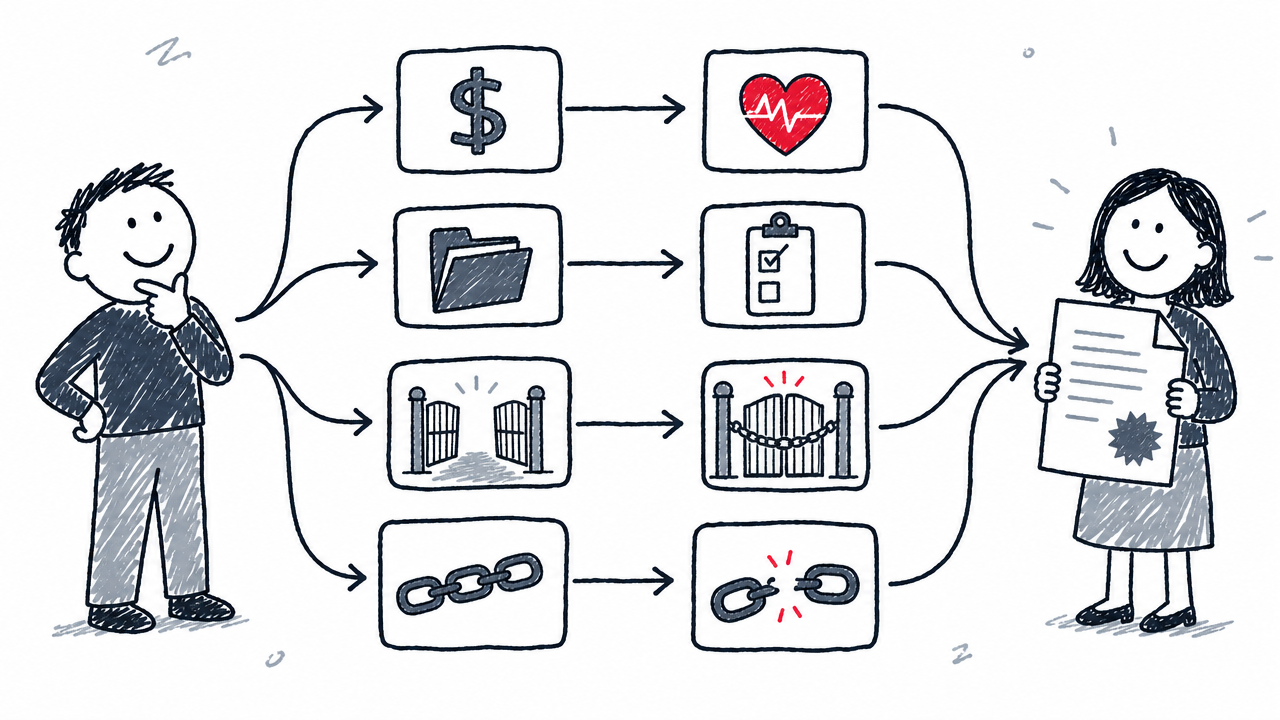
Financial power of attorney vs. medical power of attorney
A financial power of attorney gives an agent authority over money and property matters: bank accounts, investments, taxes, real estate, and insurance. A medical power of attorney (also called a health care power of attorney) gives an agent authority to make health care decisions when the principal cannot.
Financial and medical POAs are almost always separate documents. The terminology varies by state. Some states call the medical version a "health care proxy," "medical proxy," or include it within a broader "advance directive" (NIA, Choosing a Health Care Proxy).
A common point of confusion is the difference between a health care POA and a living will. A living will is a written statement of the principal's treatment preferences (for example, "do not resuscitate" instructions). A health care POA, by contrast, appoints a real person to make real-time decisions that a living will may not cover. Many estate planners recommend having both (NIA, Advance Care Planning; CFPB).
General vs. limited (special) power of attorney
A general power of attorney grants the agent broad authority over nearly all financial or legal matters the principal could handle personally. A limited (special) power of attorney restricts authority to one transaction or a narrow set of tasks (ABA).
Example: You are traveling overseas and need someone to close on the sale of your house while you are gone. A limited POA can let your agent sign the closing documents for that specific property and nothing else. Once the transaction is complete, the authority ends.
Limited POAs are useful when you trust someone for a specific task but do not want to hand over broad control. Texas legal-aid resources offer a good illustration of how limited authority works in practice, though the rules in your state may differ (TexasLawHelp).
What is a durable power of attorney?
A durable power of attorney is one whose authority survives the principal's incapacity. If the principal develops dementia, suffers a stroke, or becomes unconscious, the agent's authority continues. A nondurable POA, by contrast, ends automatically when the principal loses legal capacity.
A critical misconception: "durable" does not mean the agent must wait for incapacity to act. A durable POA can take effect right away upon signing and simply remain in force if the principal later becomes incapacitated. Durability is about what happens after incapacity, not about when authority begins (ABA; CFPB).
A durable POA is the most common planning tool for aging-related concerns. Without one, a family may need to petition a court for guardianship or conservatorship if a loved one becomes incapacitated. That process is expensive, time-consuming, and more invasive of the person's autonomy (Texas State Law Library).
What is a springing power of attorney?
A springing power of attorney stays inactive until a defined triggering event occurs, most commonly a physician's written certification that the principal lacks capacity (ABA).
The appeal is clear: the principal keeps sole control until the moment incapacity occurs. Springing POAs have practical downsides, though:
- Delays in obtaining the required medical certification can leave bills unpaid and decisions unmade.
- Banks and financial institutions may be reluctant to honor a springing POA until they are satisfied the triggering event has occurred.
- Not all states recognize or treat springing POAs the same way.
For these reasons, many estate planners prefer an immediately effective durable POA combined with a conversation about when the agent should begin acting (TexasLawHelp).
Can one document cover both medical and financial decisions?
In most states, separate documents are used for financial authority and health care authority. Some states require entirely different forms. The principal may name the same person as agent for both, or choose different agents for each role based on each person's strengths.
Always check state-specific forms and requirements. A local legal-aid organization or estate-planning attorney can confirm what your state allows.
Why families need a power of attorney
A power of attorney works only if the principal creates it while still having legal capacity. Once a person can no longer understand and communicate decisions, signing one is no longer an option. A court-ordered guardianship or conservatorship then becomes the likely path, with all the cost, delay, and loss of autonomy that entails (CFPB).
Common scenarios where a POA is valuable:
- Aging parents with a risk of dementia or cognitive decline
- Recovery from surgery when someone needs to manage finances temporarily
- Military deployment that takes a service member away from routine obligations
- Extended travel abroad where domestic transactions still need attention
- Serious illness or injury that may lead to hospitalization
Think of the planning process as a "decision map." First, identify which decisions may need coverage (financial, medical, or both). Then match each decision to the right POA characteristics: scope, timing, durability, and subject matter. The NIA's "Getting Your Affairs in Order Checklist" is a useful starting point for organizing documents before a crisis hits (NIA).
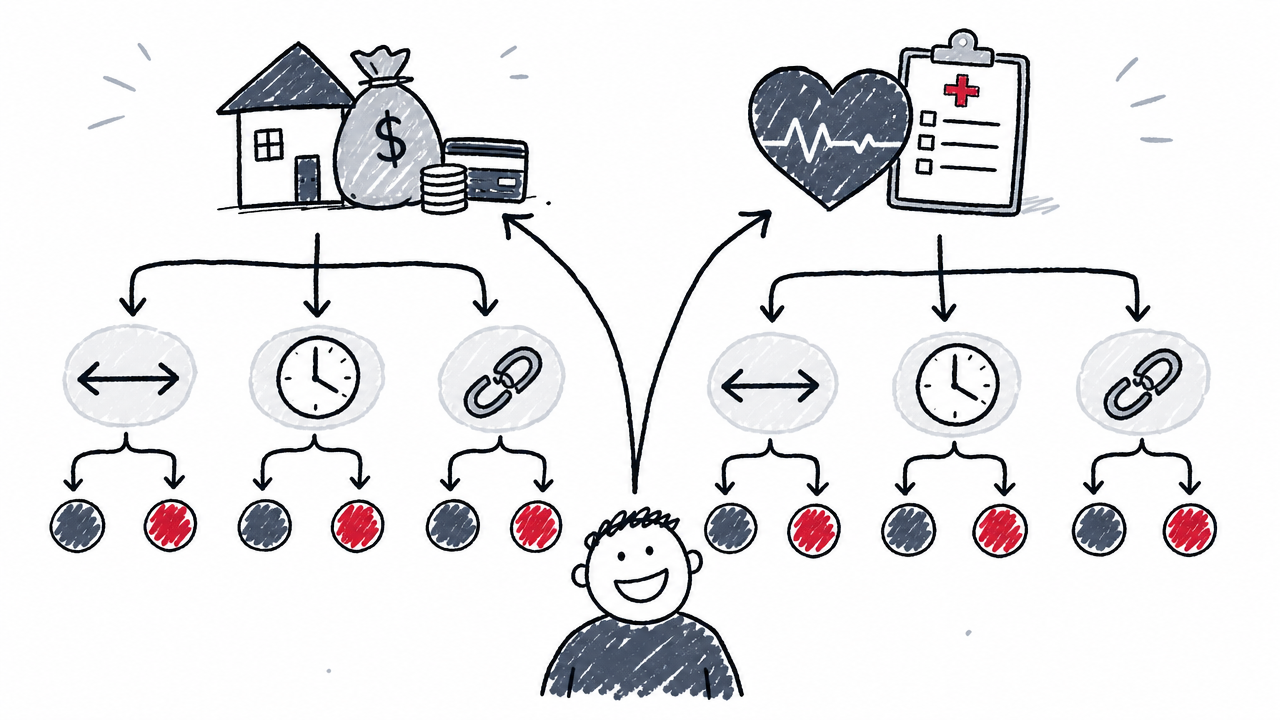
How to set up a power of attorney: step-by-step checklist
Setting up a POA does not need to be overwhelming. Follow these ten steps, then verify the details against your state's specific requirements.
Identify decisions that need coverage. List the financial, property, or medical decisions someone may need to handle on your behalf.
Choose a trustworthy primary agent. Pick someone who is honest, organized, and willing to act in your best interest, not merely someone with financial expertise.
Name a successor agent. If your primary agent cannot serve, a named successor avoids a gap in coverage.
Decide broad vs. limited scope. Do you need an agent who can manage everything, or only handle a specific task?
Decide immediate vs. springing activation. Will the agent's authority begin at signing, or only after a triggering event like a physician's certification of incapacity?
Include only appropriate powers. Grant authority that fits the situation. A POA for an aging parent's finances may not need to include the power to make gifts or change beneficiaries.
Use the correct state form or get state-specific legal advice. Many states publish statutory POA forms. Using them can reduce acceptance problems with banks and other institutions.
Sign with required witnesses and/or notary. State law dictates the formalities. See the section on signing requirements below.
Give copies to the agent and relevant institutions. Provide copies to banks, brokerages, doctors, and any other organizations that may need to verify the agent's authority. Keep certified copies on file.
Review after major life events. Revisit the document after a divorce, relocation, serious illness, death of an agent, or any change in the level of trust between principal and agent (ABA; NIA).
Do I need a lawyer to create a power of attorney?
A lawyer is not always required. Many states provide statutory forms that individuals can complete on their own, and online legal-services platforms offer templates. An attorney familiar with estate planning or elder law can tailor the document to your specific circumstances, ensure it complies with your state's current requirements, and address complications like property in more than one state or blended families (ABA; NIA).
For straightforward situations, a statutory form can work well. For complex estates, consulting an attorney is strongly recommended.
Are signing requirements the same in every state?
No. Rules for notarization, witnesses, or both vary widely from state to state. A few examples show the range:
These examples are illustrative, not comprehensive. Check your own state's statutes, state bar website, or a local legal-aid organization for the rules that apply to you.
Can a bank refuse to accept a power of attorney?
Banks and credit unions should generally accept a POA that complies with state law, but financial institutions may have their own review procedures, may request extra paperwork, or may ask the agent to complete the bank's own POA form. Some institutions set a time limit on how old a POA can be before they require a fresh one (CFPB).
Practical advice: Share the POA with every financial institution the principal uses before the agent needs to act. Ask whether the institution requires its own form or has specific procedures. Keep certified copies of the signed document. Addressing these logistics while the principal is still capable prevents delays during a crisis.
Choosing an agent and preventing abuse
Selecting the right agent is the most consequential decision in the entire POA process. The agent holds a fiduciary duty to act in the principal's best interest, keep accurate records, and avoid self-dealing. Misuse of a POA can constitute financial exploitation or elder abuse (CFPB).
Concrete safeguards to build into the process:
- Limit the powers granted to only what the agent actually needs.
- Name a successor agent so authority does not lapse.
- Require periodic accountings shared with a trusted third party, such as another family member, accountant, or attorney.
- Inform family members that the POA exists and where it is stored.
- Designate a trusted contact with the principal's bank or brokerage so the institution has someone to call if it suspects irregularities.
- Avoid naming an agent who would benefit from the principal's financial decisions, unless you have strong reason to trust them.
An agent generally cannot use the principal's money for personal expenses unless the document explicitly permits it and the spending is consistent with the principal's wishes and best interest (CFPB).

How a power of attorney ends
A POA does not last forever, and it does not survive the principal's death. Knowing exactly when authority ends prevents both gaps and overreach.
A POA ends when:
- The principal revokes it while still having legal capacity. Revocation should be in writing, with copies delivered to the agent and all institutions that hold the POA.
- The document's built-in expiration date arrives or the specific task is completed.
- The principal dies. A POA is not a will and does not give the agent any authority after death. Estate administration passes to the personal representative or executor named in the will, or to a court-appointed administrator.
- The principal becomes incapacitated and the POA is nondurable.
- The agent dies, resigns, or becomes unable to serve and no successor agent is named.
- A court appoints a guardian or conservator, which may limit or end the agent's authority depending on state law.
Review the document regularly. A POA drafted years ago may no longer reflect the principal's wishes, the agent's willingness to serve, or current state law (ABA; TexasLawHelp).
Power of attorney vs. guardianship, conservatorship, and living will
These legal tools serve different purposes. Confusing them can lead to costly mistakes.
A health care POA and a living will work well together: the living will provides guidance, and the health care agent makes real-time decisions that the living will may not cover (ABA; NIA, Choosing a Health Care Proxy; NIA, Advance Care Planning).
Frequently asked questions
Can I still make my own decisions after signing a POA?
Yes. The principal keeps the right to make decisions as long as the principal has legal capacity. The agent acts alongside or on behalf of the principal, not as a replacement. A POA does not strip the principal of authority.
Does a power of attorney need to be notarized?
It depends on the state. Many states require notarization, witnesses, or both. Some states have different rules for financial versus health care POAs. Check the specific rules for your state before signing.
Can a power of attorney change a will?
No. An agent cannot create, alter, or revoke the principal's will. The law treats will-making as a personal decision reserved to the principal.
What happens if I move to another state?
A POA valid in one state may not be accepted in another. After relocating, review the document with an attorney licensed in the new state and consider executing a new POA that complies with local requirements. Property owners with holdings in more than one state should pay special attention to this issue (ABA).
Can I revoke a power of attorney after becoming incapacitated?
Revocation requires legal capacity, so in most cases the answer is no. Choosing a trustworthy agent and building in safeguards before incapacity is critical for this reason. If an agent is abusing authority, a court may intervene to limit or revoke the POA and, if necessary, appoint a guardian or conservator.
A power of attorney is one of the most important planning documents a family can prepare, and one of the least useful if created too late. Take the time now, while all parties have legal capacity, to put the right documents in place.
For guidance tailored to your circumstances, consult your state's official statutes, a local legal-aid organization, or an estate-planning attorney. The content above is general information for educational purposes, not legal advice. Requirements, terminology, and forms vary by state.